


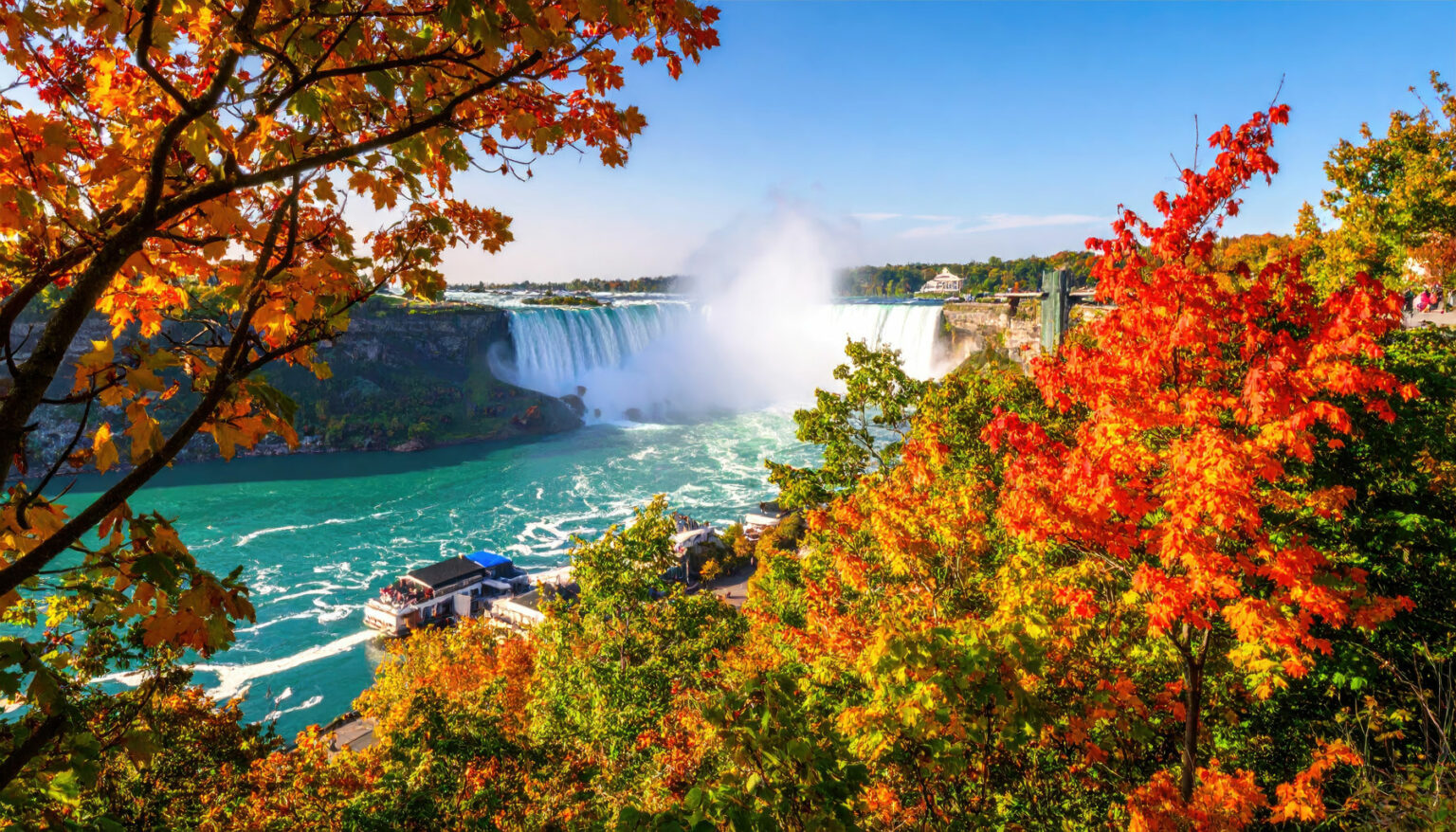

Autumn changes the Niagara landscape quickly. The Niagara Gorge fills with gold and red, the Niagara Escarpment becomes a corridor of fall colour, and quieter parks around the city offer an easy break from the main sightseeing areas.
- Niagara Falls Autumn Hiking at a Glance
- Niagara Glen: Best for Dramatic Fall Scenery
- Bruce Trail at Queenston Heights: Best for an Escarpment Hike
- Niagara Recreation Trail Through Queen Victoria Park: Best Easy Scenic Walk
- Dufferin Islands: Best Short Autumn Walk Near the Falls
- Heartland Forest: Best Accessible Nature Walk
- Firemen’s Park: Best for a Quiet Local Walk
- Which Niagara Falls Hiking Trail Should You Choose?
- How to Combine an Autumn Hike With Clifton Hill
- What to Know Before Hiking in Niagara This Fall
- See a Different Side of Niagara Falls This Autumn
For visitors staying near the Falls or Clifton Hill, hiking does not require turning the trip into a backcountry excursion. Some of Niagara’s most interesting walks are only a short drive from the tourism district, ranging from the rugged trails of the Niagara Glen to accessible forest paths at Heartland Forest and short waterside walks at Dufferin Islands.
Niagara Falls Autumn Hiking at a Glance
| Trail Area | Best For | General Difficulty | Experience |
|---|---|---|---|
| Niagara Glen | Gorge scenery and a more challenging hike | Moderate to difficult | Forest, boulders, cliffs, Niagara River |
| Bruce Trail at Queenston Heights | A classic Niagara Escarpment hike | Easy to moderate on shorter route | Forest, escarpment, history |
| Niagara River Recreation Trail | Easy walking and longer scenic routes | Easy | Paved riverfront trail |
| Dufferin Islands | Families and short autumn walks | Easy | Islands, bridges, water and trees |
| Heartland Forest | Accessible hiking and families | Easy | Forest, wetlands and boardwalks |
| Firemen’s Park | A quieter local nature walk | Easy to moderate | Forest, pond and escarpment |
Niagara Glen: Best for Dramatic Fall Scenery
3050 Niagara Parkway, Niagara Falls
For visitors looking for a true hike close to Niagara Falls, the Niagara Glen is one of the strongest choices.
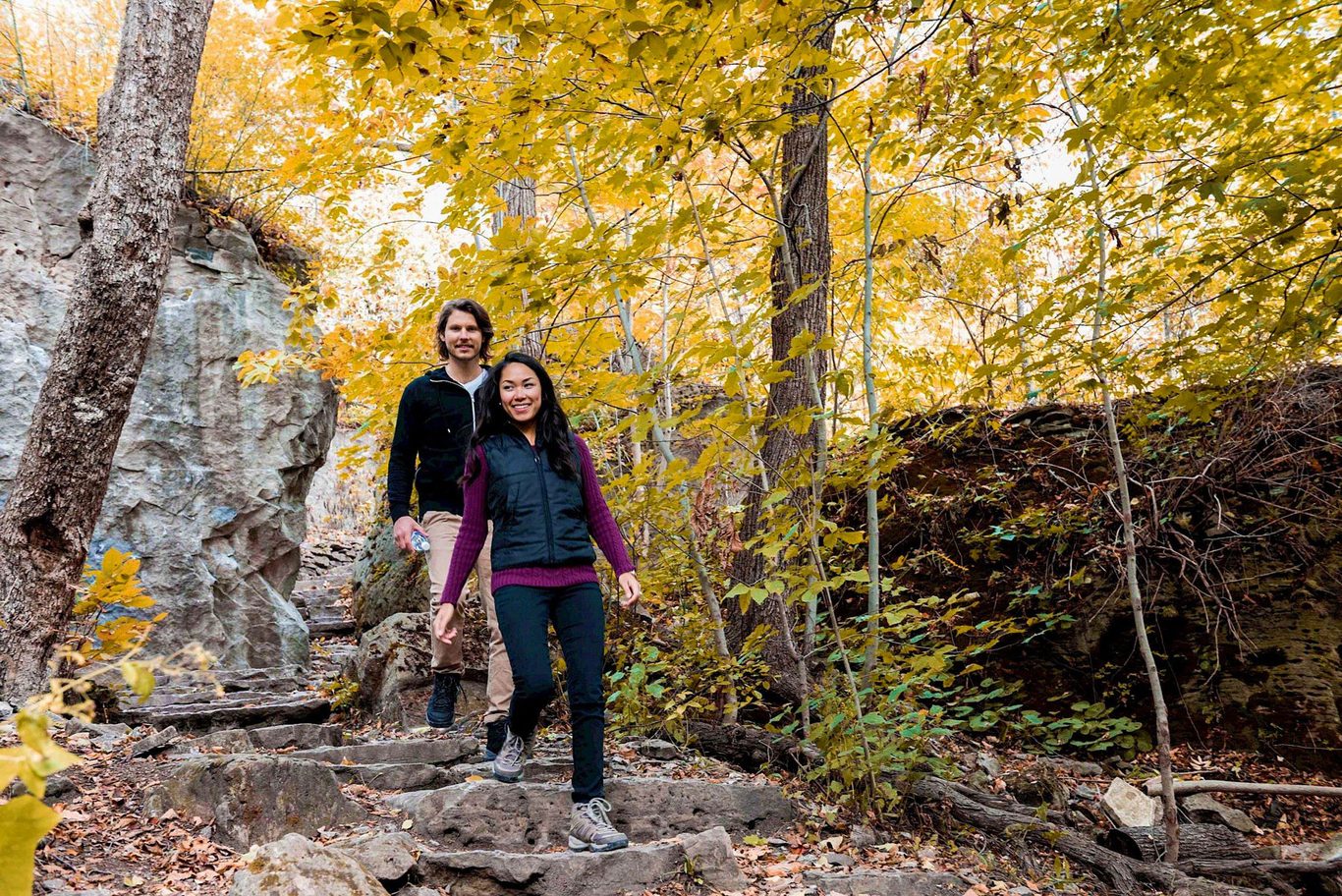
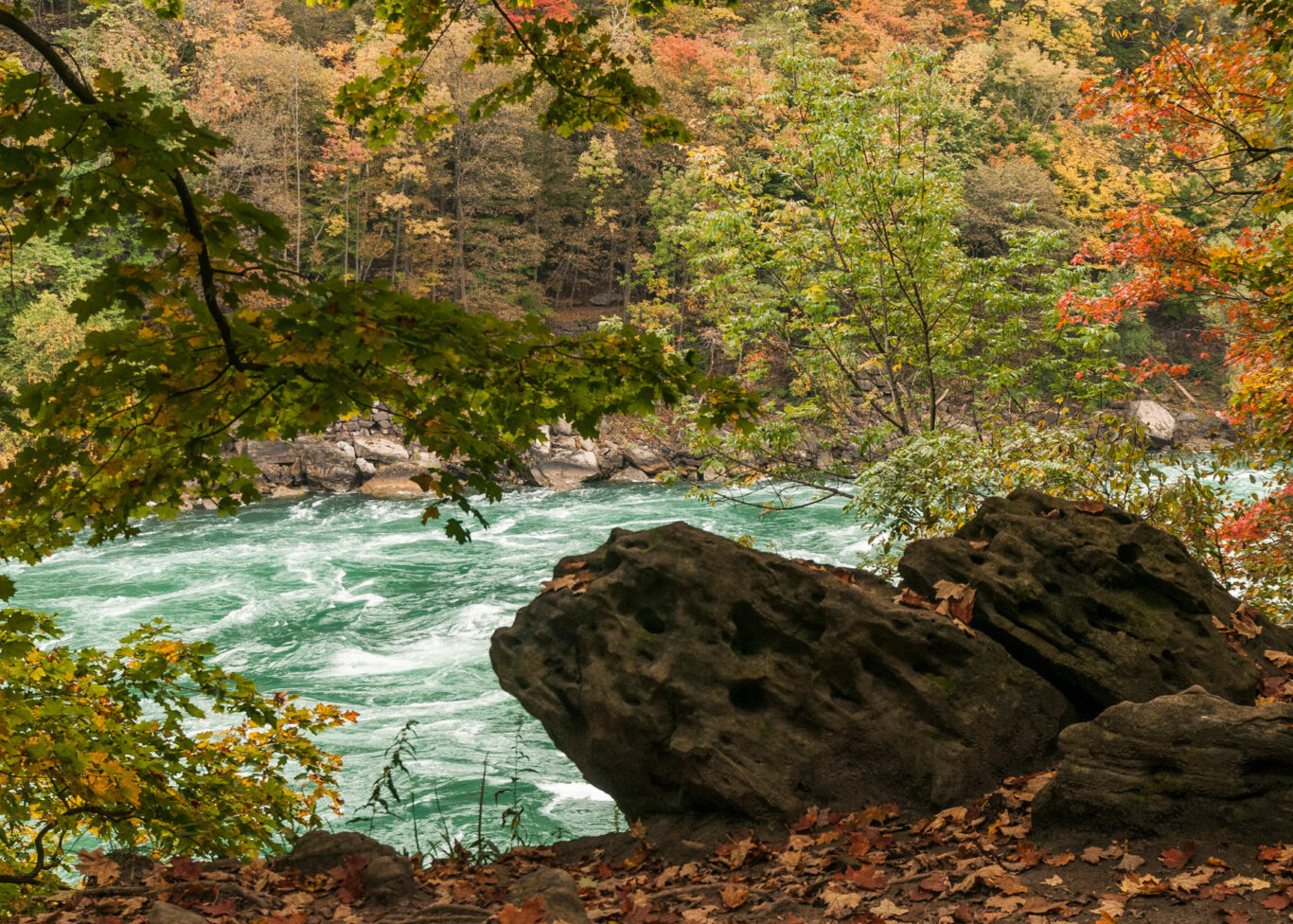
The protected nature area sits deep within the Niagara Gorge, where stairways descend from the Niagara Parkway into a Carolinian forest filled with massive boulders, rock formations and views toward the fast-moving Niagara River. Niagara Parks maintains about four kilometres of rugged hiking paths within the Glen.
Autumn adds another layer to the landscape as the forest canopy changes colour above the limestone cliffs. Unlike a paved park walk, however, the Glen requires some preparation. Expect stairs, uneven ground, rocks and steep sections. Proper footwear is much more important here than on most other walks in this guide.
Distance
2.6km
Elevation gain
97m
Route type
Loop
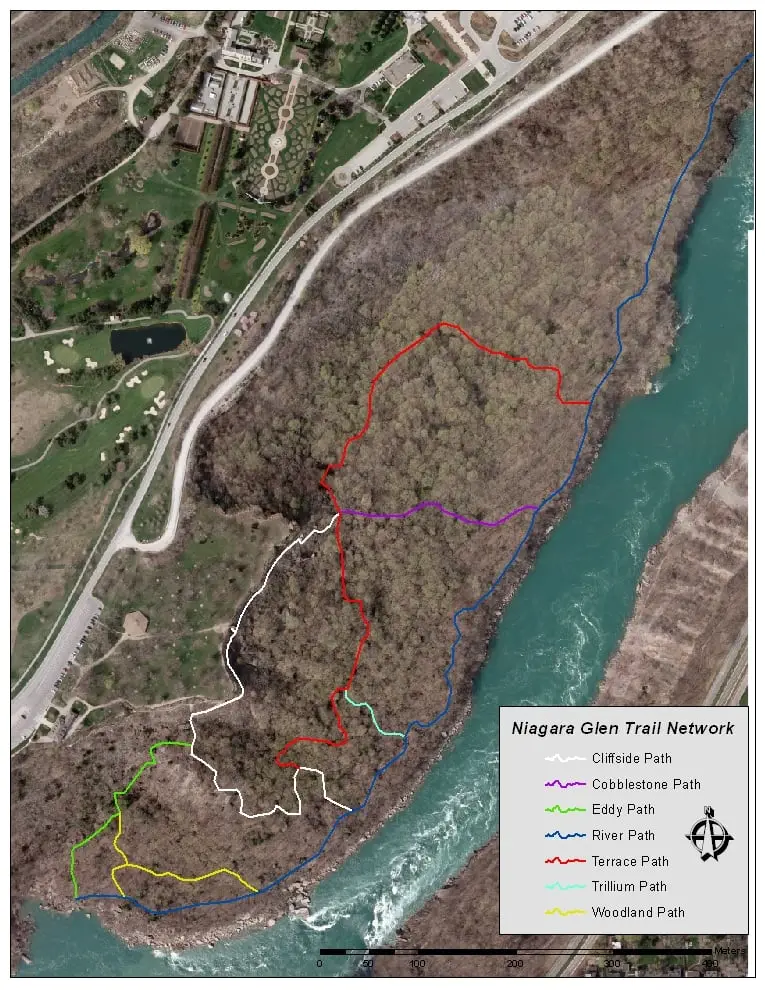
The official trail map includes the Main Loop, River, Cobblestone, Bouldering, Terrace, Trillium, Cliffside and Woodland trails.
Good choice for: active couples, older families, photographers and visitors who want a more substantial outdoor experience.
Allow: roughly one to several hours depending on the route and pace.
Important 2026 Trail Update
Niagara Parks currently identifies the Whirlpool Trail as closed and advises hikers to obey all trail closure signs and markers. Conditions and access can change, so visitors should check Niagara Parks’ current trail information before descending into the gorge. Hiking in the Glen is permitted only between sunrise and sunset.
Bruce Trail at Queenston Heights: Best for an Escarpment Hike
14184 Niagara Parkway, Niagara-on-the-Lake
Queenston Heights Park marks the southern terminus of the Bruce Trail, making it one of the easiest places near Niagara Falls to sample Ontario’s best-known long-distance hiking route. Niagara Parks describes the park as a scenic hiking area atop the Niagara Escarpment, with Brock’s Monument and the Landscape of Nations Memorial nearby
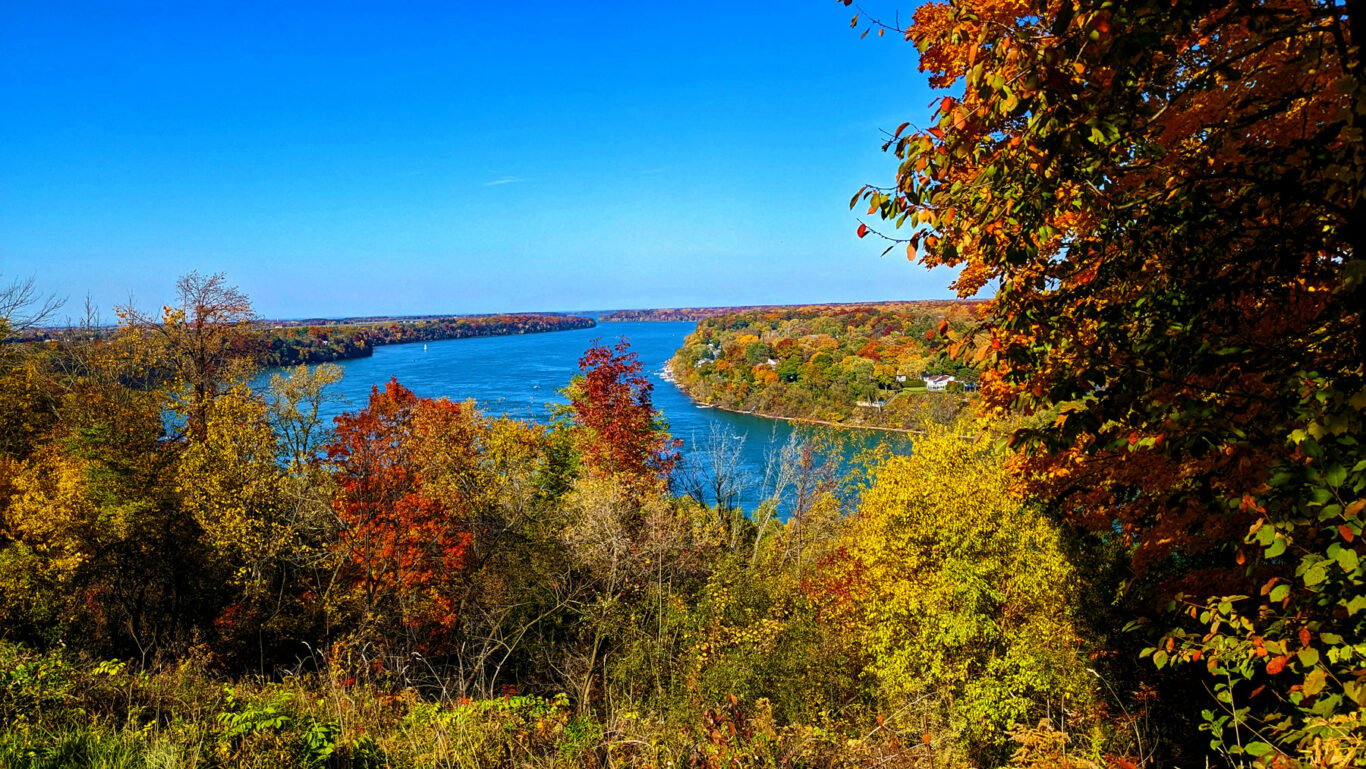
A popular Queenston via Bruce Trail route is an 8.7-kilometre out-and-back hike with about 119 metres of elevation gain. AllTrails rates it moderate and estimates roughly 1 hour 57 minutes to complete. The route includes wooded sections and some steeper inclines and declines, so it feels more substantial than a simple park walk without requiring a full-day hike.
Distance
8.9km
Elevation gain
123m
Route type
Out & back
Autumn is an especially good time to walk this section as the forested escarpment changes colour. Hikers should stay on the marked public trail, since portions of the route pass close to private property.
Good choice for: couples, active families, repeat visitors and hikers looking for a moderate trail with fall colour, Niagara history and escarpment scenery.
Allow: two to three hours for the suggested 8.9-kilometre out-and-back route.
Niagara Recreation Trail Through Queen Victoria Park: Best Easy Scenic Walk
Suggested starting point: Queen Victoria Place, 6349 Niagara Parkway, Niagara Falls
The Niagara Recreation Trail through Queen Victoria Park is a flat, fully paved multi-use route that runs through the heart of Niagara Falls. This section is especially useful for visitors who want a longer walk without the steep terrain found in the Niagara Gorge.
A commonly mapped route through the Queen Victoria Park area covers about 12.6 kilometres point to point, with roughly 246 metres of elevation gain and an estimated walking time of three to three and a half hours. Because the trail is paved, it is well suited to walkers, runners and cyclists.
The route follows the Niagara River corridor through landscaped parkland and passes some of the city’s best-known viewpoints and gardens. Queen Victoria Park itself includes formal gardens, floral displays and views of both the American and Horseshoe Falls, while the Niagara River Recreation Trail connects the park with other Niagara Parks green spaces along the river.
Visitors do not need to complete the full mapped route. Shorter sections through Queen Victoria Park work particularly well for families or travellers who want to combine an autumn walk with sightseeing around the Falls.
Distance
12.6 km
Elevation gain
246 m
Route type
Point to Point
Around Niagara Falls, the trail creates a convenient link between river viewpoints, parkland and attractions along the Niagara Parkway. North of the Falls, the landscape becomes increasingly wooded as it approaches the Whirlpool, Niagara Glen and Queenston.
Good choice for: casual walkers, families, runners, cyclists and visitors looking for a paved route close to the main tourism district.
Allow: 30 to 90 minutes for a shorter park walk, or about three to three and a half hours for the full 12.6-kilometre route shown on common trail maps.
Dufferin Islands: Best Short Autumn Walk Near the Falls
6345 Dufferin Isle Road, Niagara Falls
Just south of the Horseshoe Falls is a very different type of outdoor experience.
Dufferin Islands covers about ten acres of greenspace, with winding paths and wooden footbridges connecting a collection of small islands. Niagara Parks describes it as a secluded natural area within the heart of Niagara Falls.
This is more of a peaceful nature walk than a traditional hike, which is precisely why it works well for families and mixed-age groups. Water, small bridges, mature trees and changing leaves create plenty to see without the stairs and rough footing found in the Niagara Gorge.
Distance
1.8 km
Elevation gain
129 m
Route type
Loop
It also fits easily into a Falls sightseeing day. Visitors can see the Horseshoe Falls and then continue south toward Dufferin Islands rather than driving to a separate hiking destination.
Good choice for: families, younger children, photographers and anyone wanting a shorter walk.
Allow: about 30 to 60 minutes for an unhurried visit.
Heartland Forest: Best Accessible Nature Walk
8215 Heartland Forest Rd, Niagara Falls, ON L2H 0L5
Heartland Forest answers a travel question that many generic hiking lists overlook: where can a family enjoy a Niagara nature trail when rugged terrain is not practical?
The property has approximately four kilometres of wide, easy-access walking trails, along with boardwalks, observation areas, ponds and forest habitat. Most of the property is designed to accommodate strollers and mobility aids, and admission and parking are free.
The individual routes include Pin Oak Trail, Black Gum Trail, the OTF Boardwalk Trail and two pollinator trails. Heartland Forest classifies its trails as easy and accessible unless otherwise marked.
Because the property combines forest trails with a Nature Centre, playground and other family facilities, it is particularly practical for groups whose members have different ages or mobility levels.
Distance
2.1 km
Elevation gain
7 m
Route type
Loop
Heartland Forest estimates the drive from Clifton Hill at about 15 minutes, making it an easy half-day addition to a Niagara Falls family itinerary.
Good choice for: families, grandparents travelling with children, stroller users and visitors seeking accessible outdoor experiences.
Allow: one to two hours, or longer when combining the trails with the Nature Centre.
Firemen’s Park: Best for a Quiet Local Walk
2275 Dorchester Rd, Niagara Falls, ON L2E 6S4
For a less tourist-oriented side of Niagara Falls, Firemen’s Park offers forested trails on the Niagara Escarpment in the city’s north end.
The 135-acre property includes hiking trails, picnic areas, open spaces and a pond. It is operated by the Stamford Centre Volunteer Firemen’s Association.
This is not the place for the dramatic river views of Niagara Glen or the landmark experience of beginning the Bruce Trail. Its appeal is different: it feels more like a neighbourhood nature retreat, with enough space to wander without travelling far outside Niagara Falls.
Length
3.7 km
Elevation gain
38 m
Route type
Loop
The combination of deciduous forest, open areas and water makes it particularly attractive during the autumn colour season.
Good choice for: repeat visitors, local families, dog owners and travellers looking for a quieter park.
Allow: about one to two hours depending on the route.
Which Niagara Falls Hiking Trail Should You Choose?
For the most dramatic scenery, choose the Niagara Glen.
For a traditional hike with more distance, start the Bruce Trail at Queenston Heights.
For an easy riverside walk, use a section of the Niagara River Recreation Trail.
For young children or a quick nature break, Dufferin Islands is one of the simplest options.
For accessible trails and mixed-mobility groups, Heartland Forest stands out.
For a quieter local experience, explore Firemen’s Park.
That variety is part of what makes hiking useful in a Niagara Falls itinerary. A visitor does not have to choose between spending the entire day sightseeing around the Falls or disappearing into the wilderness. Niagara’s trail network makes it possible to fit an hour of autumn colour, a half-day gorge hike or a longer escarpment walk into the same trip.
How to Combine an Autumn Hike With Clifton Hill
For travellers staying around the main Niagara Falls tourism district, hiking often works best as one part of the day rather than the entire itinerary.
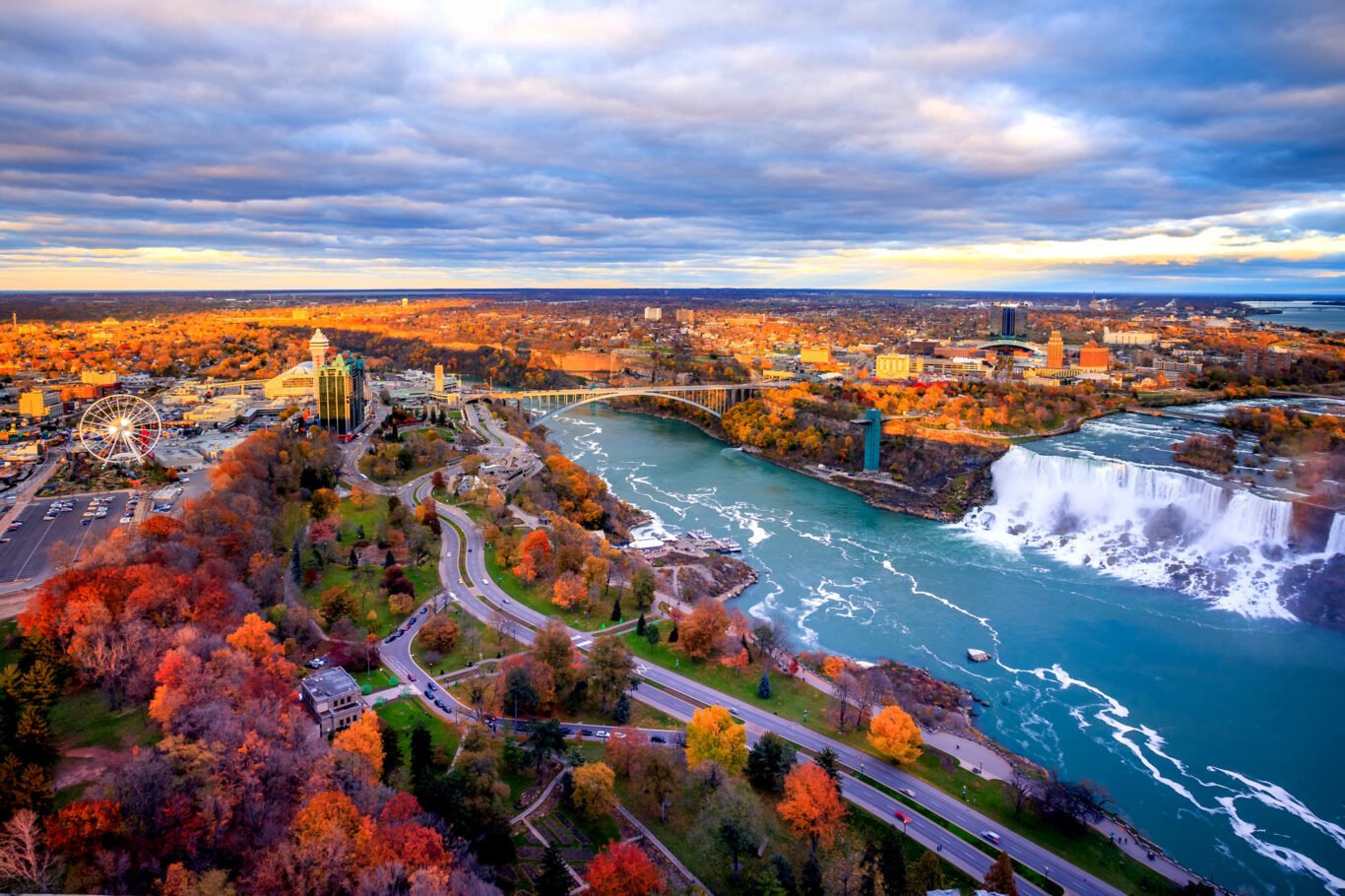
An early hike at Niagara Glen or Queenston Heights can be followed by lunch and attractions around Clifton Hill. Families choosing a gentler walk at Dufferin Islands can combine it with the Horseshoe Falls before heading toward Clifton Hill later in the day. The Niagara River Recreation Trail also makes it possible to build walking directly into a sightseeing route along the Niagara Parkway.
This contrast becomes especially useful in autumn: spend daylight hours among the fall colours, then return to the central tourism district for restaurants, attractions and nighttime views over Niagara Falls.
What to Know Before Hiking in Niagara This Fall
Autumn conditions can change quickly. Fallen leaves can hide rocks and roots, while wet leaves can make stone steps and gorge trails slippery. Dress in layers, bring water and choose footwear appropriate to the route.
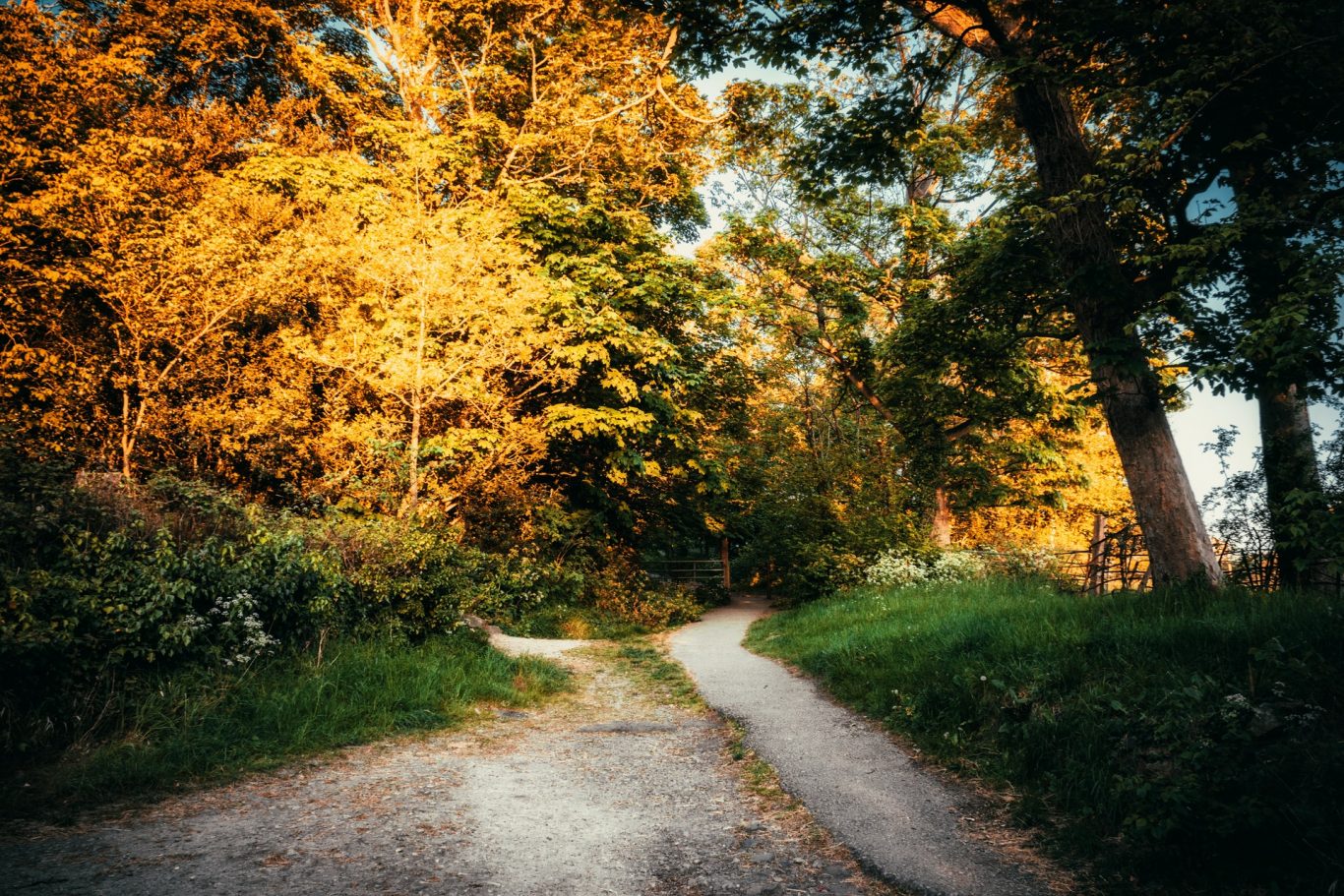
The difference between these trails also matters. Dufferin Islands, Heartland Forest and the Niagara River Recreation Trail are generally much easier walking environments than the natural trails below the rim of the Niagara Gorge. Niagara Parks specifically warns that the Glen can contain steep cliffs, slippery or loose rocks and fast-moving water.
Trail conditions and temporary closures should always be checked before leaving, particularly when planning a Niagara Glen hike. Bruce Trail hikers should similarly follow current trail blazes and notices because reroutes occasionally occur.
See a Different Side of Niagara Falls This Autumn
The waterfalls may be the reason most people first come to Niagara, but autumn makes the surrounding landscape worth exploring in its own right.
Within a relatively compact area, visitors can descend into the Niagara Gorge, walk part of the Bruce Trail, follow the Niagara River, cross wooded islands or choose an accessible path through Carolinian forest. Each offers a different answer to the question of what to do outdoors near Niagara Falls once the leaves begin to change.
And because these hikes sit close to the Falls and Clifton Hill rather than hours away from them, they work naturally within a larger Niagara Falls getaway — not as a detour from the trip, but as another way to experience the destination.