



Beyond the roar of the waterfalls, Niagara’s riverfront holds another story: a stranded barge, a century-old power station, a monument to an electrical pioneer and quiet reminders of the people who shaped this landscape. These five historic landmarks are worth looking for as you explore the Canadian side of Niagara Falls. Most can be appreciated from public paths, although construction around Toronto Power currently affects access.
The Iron Scow: A Timeless Shipwreck Story
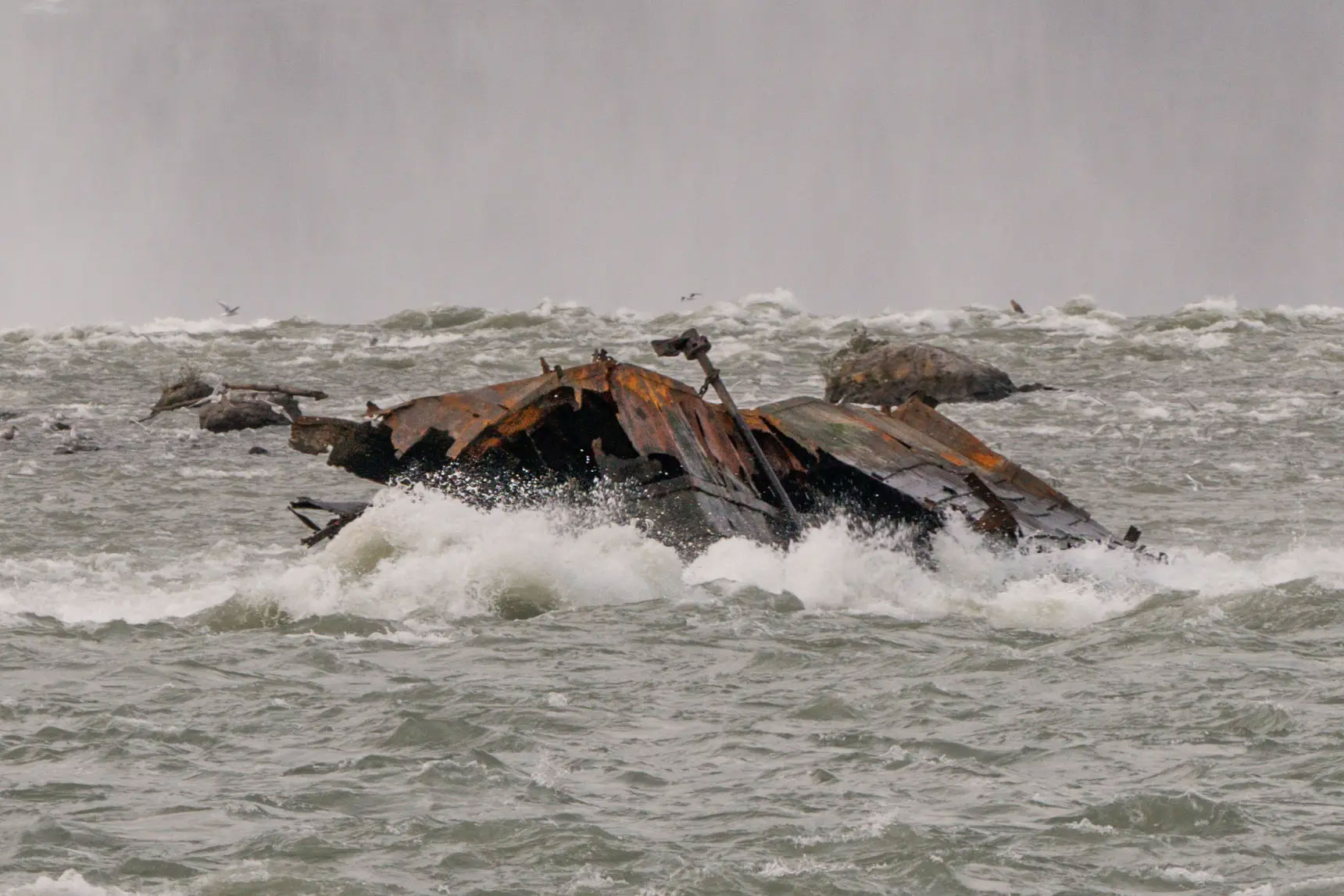
On August 6, 1918, a dumping scow broke free from its towing tug in the upper Niagara River. Two men, Gustav F. Lofberg and James H. Harris, were aboard as the vessel drifted toward the Horseshoe Falls. They opened the scow’s bottom dumping doors, allowing it to settle onto the riverbed roughly 600 metres from the brink. They were stranded, but they had stopped the barge from going over the Falls.
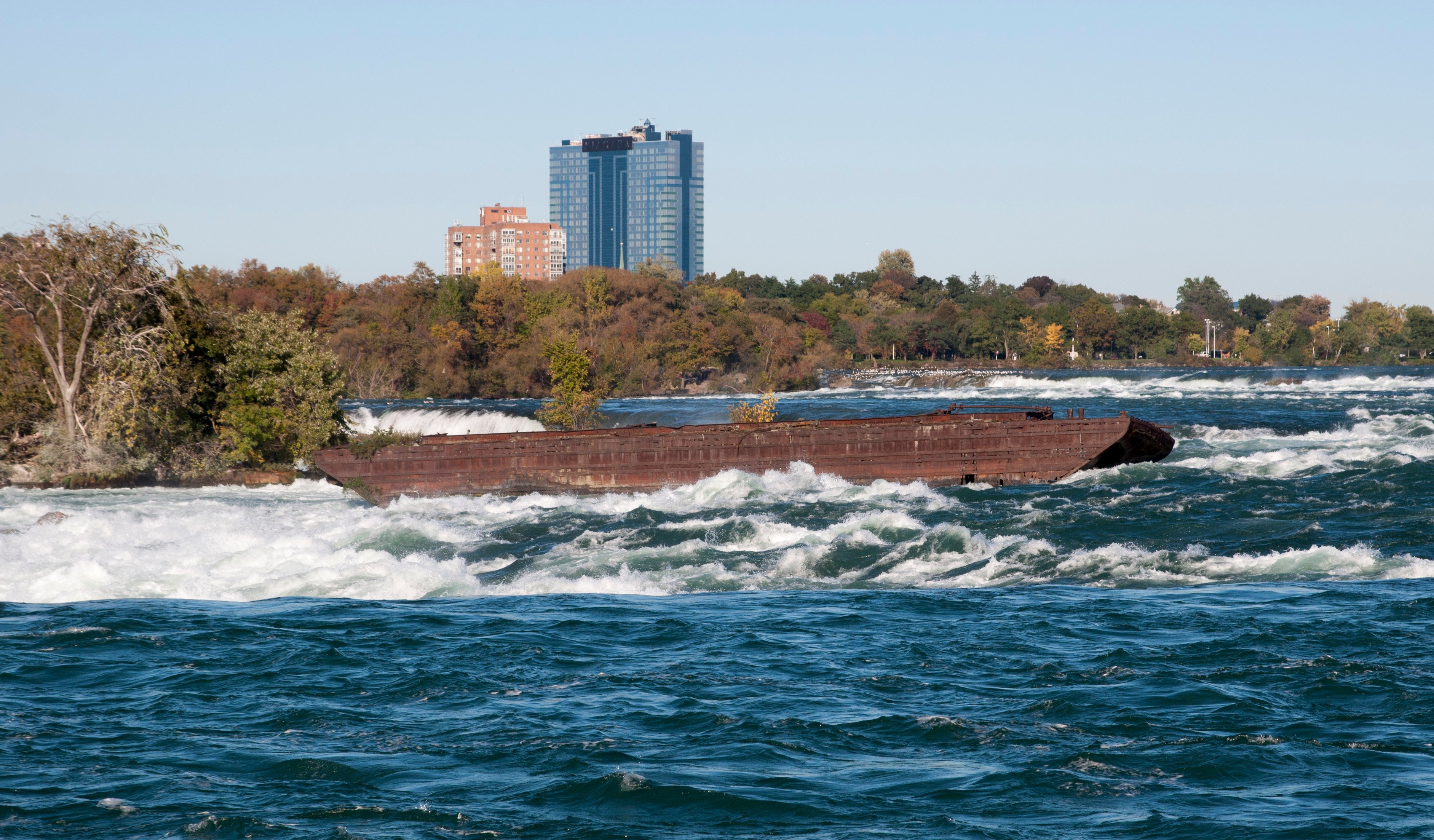
Rescuers worked through the night. A line was fired from the nearby Toronto Power Generating Station, and the men were eventually brought ashore in a breeches buoy on August 7. Local riverman and First World War veteran William ‘Red’ Hill Sr. played a crucial role in untangling the rescue lines. The effort also involved local police and firefighters, Niagara Parks police and the U.S. Coast Guard.
For more than a century, the scow became a familiar silhouette in the rushing water. A powerful storm moved it downstream in October 2019, and ice and river conditions damaged it further in 2022. On November 19, 2025, its bow broke loose and shifted again. Parts of the wreck remain in the river, but its appearance has changed considerably from older photographs. Visitors can learn more from Niagara Parks’ Iron Scow history and interpretive displays near the river.
Toronto Power Generating Station


The Toronto Power Generating Station is one of the most striking buildings beside the upper Niagara River. Designed by E. J. Lennox, the architect also associated with Toronto’s Old City Hall and Casa Loma, the stone powerhouse opened in 1906. Its grand exterior gives an early industrial facility the appearance of a civic landmark. It supplied electricity to Ontario communities until operations ended in 1974.
Inside, water-driven machinery turned the force of the Niagara River into electricity. The plant is now recognized as a National Historic Site of Canada, valued for both its architecture and its place in the history of hydroelectric development. Its proximity to the Iron Scow also matters: rescuers used the powerhouse roof to launch the line that helped bring the stranded men to safety in 1918.
The long-awaited redevelopment is moving forward. Niagara Parks and Toronto Power Hotel Inc. have announced a privately funded investment of more than $200 million to restore the heritage property and create a boutique hotel with dining, a brewery, wellness facilities, arts and cultural spaces, and other visitor experiences. Preliminary work and site preparation are underway, and Ontario reported in 2026 that another construction phase was planned to begin in October. The building is not currently a public attraction; nearby pathways and parkland have been temporarily closed or diverted for the project. Check Niagara Parks’ Toronto Power updates before planning a stop.
The Tesla Monument: A Tribute to a Visionary
Nikola Tesla’s work on alternating-current electricity helped make long-distance transmission of hydroelectric power practical. The first major Niagara hydroelectric developments in the 1890s, particularly on the American side of the river, demonstrated how the energy of the Falls could serve communities far beyond Niagara itself.
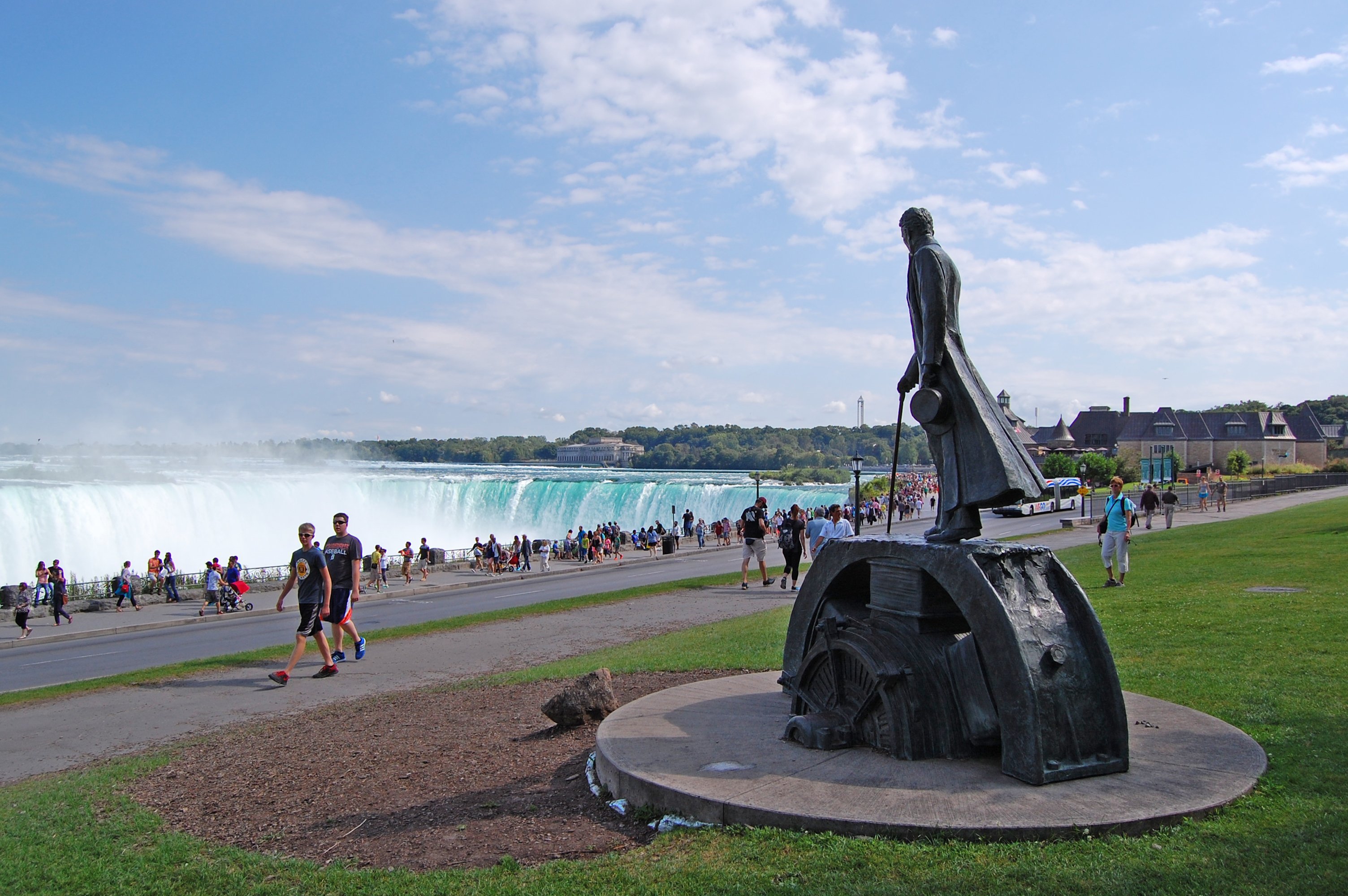
Across from the Horseshoe Falls in Queen Victoria Park stands a bronze tribute to Tesla, created by Hamilton sculptor Les Drysdale. The monument was unveiled on July 9, 2006, marking the 150th anniversary of Tesla’s birth. Tesla is shown standing on an alternating-current motor, a detail that connects the sculpture to his lasting contribution to modern electrical systems. It is a worthwhile stop for visitors interested in the history behind Niagara’s power stations.
Rambler’s Rest: A Quiet Nook with a Past
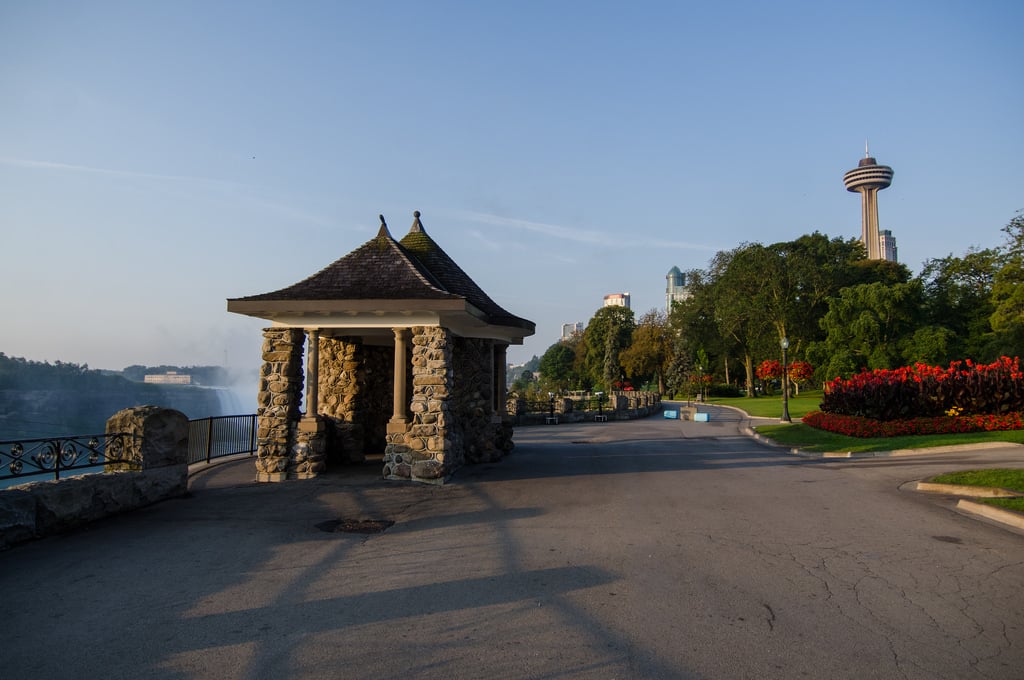
Built in 1907, Rambler’s Rest is a modest stone pavilion overlooking the Niagara River between the Canadian Horseshoe Falls and the American Bridal Veil Falls. Located south of Grand View Marketplace, it reflects an era when the parkway’s small shelters and scenic viewpoints were part of the experience of visiting Niagara Falls.
The pavilion is easy to overlook beside the larger attractions, and that is part of its appeal. Its stonework and river views offer a quieter connection with the early park landscape. Niagara Parks also lists Rambler’s Rest as an outdoor wedding location, so access or use of the space may vary during booked events.
Zimmerman Fountain: The Legacy of a Builder
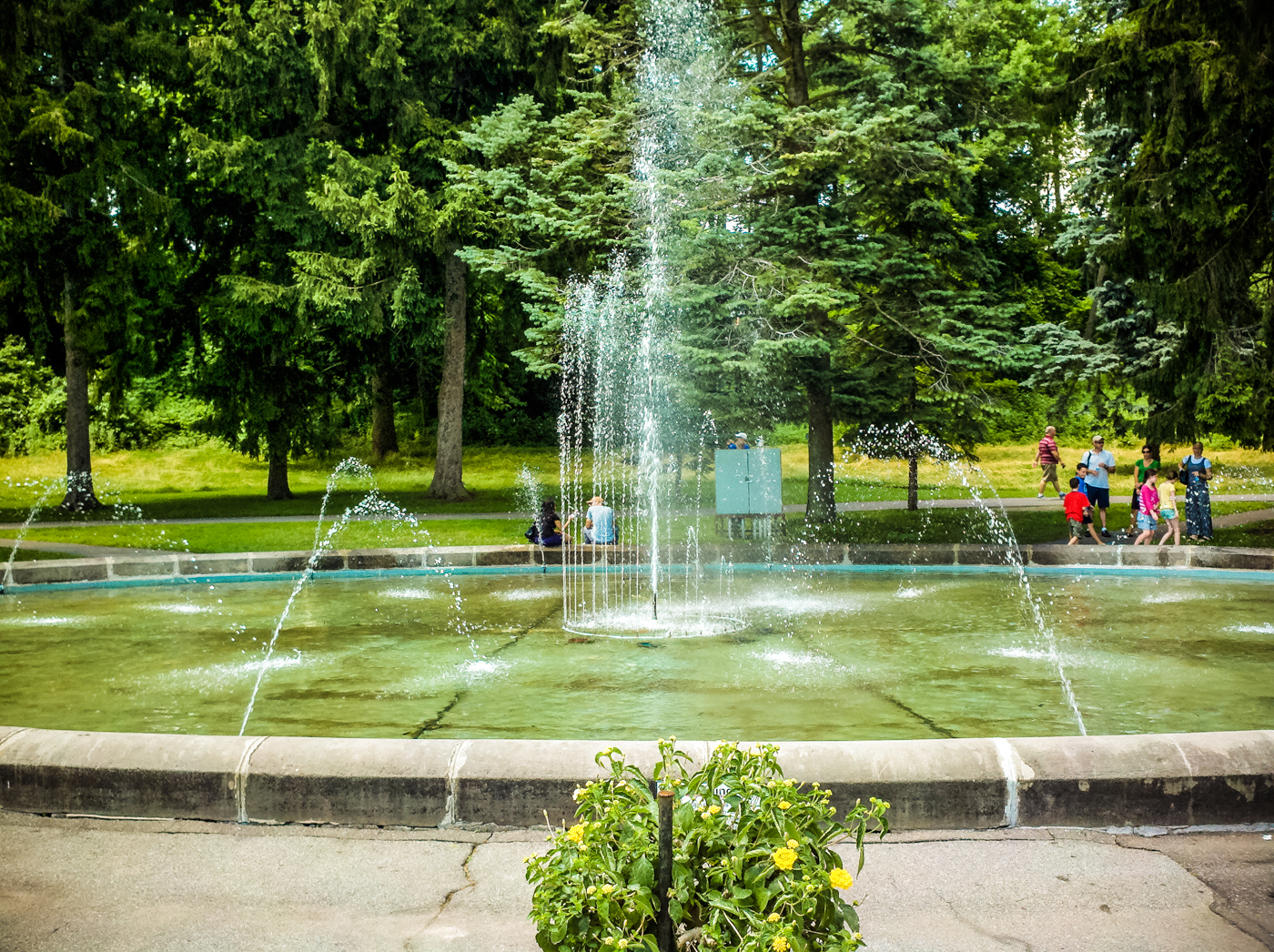
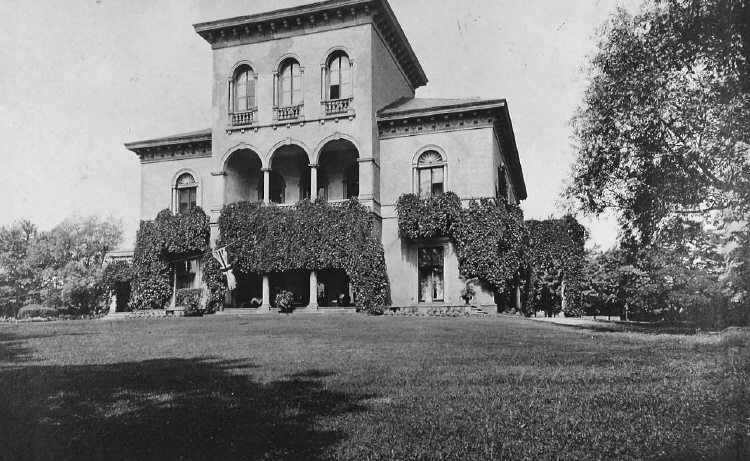
Samuel Zimmerman was one of the ambitious entrepreneurs who helped shape nineteenth-century Niagara. A contractor involved in major transportation projects, including railway and canal work, he acquired land overlooking the river and developed an estate known as Clifton Place. His plans linked the area’s scenic setting with the growth of a fashionable destination for visitors.
Zimmerman died in a railway accident in 1857 before fully realizing his plans. The fountain associated with his estate remains a reminder of that earlier landscape and of the origins of the Clifton Hill name. Look for it in Queen Victoria Park below Clifton Hill, where the grounds preserve traces of the district’s history beyond today’s attractions.
Visiting These Historic Sites
These landmarks are concentrated along the Canadian riverfront, but they are not all accessible in the same way. The Tesla Monument and Rambler’s Rest are park stops; the Iron Scow is viewed from a safe distance, never from the river; and Toronto Power is closed during redevelopment, with temporary path detours nearby. Zimmerman Fountain can be incorporated into a walk through Queen Victoria Park. For a longer outing, pair these stops with Niagara Parks Power Station, the restored generating station that now welcomes visitors. Allow time for the views and follow posted access signs.
FAQ: Niagara Falls Historical Landmarks
The Iron Scow is a dumping barge that became stranded above the Horseshoe Falls in 1918. Its two crewmen were rescued the following day. The wreck shifted in 2019, broke apart further in 2022 and moved again in November 2025; remnants remain visible in the upper river.
Can you go inside the Toronto Power Generating Station?
No. The historic power station remains closed while a major redevelopment takes place. Construction preparation and temporary pathway detours affect the surrounding area. Consult Niagara Parks for current access information.
Where exactly is the Nikola Tesla statue?
The Canadian Tesla Monument is in Queen Victoria Park, across from the Horseshoe Falls, near the riverfront parkway. It was unveiled in 2006.
Is Rambler’s Rest still open to the public?
Rambler’s Rest is a historic outdoor stone pavilion south of Grand View Marketplace, between the Canadian Horseshoe Falls and the American Bridal Veil Falls. It is a park landmark, though scheduled events or local restrictions may affect access.
What is the Zimmerman Fountain, and where is it?
Zimmerman Fountain is associated with nineteenth-century entrepreneur Samuel Zimmerman’s Clifton Place estate. It is located in Queen Victoria Park below the Clifton Hill area.
A Living Legacy
Niagara Falls is known for the natural spectacle, but the surrounding landmarks show how people have responded to it: by building, experimenting, creating public spaces and sometimes surviving remarkable danger. From the shifting remnants of the Iron Scow to the restoration of Toronto Power, these sites connect the Niagara you see today with the stories that came before it.