


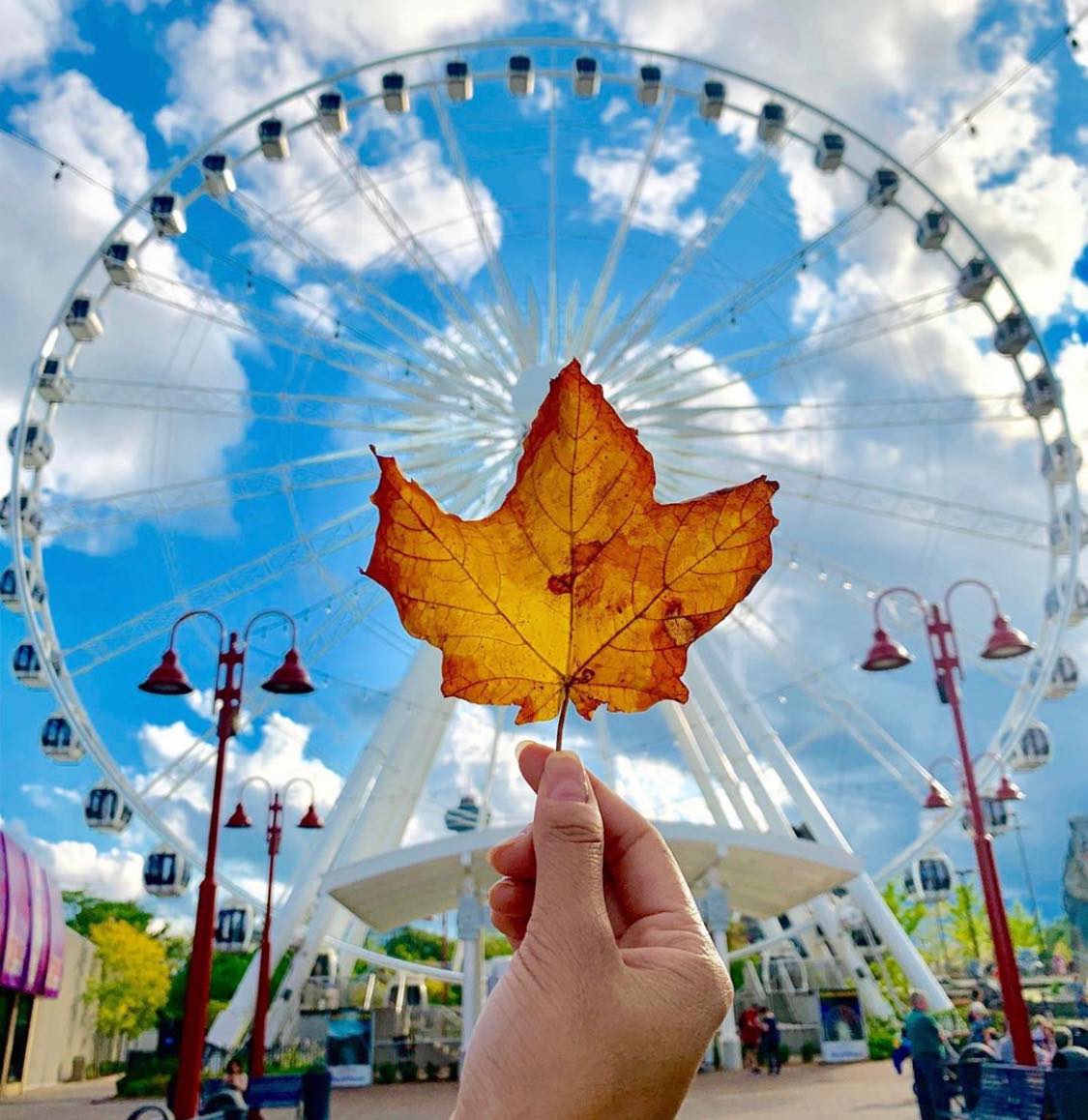

Few places show the scale of autumn in Niagara Falls quite like the Niagara SkyWheel. From 175 feet above Clifton Hill, the view opens across the Horseshoe Falls, American Falls, Niagara River, Queen Victoria Park and the wooded edges of the Niagara Gorge. In fall, those familiar landmarks sit within a much broader landscape of changing reds, golds and oranges.
- Horseshoe Falls Surrounded by Early Fall Colour
- Autumn Colour at the Base of the SkyWheel
- Looking North Along the Niagara River
- The Niagara SkyWheel Framed by Yellow Leaves
- Morning Light Over Niagara Falls
- Queen Victoria Park in Fall
- Looking Back at the SkyWheel from Queen Victoria Park
- American Falls and the Niagara Gorge
- Goat Island in Autumn
- Mist, Clouds and Fall Colour
- When Is the Best Time to See Fall Views from the Niagara SkyWheel?
- Frequently Asked Questions about the Niagara SkyWheel in Fall
- A Different Way to See Fall in Niagara Falls
The perspective changes as the wheel turns. One moment the Horseshoe Falls fills the view; a few minutes later, the gondola is looking north along the Niagara River or down across the trees and gardens between Clifton Hill and the Falls.
These ten images capture some of the best fall views from the Niagara SkyWheel — and show what to look for when planning an autumn ride.

Niagara SkyWheel Tickets: Adults: $15 + HST | Children: $7 + HST
Horseshoe Falls Surrounded by Early Fall Colour
Early in the season, the colour around the Horseshoe Falls arrives gradually. Patches of yellow and orange appear among trees that are still green, creating a layered view rather than a solid wall of autumn colour.
From the SkyWheel, the height makes that transition much easier to see. The Horseshoe Falls anchors the scene while Queen Victoria Park, the upper Niagara River and the surrounding tree canopy reveal how far the season has progressed.
Fall colour varies with weather and location, so the landscape can look noticeably different from one week to the next.
Autumn Colour at the Base of the SkyWheel
Not every memorable fall view requires looking toward the Falls.
Trees immediately around the Niagara SkyWheel can become some of the brightest points in the landscape, particularly when orange and yellow leaves are set against the wheel’s white structure. From ground level, it creates one of Clifton Hill’s most recognizable autumn compositions.
It is also a reminder to look up before or after the ride. Some of the strongest seasonal photographs place the SkyWheel within the fall scenery rather than photographing the scenery from it.
Looking North Along the Niagara River
Turn away from the Horseshoe Falls and the landscape changes.
The Niagara River stretches north toward the Rainbow Bridge and Niagara Gorge, with wooded areas following both sides of the water. From the upper part of the SkyWheel’s rotation, the river becomes the centre of the scene and the autumn canopy provides its frame.
This wider perspective helps show something that is easy to miss at street level: Niagara Falls is surrounded by a long green corridor that takes on an entirely different character in autumn. Niagara Parks identifies the Niagara River corridor and Niagara Glen as particularly scenic places for viewing changing fall colour.
The Niagara SkyWheel Framed by Yellow Leaves
Some of the best fall photographs are taken from outside the attraction.
Yellow leaves create a natural frame around the SkyWheel while its height keeps the structure visible above the surrounding trees. A clear blue autumn sky makes the contrast even stronger.
For photographers walking between Clifton Hill and Queen Victoria Park, changing the angle by only a few steps can completely alter the relationship between the wheel, trees and skyline.
Morning Light Over Niagara Falls
Low morning light brings out details that can disappear under a bright midday sky. The Falls pick up warmer tones, mist becomes more visible and the river can take on deeper shades of blue and green.
This image also shows how effectively a SkyWheel gondola can frame the landscape. Instead of treating the gondola as something to photograph around, its windows become part of the composition.
Current public operating hours generally begin later in the morning, so visitors hoping for similar lighting should check the day’s SkyWheel schedule before planning a photography trip
Queen Victoria Park in Fall
Queen Victoria Park sits between Clifton Hill and the Horseshoe Falls, making it an important part of the SkyWheel view.
From above, individual gardens and pathways become part of a much larger canopy. Reds, yellows, bronze and lingering green overlap across the park rather than appearing as isolated trees.
The height of the SkyWheel is particularly useful here. At ground level, visitors walk beneath the foliage. From the gondola, the colour can be seen spreading across the landscape toward the Falls.
Looking Back at the SkyWheel from Queen Victoria Park
After seeing Queen Victoria Park from above, walk down toward the Falls and reverse the perspective.
From the park, autumn branches can frame the Niagara SkyWheel above Clifton Hill. The wheel remains visible from many points around the Falls area, but trees and gardens soften the urban background during fall.
This combination of parkland, observation wheel and Niagara skyline helps explain why the area offers so many different fall photo opportunities within a relatively compact walk.
American Falls and the Niagara Gorge
The American Falls provide one of the strongest contrasts in the autumn landscape.
White water drops into the Niagara Gorge while the wooded areas around the river shift toward orange, red and gold. The elevated SkyWheel view makes it possible to see the Falls as part of that broader landscape rather than only from directly across the river.
On a clear day, the distinction between the American Falls, surrounding islands, Niagara River and gorge becomes particularly sharp.
Goat Island in Autumn
Goat Island divides the American Falls from the Horseshoe Falls and adds another broad area of trees to the view across the river.
During autumn, those trees can become a patchwork of colour surrounded by moving water. Seen from above, the island helps give the Falls a sense of geography that is harder to understand from a single ground-level viewpoint.
It is one of those details that becomes much more obvious once the SkyWheel reaches the upper part of its rotation.
Mist, Clouds and Fall Colour
Not every good fall view requires a perfectly clear day.
Mist rising from the Falls can drift through the river valley while low clouds change the light across the landscape. Against autumn foliage, those conditions can produce a more dramatic scene than a cloudless afternoon.
The SkyWheel’s gondolas are fully enclosed and climate controlled, which makes cooler fall weather much easier to work around. A typical ride lasts roughly eight to twelve minutes, providing several changing perspectives as the wheel rotates.
When Is the Best Time to See Fall Views from the Niagara SkyWheel?
There is no single peak date that works every year. Temperature, rainfall and weather patterns affect how quickly individual trees change.
September can bring the first scattered colour, while October typically brings a much stronger autumn feel across the Niagara River corridor. Niagara Parks’ own fall programming and seasonal material highlight the changing colours along the Niagara River, Niagara Glen and surrounding parkland throughout the season.
Time of day matters too. Afternoon light brings out the colour in the trees, while the period approaching sunset can add warmer light to the Falls and river. Stay into the evening and the experience changes again: Niagara Falls is illuminated every night, with the lights currently beginning at 6:30 p.m. from September 20–30, 6:15 p.m. October 1–15 and 6 p.m. October 16–31.
For photography through the gondola windows, keep the camera or phone close to the glass and avoid using flash to reduce reflections. It is also worth spending the first rotation simply watching the view. The strongest compositions are often easier to spot once the relationship between the Falls, river and surrounding landscape becomes clear.
Frequently Asked Questions about the Niagara SkyWheel in Fall
The SkyWheel provides panoramic views of Niagara Falls framed by vibrant autumn foliage, all from the comfort of climate-controlled gondolas.
A typical ride lasts 8—12 minutes, offering several rotations so you can enjoy both wide panoramas and close-up views.
Yes. The gondolas are enclosed and climate-controlled, making it possible to enjoy the ride in sunshine, rain, or cooler fall temperatures.
Yes. The elevated view provides sweeping vistas of both the Horseshoe Falls on the Canadian side and the American Falls across the border.
Late afternoon offers golden light perfect for photography, while evenings provide dazzling views of the illuminated waterfalls. Early morning is ideal for quieter rides and sunrise vistas.
The SkyWheel is located on Clifton Hill, the entertainment district of Niagara Falls, within easy walking distance of hotels, restaurants, and attractions.
Yes. Tickets can be purchased online or on-site at the Clifton Hill Fun Center, with digital redemption available via smartphone.
Absolutely. Each gondola seats up to six people, making it an excellent choice for families and groups. Children of all ages can ride when accompanied by an adult.
Adult tickets are $15 + HST, and children’s tickets are $7 + HST. The attraction is open year-round.
Yes. Cameras and smartphones are encouraged, as the SkyWheel provides some of the most photogenic views of Niagara Falls in autumn.
A Different Way to See Fall in Niagara Falls
Autumn colour can be explored from the Niagara Parkway, Queen Victoria Park and trails throughout the Niagara River corridor. The Niagara SkyWheel adds something different: height.
From one gondola, visitors can see the Horseshoe Falls, American Falls, Niagara River, parkland and changing tree canopy as parts of the same landscape. The enclosed gondolas also make the view accessible when the temperature drops or the weather becomes less predictable.
That broader perspective is what makes a fall ride worthwhile. The Falls remain the landmark everyone comes to see, but in autumn, the landscape around them becomes part of the attraction too.