


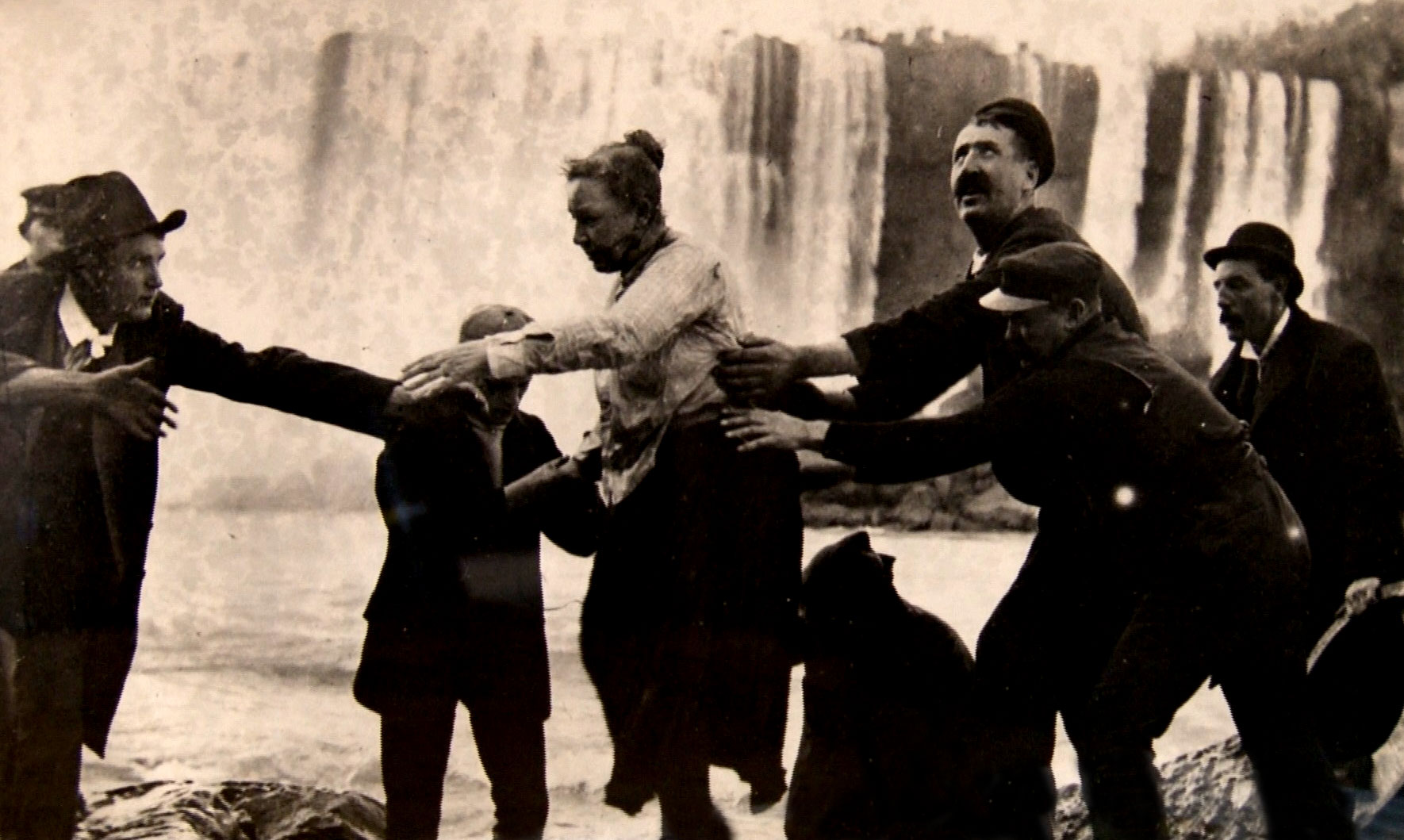

Imagine climbing into a wooden barrel, being sealed inside, and knowing that within minutes you’ll be swept over one of the most powerful waterfalls in the world. It sounds almost impossible. Yet in 1901, that’s exactly what Annie Edson Taylor did.
- The Unmatched Power of Niagara Falls
- The Survivors: A History of Niagara Falls Daredevils
- Annie Edson Taylor (October 24, 1901)
- Bobby Leach (July 25, 1911)
- Jean Lussier (July 4, 1928)
- Nathan Boya / William Fitzgerald (July 15, 1961)
- Karel Soucek (July 2, 1984)
- Steve Trotter (First Attempt – August 18, 1985)
- John “David” Munday (October 5, 1985 & September 27, 1993)
- Peter De Bernardi & Jeffery James Petkovich (September 28, 1989)
- Steve Trotter & Lori Martin (Second Attempt – June 18, 1995)
- Documented Fatalities: Those Who Didn’t Survive Niagara Falls
- Important Legal and Safety Context
- The Lasting Legacy of Niagara Falls Daredevils
For generations, Niagara Falls has drawn people willing to risk everything for a moment in history. Some were chasing fame or fortune. Others wanted to test an invention or accomplish something nobody had done before. A remarkable few survived. Others weren’t so fortunate.
Here are the stories of the Niagara Falls daredevils, from the first successful barrel plunge to the extraordinary attempts that followed.
The Unmatched Power of Niagara Falls
It’s one thing to admire Niagara Falls from a viewing platform. It’s quite another to imagine going over the edge. The Horseshoe Falls, where most of these stunts took place, drops approximately 167 feet (51 metres). Its curved crest stretches more than 2,700 feet (823 metres), with enormous volumes of water pouring over every second.
But the height is only part of the danger. Powerful currents, violent turbulence and churning water below the Falls make survival extraordinarily difficult. Even a specially designed barrel offers no guarantee of protection.
The Survivors: A History of Niagara Falls Daredevils
Annie Edson Taylor (October 24, 1901)
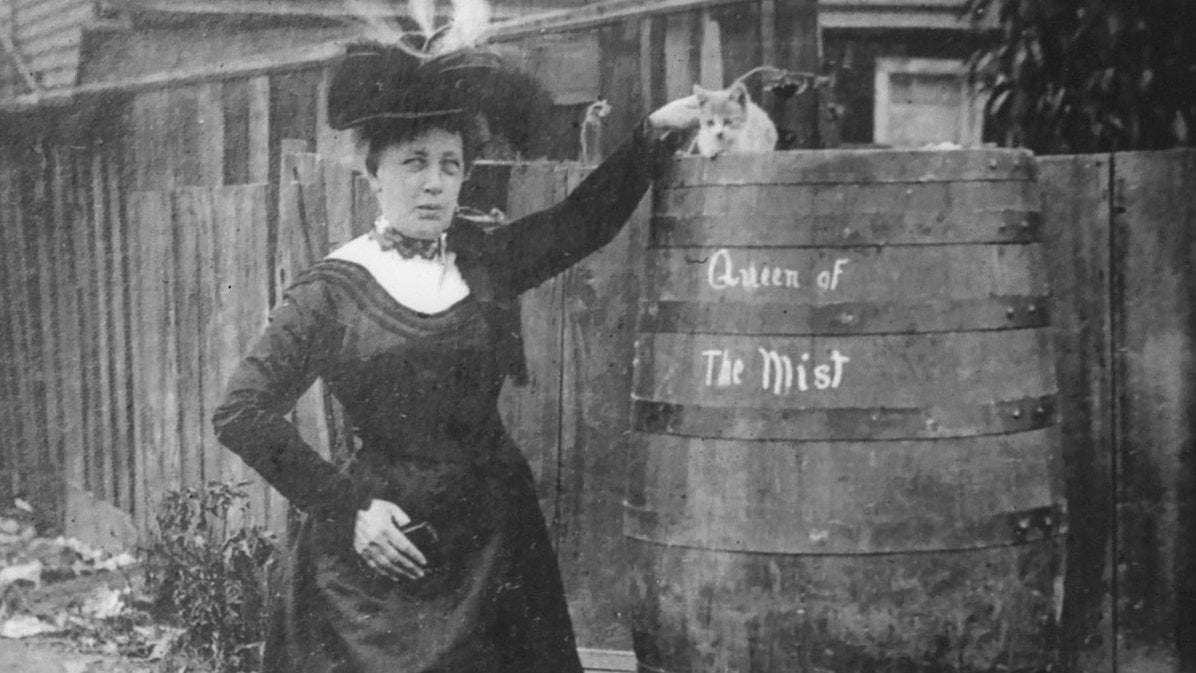
On October 24, 1901, a 63-year-old schoolteacher from Bay City, Michigan, made a decision that would change Niagara Falls history forever. Annie Edson Taylor was struggling financially and hoped an extraordinary stunt might bring her the recognition and money she needed.
She had a special barrel built from white oak and reinforced with iron. It stood roughly 4.5 feet tall, with padding and a leather harness to hold her in place. Before getting inside herself, she tested it by sending a cat named Iagara over the Falls. The cat survived.
On her 63rd birthday, Taylor climbed inside, was sealed into the barrel and set adrift on the Niagara River. Rescuers retrieved her after the plunge, alive and conscious, with only a small cut on her head. She became the first person on record to survive going over the Horseshoe Falls in a barrel.
Unfortunately, the fame never brought the financial security she’d imagined. She spent much of her later life in poverty and died in 1921. Taylor also made it clear she had no wish to repeat the experience, famously comparing a second plunge to walking into the mouth of a cannon.
Bobby Leach (July 25, 1911)
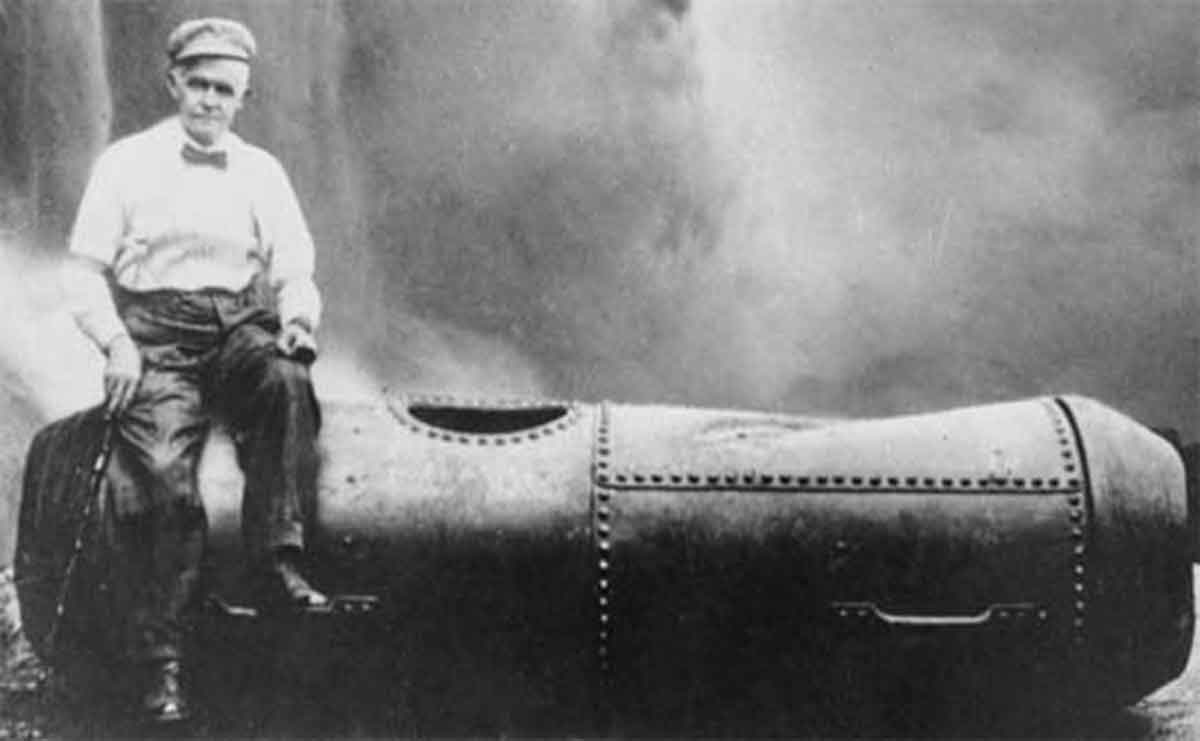
Ten years after Annie Taylor’s historic plunge, English daredevil Bobby Leach decided he could do the same. A former circus performer and experienced swimmer, Leach knew how to put on a show. But Niagara Falls was a different kind of challenge.
He built a heavily riveted steel barrel, a far cry from Taylor’s padded wooden vessel. On July 25, 1911, he went over the Horseshoe Falls and survived, but the ride left him with serious injuries, including broken kneecaps and a fractured jaw. He spent months recovering in hospital.
Leach later toured with stories of his escape. Then came one of the strangest twists in daredevil history: in 1926, he reportedly slipped on an orange peel while travelling in New Zealand. Gangrene developed after the injury, and he died following an amputation. The man who survived Niagara Falls was ultimately brought down by a much more ordinary accident.
Jean Lussier (July 4, 1928)
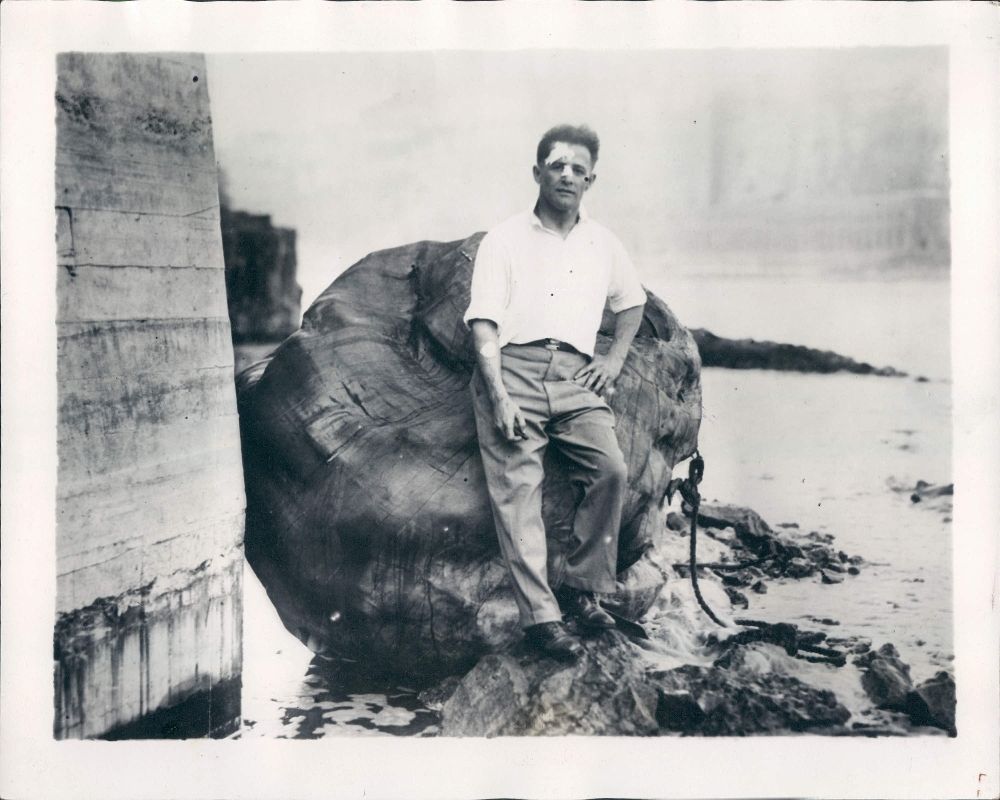
By the 1920s, several would-be daredevils had already died attempting the Falls. French-Canadian machinist Jean Lussier thought he had a better idea: instead of a barrel, he’d use a giant ball.
His six-foot spherical craft had a steel framework, thick rubber and 32 inner tubes for cushioning. He also included oxygen and instruments in case the vessel became trapped. It was an unusual design, but carefully considered.
On July 4, 1928, Lussier went over the Horseshoe Falls and emerged with only a minor cut on his forehead. Afterward, he reportedly sold pieces of the inner tubes as souvenirs. Unlike many who tried their luck at Niagara, he lived a long life, dying in 1971 at age 80.
Nathan Boya / William Fitzgerald (July 15, 1961)

More than three decades later, Nathan Boya, using the name William Fitzgerald, entered the Niagara River inside a homemade sphere he called the Plunge-O-Sphere. The 35-year-old New Yorker had built a 1,250-pound craft around a steel framework and rubber shell.
His reasons were surprisingly personal. Boya later said he felt guilty about ending an engagement; the couple had once planned to honeymoon at Niagara Falls. Whatever his motivation, the risk was enormous.
On July 15, 1961, Boya survived the plunge with bruises to his back. The Maid of the Mist helped recover his sphere, but his story didn’t end with the rescue. Following a crackdown on unauthorized stunts after the death of William ‘Red’ Hill Jr., Boya was arrested and fined $113.60 for stunting without a permit.
Karel Soucek (July 2, 1984)

Karel Soucek arrived at Niagara Falls with confidence and a barrel carrying a bold message: ‘Last of the Niagara Daredevils.’ The 37-year-old stuntman from Hamilton, Ontario, built a red-and-white capsule from aluminum, steel and plastic, with a heavy weight intended to help control its orientation in the water.
On July 2, 1984, Soucek went over the Horseshoe Falls and survived with only a cut on his forehead. He was fined $500, and authorities confiscated his barrel.
Less than seven months later, on January 20, 1985, he attempted another barrel stunt at the Houston Astrodome. This time he was to drop from the stadium roof into a water tank. The stunt went terribly wrong, and Soucek suffered fatal injuries. Despite the words painted on his Niagara barrel, he certainly wasn’t the last daredevil.
Steve Trotter (First Attempt – August 18, 1985)

At just 22, Steve Trotter became one of the youngest people to deliberately go over the Horseshoe Falls and survive. His homemade craft, nicknamed the Rig, combined two industrial pickle barrels with fiberglass, balsa wood and truck tire inner tubes for cushioning.
Inside, Trotter had a racing harness, oxygen tanks and a two-way radio. On August 18, 1985, he took the plunge, emerged unharmed, and was picked up by the Maid of the Mist crew.
His successful stunt brought plenty of attention, along with a $500 fine. For most people, one trip over Niagara Falls would be enough for a lifetime. Ten years later, Trotter would return.
John “David” Munday (October 5, 1985 & September 27, 1993)

David Munday, a skydiving instructor from Milton, Ontario, saw his Niagara Falls attempts as challenges of preparation and engineering. For his first plunge in 1985, he built a capsule from a modified steel boiler tank and named it the Jet Stream.
He survived his first trip over the Horseshoe Falls with bruises. Eight years later, in 1993, he returned and survived again, becoming the first person to deliberately go over the Falls twice and survive both attempts.
By then, authorities were taking a firmer stance against copycat stunts. Munday’s second attempt reportedly resulted in a fine of roughly $12,000. He credited careful planning and the vessel’s design for his success, although no amount of preparation could remove the danger.
Peter De Bernardi & Jeffery James Petkovich (September 28, 1989)

Most Niagara Falls daredevils attempted their stunts alone. On September 28, 1989, Peter De Bernardi of Niagara Falls, Ontario, and Jeffery James Petkovich, a Michigan university student, decided to make history together.
They climbed into a steel barrel about 12 feet long and weighing roughly 3,000 pounds. The two were positioned head-to-head, secured by harnesses and equipped with oxygen. Their craft carried an anti-drug message, which the pair said reflected the purpose of their stunt.
Both survived the plunge with minor injuries, becoming the first duo to survive the Horseshoe Falls in one vessel. They were arrested afterward and each fined $1,500. The publicity added to concerns about copycat attempts and the risks to rescue crews.
Steve Trotter & Lori Martin (Second Attempt – June 18, 1995)

Steve Trotter returned to Niagara Falls in June 1995, a decade after his first successful plunge. This time, 29-year-old Lori Martin joined him inside a 12-foot barrel made from welded water heaters, reinforced with Kevlar and thick Styrofoam.
The pair survived the drop on June 18, but the most frightening part of their ordeal wasn’t over. Their barrel became lodged in a rocky crevice in the turbulent water below the Falls.
Niagara Parks Police and Niagara Falls firefighters helped carry out a difficult rescue. Both escaped with minor injuries and were arrested afterward. The barrel remained in the river for more than a week before it could be removed.
Trotter had now survived the Horseshoe Falls twice. For the emergency crews called in to help, however, the incident was another reminder of how an unauthorized stunt can put many lives at risk.
Documented Fatalities: Those Who Didn’t Survive Niagara Falls
Not every daredevil who entered the Niagara River made it out alive. Behind the famous survival stories are several tragic attempts that show just how unforgiving the Falls can be.
- Charles Stephens (July 11, 1920): Stephens died attempting the plunge in a barrel. Only an arm remained attached to the safety harness.
- George Stathakis (July 4, 1930): His barrel became trapped after the plunge, and he died inside. His pet turtle survived.
- William “Red” Hill Jr. (August 5, 1951): Hill died when his homemade craft, known as The Thing, broke apart.
- Jesse Sharp (June 5, 1990): Sharp attempted to go over the Falls in a kayak without a life jacket. His body was never recovered.
- Robert Overacker (October 1, 1995): Overacker rode a jet ski over the Falls, but his parachute system failed to work as intended. He died in the attempt.
- Kirk Jones (April 19, 2017): After surviving an unprotected plunge in 2003, Jones returned in an inflatable ball and did not survive.
These stories are part of Niagara Falls history, but they also put the celebrated escapes into perspective. No barrel, ball or elaborate invention could truly control the power of the river.
Important Legal and Safety Context
Unauthorized stunts at Niagara Falls are illegal. The Niagara Parks Act and related rules prohibit dangerous stunting activities without appropriate authorization. Violations can bring substantial fines and other legal consequences.
Beyond the obvious danger to the person making the attempt, these incidents also put emergency crews and rescuers at risk. Today, visitors can experience Niagara’s power safely from designated viewing areas and attractions.
The Lasting Legacy of Niagara Falls Daredevils
More than a century after Annie Edson Taylor climbed into her wooden barrel, the Niagara Falls daredevils still fascinate visitors. A schoolteacher hoping to escape poverty, a giant rubber ball filled with inner tubes, and two people squeezed into one barrel: their stories sound almost unbelievable.
Yet behind the extraordinary headlines were real people, each with their own motivations and consequences. Their adventures are woven into Niagara Falls history alongside the famous tightrope walkers and generations of visitors drawn to the Niagara River.
Stand near the Horseshoe Falls today, with the roar of the water and mist rising from the gorge, and it’s hard not to wonder what those daredevils were thinking as they approached the brink. Thankfully, the rest of us can enjoy the spectacle with our feet firmly on solid ground.