


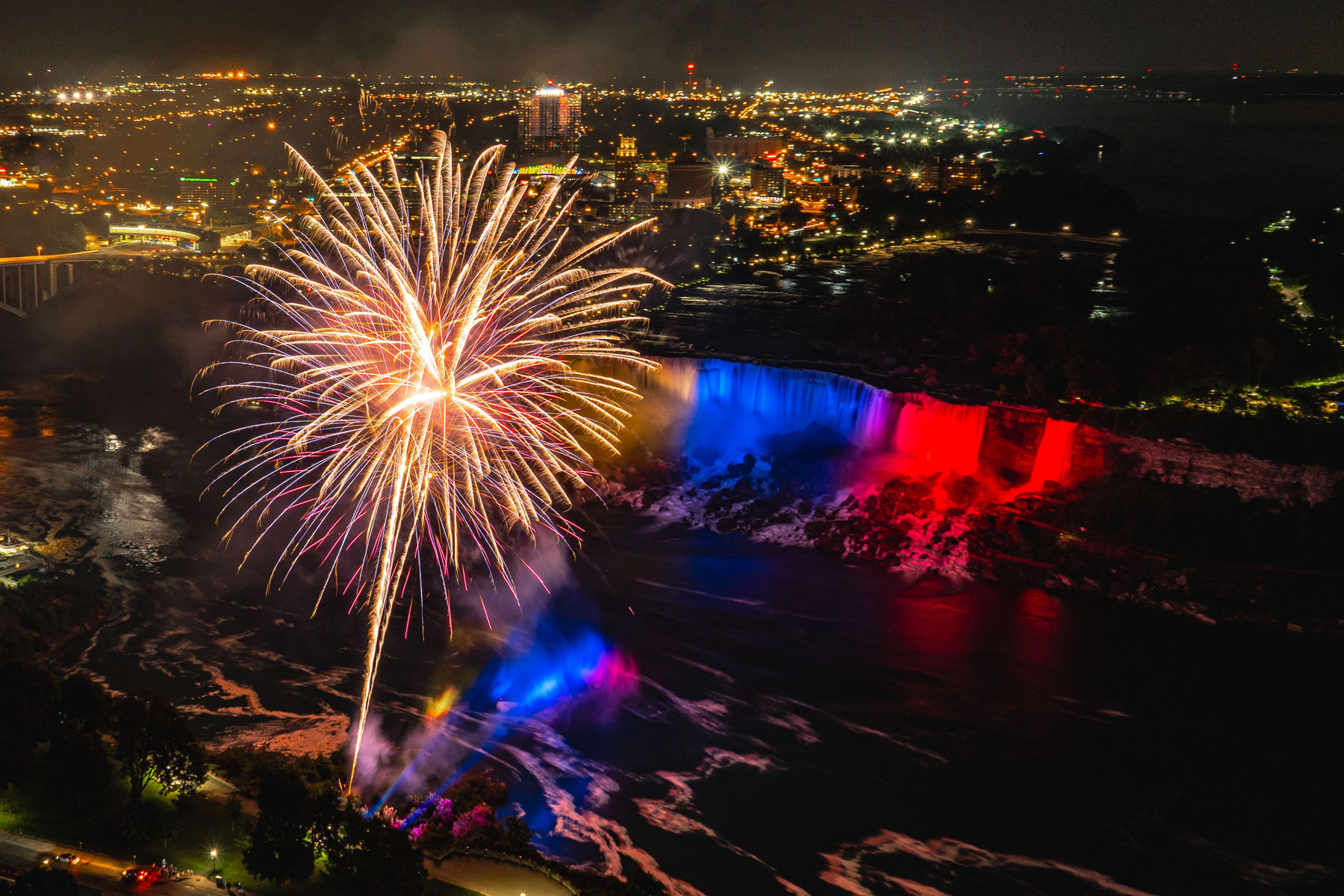

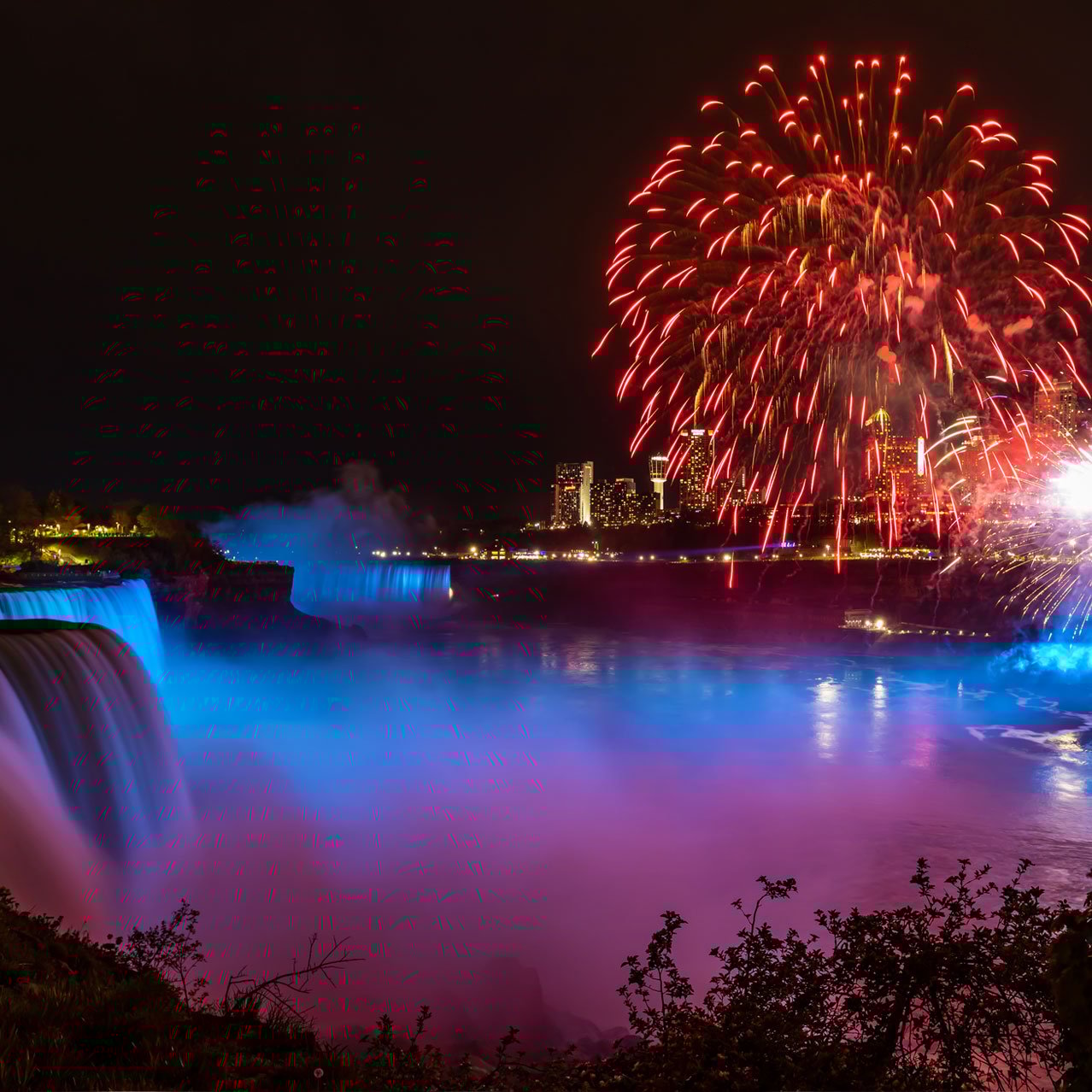
Few places give photographers a setting as dramatic as Niagara Falls after dark. The waterfalls glow beneath changing illumination colours, mist drifts through the gorge, and fireworks burst above the river—often reflecting across the water below.
- Queen Victoria Park: The Best All-Around Location
- Oakes Garden Theatre: The Best Elevated Wide-Angle View
- The Niagara Parkway Promenade: The Best Place to Experiment
- Niagara SkyWheel: The Best Moving Aerial Perspective
- Skylon Tower: The Best Long-Distance Skyline Shot
- Niagara City Cruises: The Most Immersive View
- Rainbow Bridge: The Best International Perspective
- Clifton Hill After Dark: The Best Creative Foreground
- Camera Settings for Niagara Falls Fireworks
- Capture the Scene Before the Fireworks
- Protect the Lens From Niagara Mist
- How to Photograph the Fireworks With a Smartphone
- Plan the Photograph Before 10 p.m.
- A Simple Clifton Hill Photography Route
- Final Word: Find a View That Tells a Story
The challenge is fitting all of that movement, light and scale into one photograph.
For the 2026 season, fireworks are scheduled nightly at 10 p.m. from May 15 through October 12, weather permitting. Regular displays last approximately five minutes, with longer shows planned for select holidays. The fireworks are launched from within the Niagara Gorge between the American Falls and Canadian Horseshoe Falls, making the Canadian side’s parks, overlooks and elevated attractions especially useful for photography.
This guide covers the best places to photograph the Niagara Falls fireworks, what kind of image each location produces and how to prepare before the first burst reaches the sky.
Queen Victoria Park: The Best All-Around Location
For the classic Niagara Falls fireworks photograph, begin in Queen Victoria Park.
The park extends along the Niagara Parkway opposite the American Falls and toward the Horseshoe Falls. Its open lawns and long parapet wall provide room to test several compositions before choosing a final position.
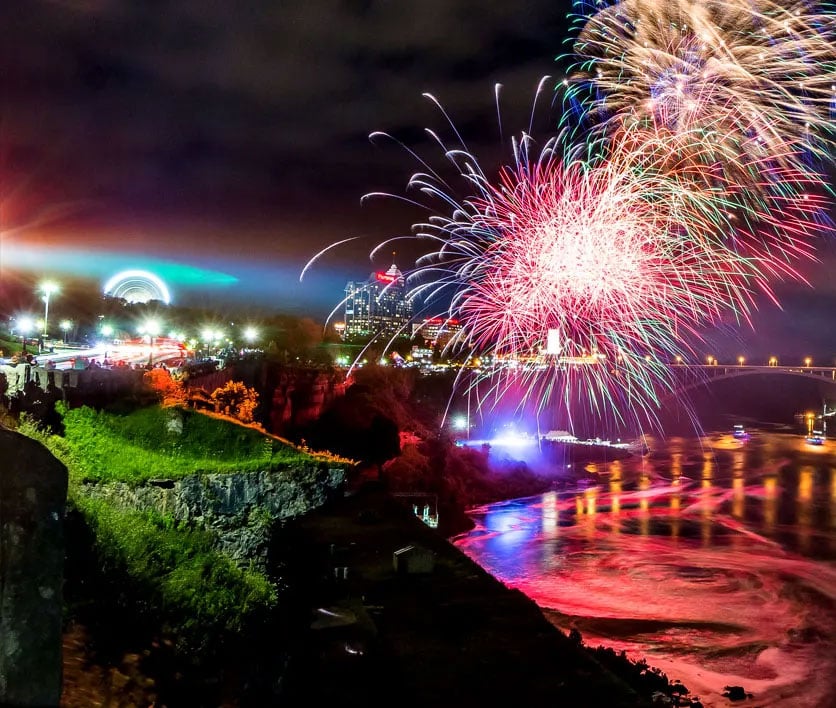
From here, photographers can combine:
- Fireworks above the Niagara Gorge
- The illuminated American Falls
- Mist rising from the Horseshoe Falls
- Reflections across the Niagara River
- The Skylon Tower and Fallsview skyline
Niagara Parks identifies Queen Victoria Park as the primary viewing area for the fireworks, particularly the main lawn and the parapet overlooking the river.
Best photography approach
Arrive at least 45 minutes before showtime and walk the parapet before setting up. Trees, lamp posts and spectators can change the composition considerably over a relatively short distance.
A position closer to Queen Victoria Place generally produces a broad view of the gorge. Moving north brings the American Falls more prominently into the frame, while moving south creates greater separation between the waterfalls and the fireworks.
Best for: First-time visitors, tripod photography and classic Falls compositions.
Oakes Garden Theatre: The Best Elevated Wide-Angle View
Located at the foot of Clifton Hill, Oakes Garden Theatre offers one of the most layered nighttime views in Niagara Falls.
Instead of standing immediately beside the river, photographers can use the garden’s elevation to place trees, stonework, the Niagara Parkway, the American Falls and the distant Horseshoe Falls into the same scene.
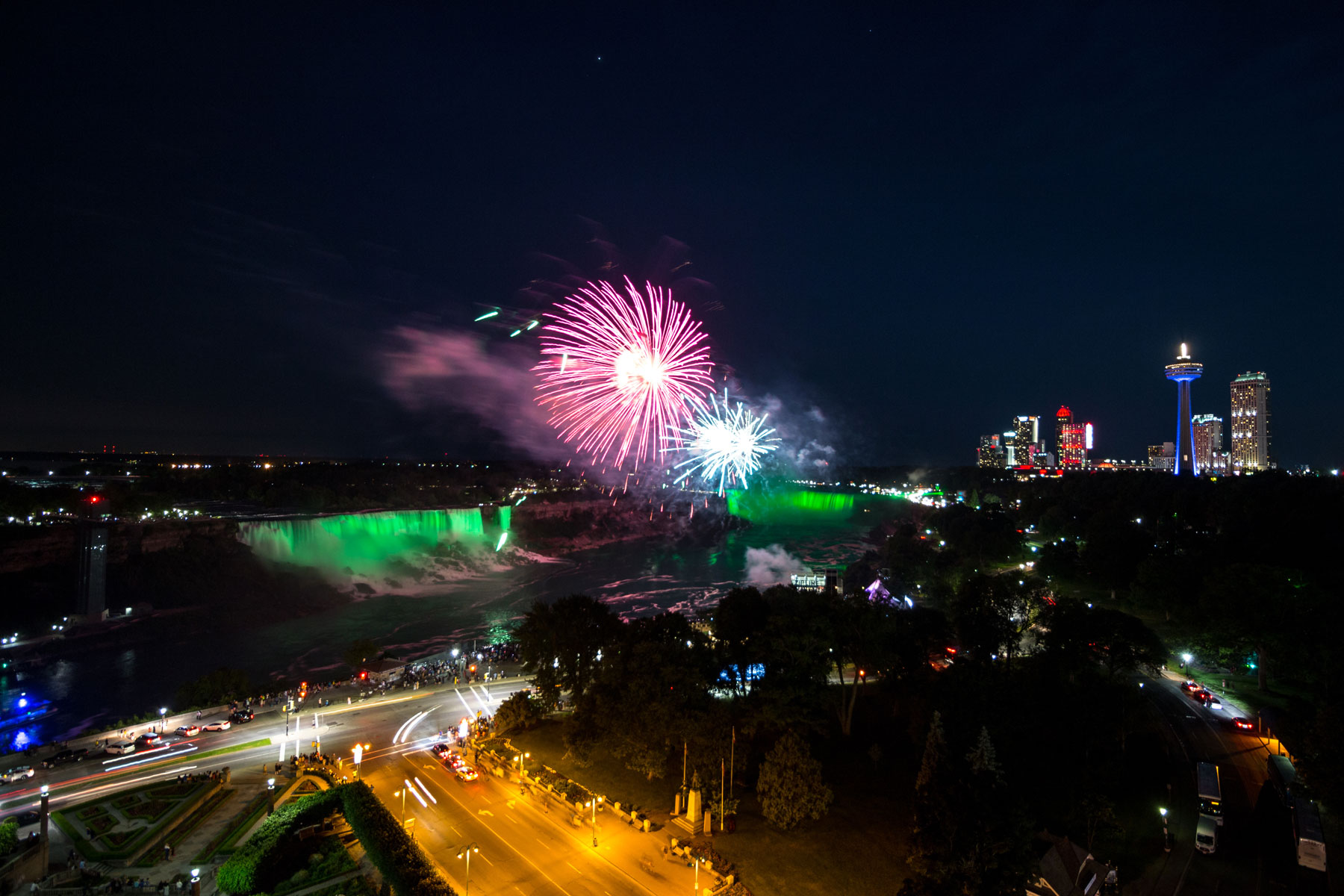
The location works particularly well when there is still a little blue in the sky. Arriving before sunset provides time to photograph the gardens during blue hour before preparing for the 10 p.m. display.
The upper sections of the garden are generally better for wide compositions. Lower viewpoints may introduce more trees and landscaping, which can either frame the scene beautifully or obstruct it.
Local advantage
Oakes Garden Theatre sits directly between Clifton Hill and Queen Victoria Park. A photographer can scout the garden first and still walk to the Niagara Parkway if the preferred view is unavailable.
Best for: Wide-angle landscapes, environmental portraits and photos that show more of the surrounding destination.
The Niagara Parkway Promenade: The Best Place to Experiment
The Niagara Parkway between the foot of Clifton Hill and Table Rock is not one single viewpoint. It is a sequence of subtly different perspectives.
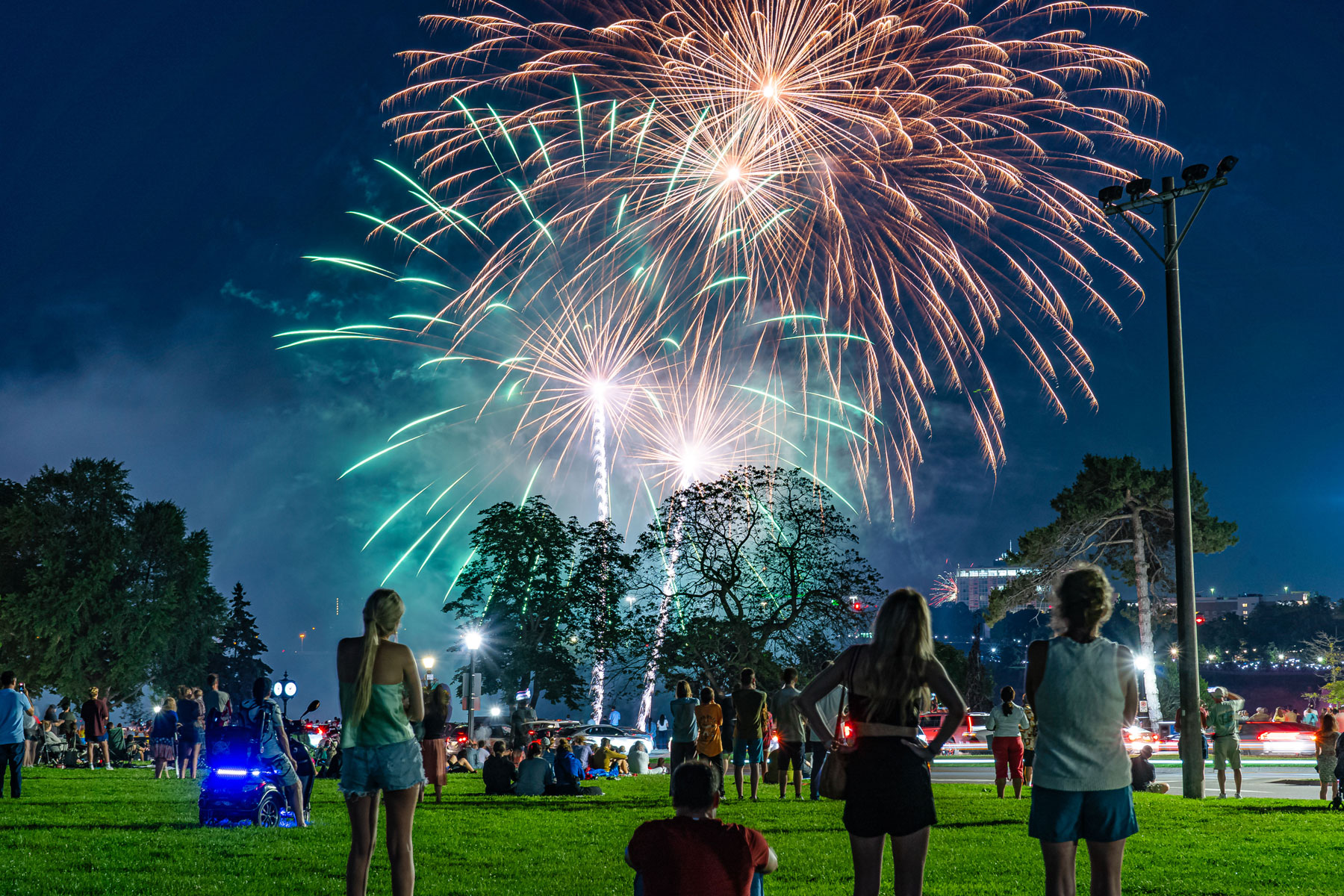
That makes it one of the best areas for photographers who want something less predictable than the standard postcard composition.
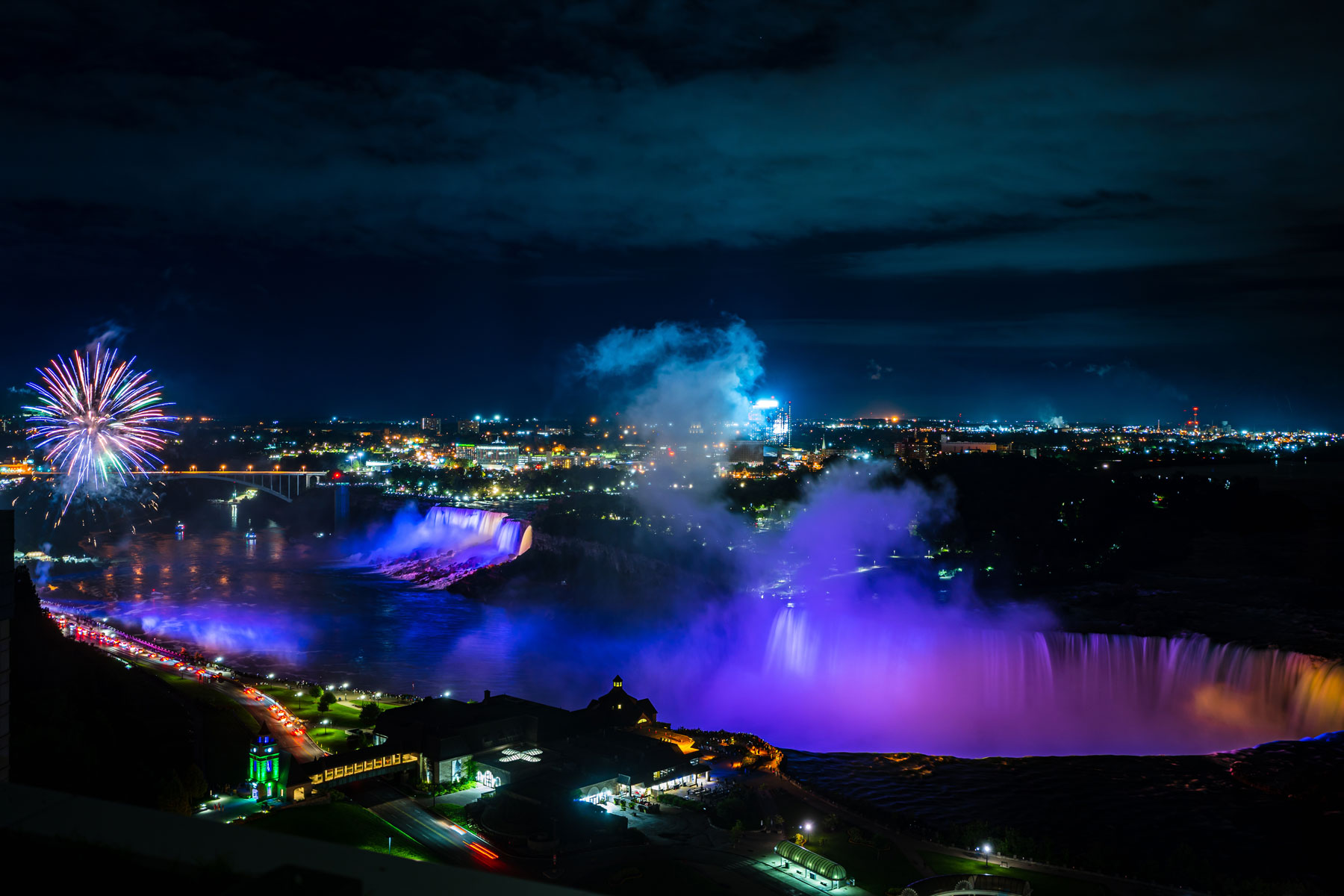
Near the American Falls, the fireworks appear larger in relation to the waterfall. Farther south, the scene opens to include more of the Horseshoe Falls, illuminated mist and the Fallsview skyline.
Look for:
- Curves in the parapet leading toward the Falls
- Reflections on wet pavement after rain
- Openings between trees
- Benches or silhouettes that provide foreground scale
- Coloured light moving through the mist
The illumination begins well before the fireworks, allowing photographers to establish exposure and focus while the landscape is still relatively calm. Seasonal illumination times change throughout the year, but the Falls remain lit through the late evening during the summer fireworks season.
Best for: Long-exposure photography, reflections and photographers willing to scout several compositions.
Niagara SkyWheel: The Best Moving Aerial Perspective
The Niagara SkyWheel provides a completely different way to photograph the fireworks: from inside an enclosed gondola rotating above Clifton Hill.
From the upper portion of the ride, the view can include the Falls, fireworks, Casino Niagara, the Niagara River and the surrounding city lights. The result is less like a conventional landscape and more like an aerial cityscape.
There are, however, a few technical limitations. The gondola continues moving, windows can create reflections, and there is no opportunity to use a full-sized tripod.
How to get a better SkyWheel photo
Turn off the flash and hold the camera close to the glass without touching it. Use a faster shutter speed than you would from the ground, increase the ISO only as much as necessary and watch for reflections from screens or bright clothing inside the gondola.
Timing matters. Join the queue early enough to account for evening crowds, but remember that boarding too soon could place you back on the ground before the fireworks begin. The original article recommended lining up approximately 20 to 30 minutes before the show; on particularly busy weekends, additional time may be sensible.
Best for: Smartphone photography, cityscapes and distinctive elevated views.
Skylon Tower: The Best Long-Distance Skyline Shot
The Skylon Tower’s observation level provides a sweeping view across the entire tourism district.
From this height, photographers can separate the fireworks from the surrounding buildings and show how the Niagara River, waterfalls and city fit together. A moderate telephoto lens is particularly effective because the fireworks can appear comparatively small in a very wide photograph.
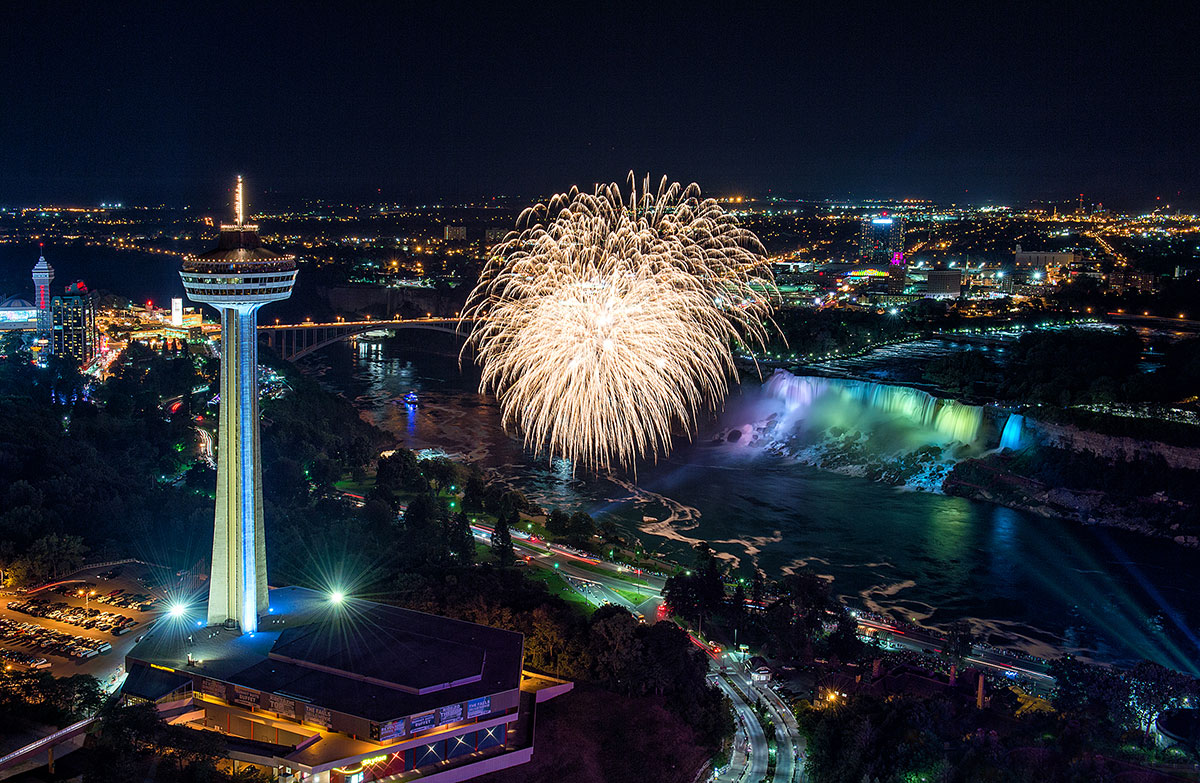
The primary challenge is shooting through glass. Interior lights, fingerprints and clothing can all create reflections.
Hold the lens close to the window, use a rubber lens hood when possible and avoid wearing bright clothing that may reflect into the photograph. Flash should remain off.
Because the tower is farther from the launch area than Queen Victoria Park, this location is better for compressed skyline photographs than close, detailed images of individual fireworks.
Best for: Telephoto images, skyline photography and broad aerial perspectives.
Niagara City Cruises: The Most Immersive View
A Falls Fireworks City Cruise places photographers directly on the Niagara River beneath the illuminated waterfalls and nighttime sky.
The approximately 40-minute experience travels past the American and Bridal Veil Falls before approaching the Canadian Horseshoe Falls. Fireworks sailings operate on select evenings during the season and provide panoramic views from the water.
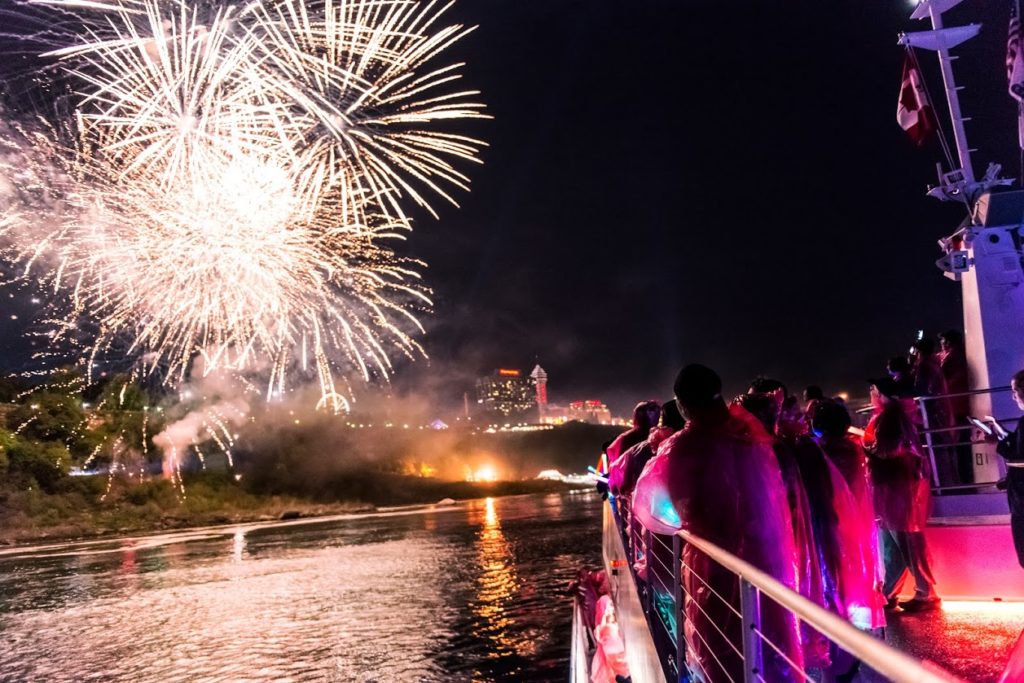
This is one of the most memorable places to experience the display, but it is not the easiest place to create a technically perfect long exposure. The boat moves, other passengers move and mist can quickly collect on a lens.
Use image stabilization and a relatively fast shutter speed. Rather than attempting five-second exposures, concentrate on capturing individual bursts above the Falls, silhouettes of passengers and colour reflected on the river.
Keep a clean microfibre cloth accessible and protect equipment from spray when it is not being used.
Best for: Immersive travel photography, people-focused images and reflections from the river.
Rainbow Bridge: The Best International Perspective
The pedestrian walkway across Rainbow Bridge creates an unusually open view along the Niagara River. From the bridge, photographers can capture both the Canadian and American sides while looking directly into the gorge.
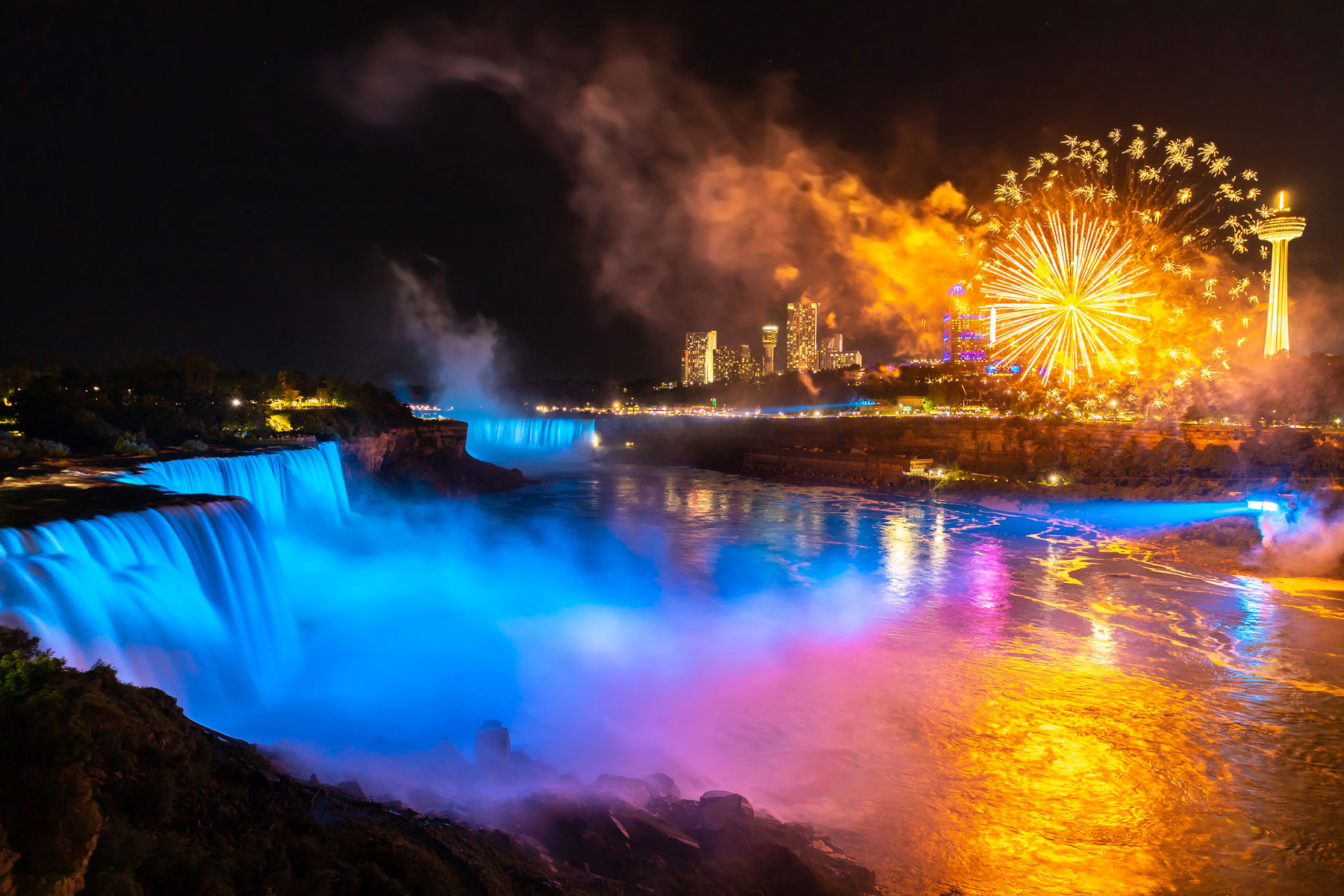
This should not be treated as a casual viewing platform, however. Rainbow Bridge is an active international border crossing. Pedestrians must carry the appropriate identification for entering both countries, pass through border inspection and pay the pedestrian toll when travelling toward the United States. The bridge commission currently lists a cash payment of C$8.50 CAD per person.
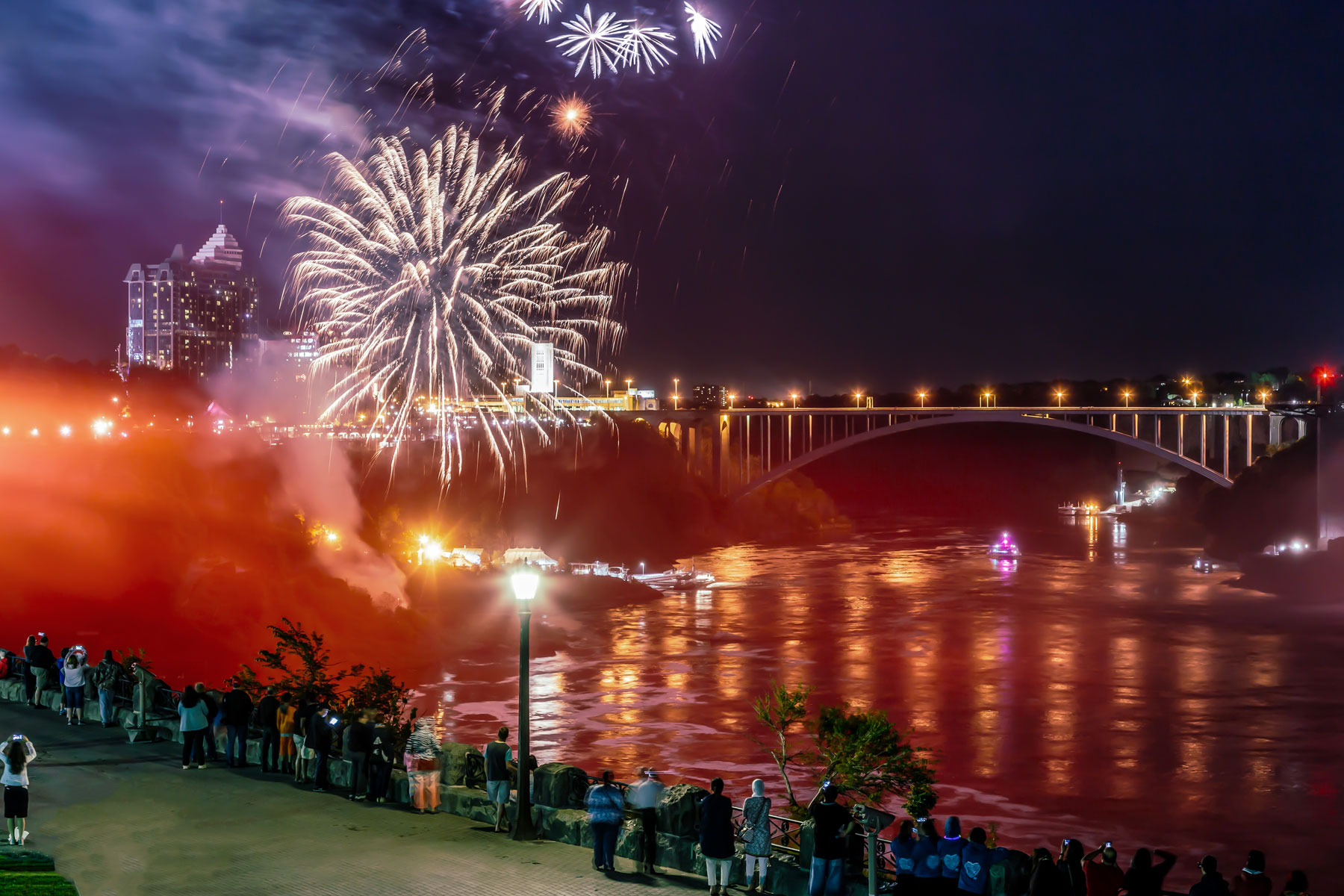
Space is also limited, and equipment should never obstruct the walkway. A small camera or compact support is considerably more practical than a large tripod.
Best for: Experienced travellers who are already prepared to cross the international border.
Clifton Hill After Dark: The Best Creative Foreground
Not every fireworks photograph needs to place the waterfalls at the centre of the frame.
From parts of Clifton Hill, photographers can use the illuminated Niagara SkyWheel, attraction façades, neon signage or the erupting volcano at Dinosaur Adventure Golf as foreground elements. The fireworks appear farther away, but the resulting image tells a broader story about Niagara Falls after dark.
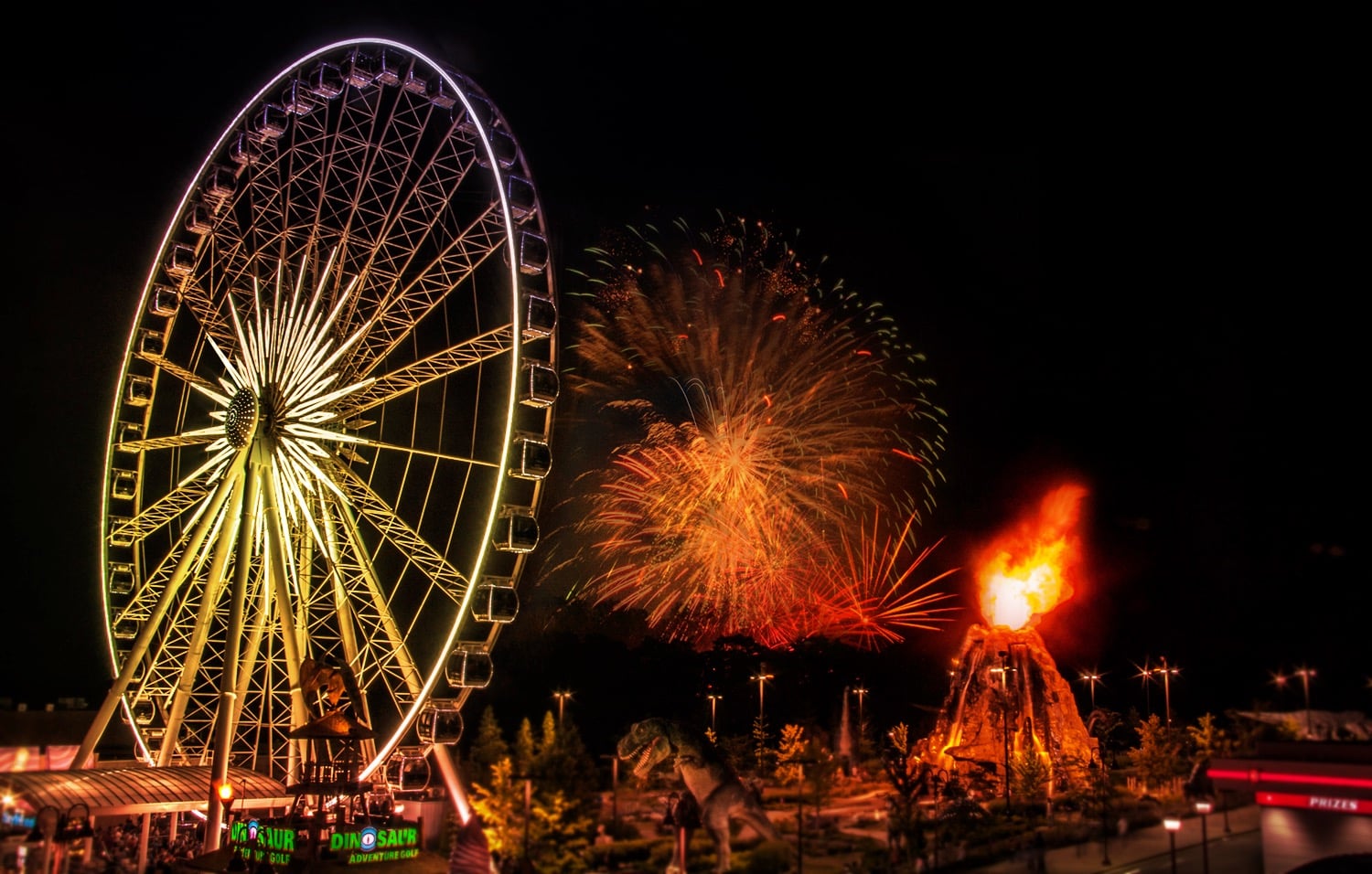
This approach works especially well for:
- Fireworks framed through the Niagara SkyWheel
- Families watching from an attraction
- Long exposures combining traffic and amusement lights
- Reflections after a summer rain
- Vertical photographs designed for social media
Because Clifton Hill remains active late into the evening, use a compact setup and avoid placing tripods in busy pedestrian areas.
The fireworks may be the smallest part of the composition—but the energy of the district becomes part of the photograph.
Best for: Social content, colourful cityscapes and photographs that combine the fireworks with Clifton Hill nightlife.
Camera Settings for Niagara Falls Fireworks
Fireworks are significantly brighter than the surrounding landscape. Automatic camera modes often overexpose the bursts while leaving the waterfalls and skyline poorly balanced.
A reliable starting point for a tripod-mounted camera is:
- ISO: 100 or 200
- Aperture: f/8 to f/11
- Shutter speed: Two to six seconds
- Focus: Manual, set using a distant illuminated object
- File type: RAW
- White balance: Daylight or approximately 4,000K
Take several test exposures of the illuminated Falls before 10 p.m. Once the fireworks begin, adjust the shutter speed according to the brightness and number of bursts.
Longer exposures create fuller trails but can quickly become cluttered. Two or three well-separated bursts usually produce a cleaner photograph than attempting to capture an entire sequence in one frame.
A remote shutter release is useful, but a two-second camera timer also reduces vibration.
Capture the Scene Before the Fireworks
The strongest photograph may require more than the fireworks themselves.
Before the show begins, capture a clean exposure of the waterfalls, skyline and river. The illuminated landscape often needs different exposure settings than the bright pyrotechnics.
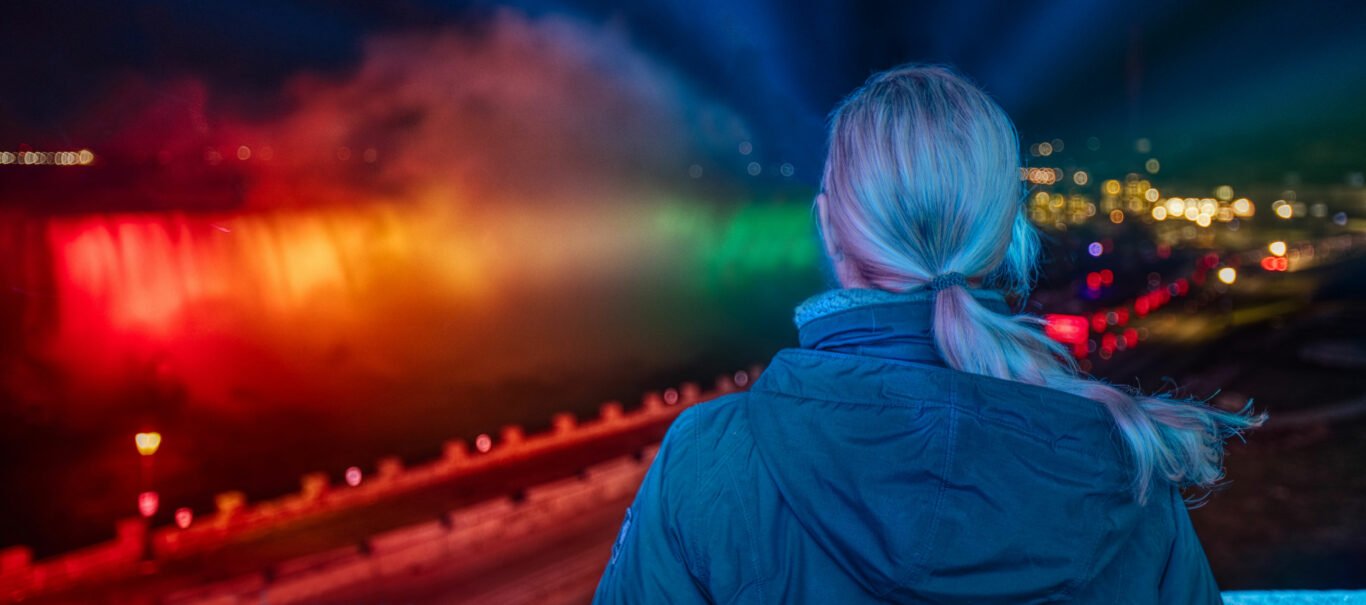
Photographers who later combine exposures should disclose significant composites when presenting the image as documentary or editorial photography.
Protect the Lens From Niagara Mist
Even when standing well back from the Horseshoe Falls, airborne mist can soften photographs and create flare around lights.
Bring a lens cloth, use a lens hood and check the front element frequently. On humid nights, allowing equipment to adjust gradually between air-conditioned interiors and outdoor heat can also reduce condensation.
How to Photograph the Fireworks With a Smartphone
Modern phones can produce excellent fireworks images, but fully automatic night modes may create overly bright skies or broken-looking trails.
For better results:
- Use the main 1x camera, which normally performs better in low light than the ultra-wide or digital zoom.
- Brace the phone against a railing or use a compact phone tripod.
- Tap the fireworks area and reduce the exposure until colour returns to the brightest bursts.
- Turn off the flash.
- Avoid heavy digital zoom; crop the image afterward instead.
- Use a manual or “Pro” mode when available and begin with a low ISO and a shutter speed between approximately one-quarter and one second.
For handheld photographs from the SkyWheel or Niagara City Cruises, prioritize a faster shutter speed over long trails. A sharp, shorter burst is preferable to a brighter but blurred photograph.
Plan the Photograph Before 10 p.m.
The regular display lasts only about five minutes, leaving little time to relocate or solve technical problems once it begins.
Arrive early enough to:
- Choose a composition
- Check for trees and light poles
- Set focus
- Test exposure on the illuminated Falls
- Clean the lens
- Confirm that batteries and memory cards are ready
Strong winds can cause a fireworks display to be cancelled for safety reasons. Niagara Parks recommends checking with staff, following its social channels or calling its information line for cancellation notices.
A Simple Clifton Hill Photography Route
For an easy evening itinerary, begin on Clifton Hill around sunset and photograph the district as its signs and attractions light up. Walk downhill to Oakes Garden Theatre during blue hour, then continue into Queen Victoria Park to select a fireworks position.
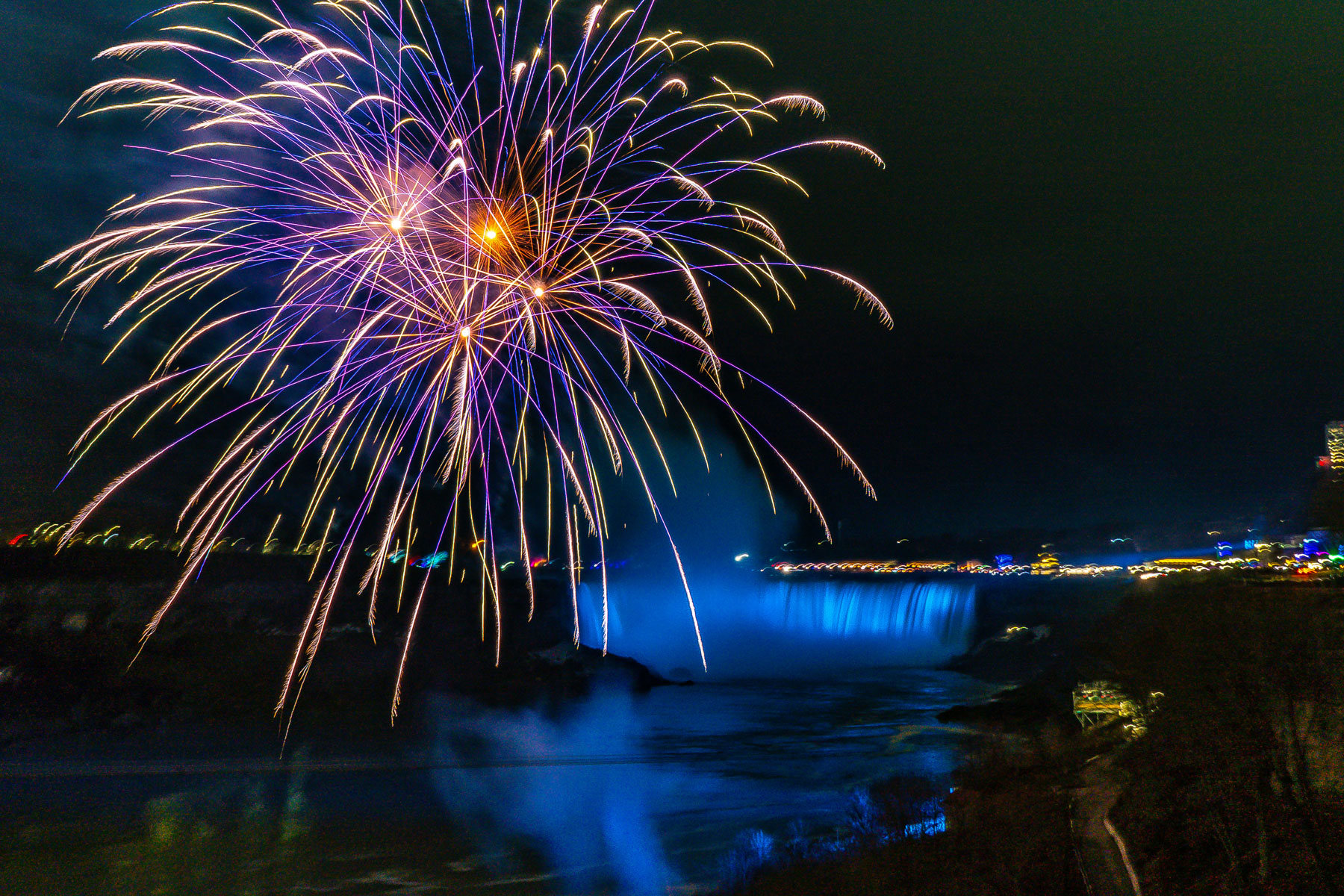
After the 10 p.m. show, return up Clifton Hill for nighttime photographs of the Niagara SkyWheel, attractions and lively streetscape.
This route produces three distinct sets of images—gardens at dusk, fireworks over the Falls and Clifton Hill after dark—without requiring a vehicle between locations.
Final Word: Find a View That Tells a Story
The most technically perfect viewpoint is not always the most memorable.
Queen Victoria Park delivers the essential Niagara Falls composition. Oakes Garden Theatre provides greater depth. The SkyWheel introduces movement and city lights. Niagara City Cruises places the viewer on the water, while Clifton Hill adds colour, people and energy.
Choose the location based on the photograph you want to make—not simply the closest place to stand.
With a little preparation, Niagara Falls offers much more than a picture of fireworks in a dark sky. It offers illuminated waterfalls, drifting mist, reflections, architecture and one of Canada’s most recognizable nighttime landscapes.