


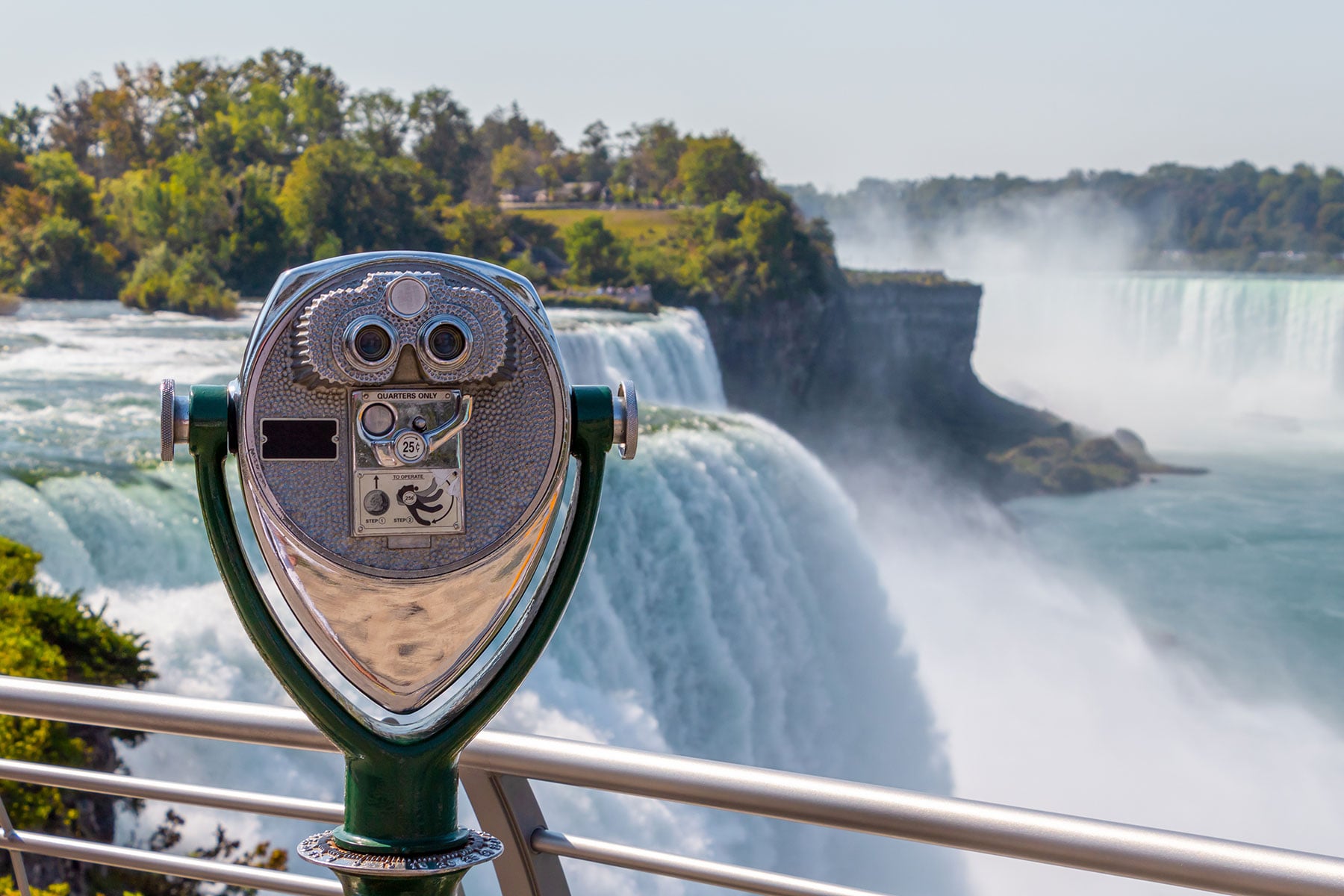

Few natural landmarks in North America are as instantly recognizable as Niagara Falls. Straddling the border between Canada and the United States, the Falls combine immense natural power with more than two centuries of human stories—ranging from daring stunts and engineering feats to geological discoveries and enduring traditions.
- The Winter When the Falls Nearly Stopped
- Daredevils Once Treated the Falls as a Stage
- The Falls Glow After Dark
- Hidden Caves Behind the Falls
- The Floral Clock Keeps Perfect Time
- The Whirlpool Spins Because the River Turns
- Niagara Became the Honeymoon Capital of the World
- Powering Millions of Homes
- A Geological Story Millions of Years in the Making
- Three Waterfalls, Not One
- A Ghost Town Lies Beneath the River
- The Mist Creates Its Own Weather
- A Century-Old Cable Car Still Crosses the Gorge
- Niagara Is an Important Stop for Migrating Birds
- One of the Best Views Comes from Above
Today, millions of travelers arrive each year to witness the spectacle from the parklands along the Niagara Parkway or from observation points across the river in Niagara Falls, New York. Yet beyond the roar of the cascading water lies a deeper narrative shaped by climate, geology, and history.
These lesser-known facts offer a richer understanding of one of the continent’s most famous natural attractions.
The Winter When the Falls Nearly Stopped
In March 1848, residents living near the Niagara River awoke to an unfamiliar silence. The thunderous roar of the Falls had nearly disappeared.
An unusually severe winter had pushed massive ice fields from Lake Erie into the upper river, forming a temporary natural dam. With much of the water blocked upstream, the flow over the Falls slowed dramatically, exposing sections of the riverbed that are normally hidden beneath rushing water.
For several hours, curious residents walked out across the exposed riverbed and even crossed between countries. When the ice finally shifted later that day, the river surged back to life.
Daredevils Once Treated the Falls as a Stage
During the late 19th and early 20th centuries, Niagara Falls became a magnet for performers attempting spectacular stunts.
Among the most famous was Charles Blondin, who repeatedly crossed the gorge on a high wire in the 1850s. His crossings included theatrical variations—walking blindfolded, pushing a wheelbarrow, and even carrying a passenger across the rope.
In 1901, schoolteacher Annie Edson Taylor became the first person to survive a trip over the Falls in a specially constructed barrel. The feat launched decades of similar attempts before authorities eventually banned such stunts.
The Falls Glow After Dark
Each evening, the waterfalls are transformed by a carefully orchestrated lighting system maintained by the Niagara Falls Illumination Board. Powerful LED lights cast shifting colours across the water, creating one of the most recognizable nighttime scenes in North America.
The tradition of lighting the Falls dates back to 1925, when early floodlights illuminated the cascading water for visiting dignitaries. Modern lighting systems now allow for seasonal colour displays and commemorations visible from vantage points throughout the city.
Hidden Caves Behind the Falls
Centuries of erosion have carved hollow chambers and recesses into the rock layers beneath the Falls. These natural cavities formed as softer rock eroded faster than the harder limestone above.
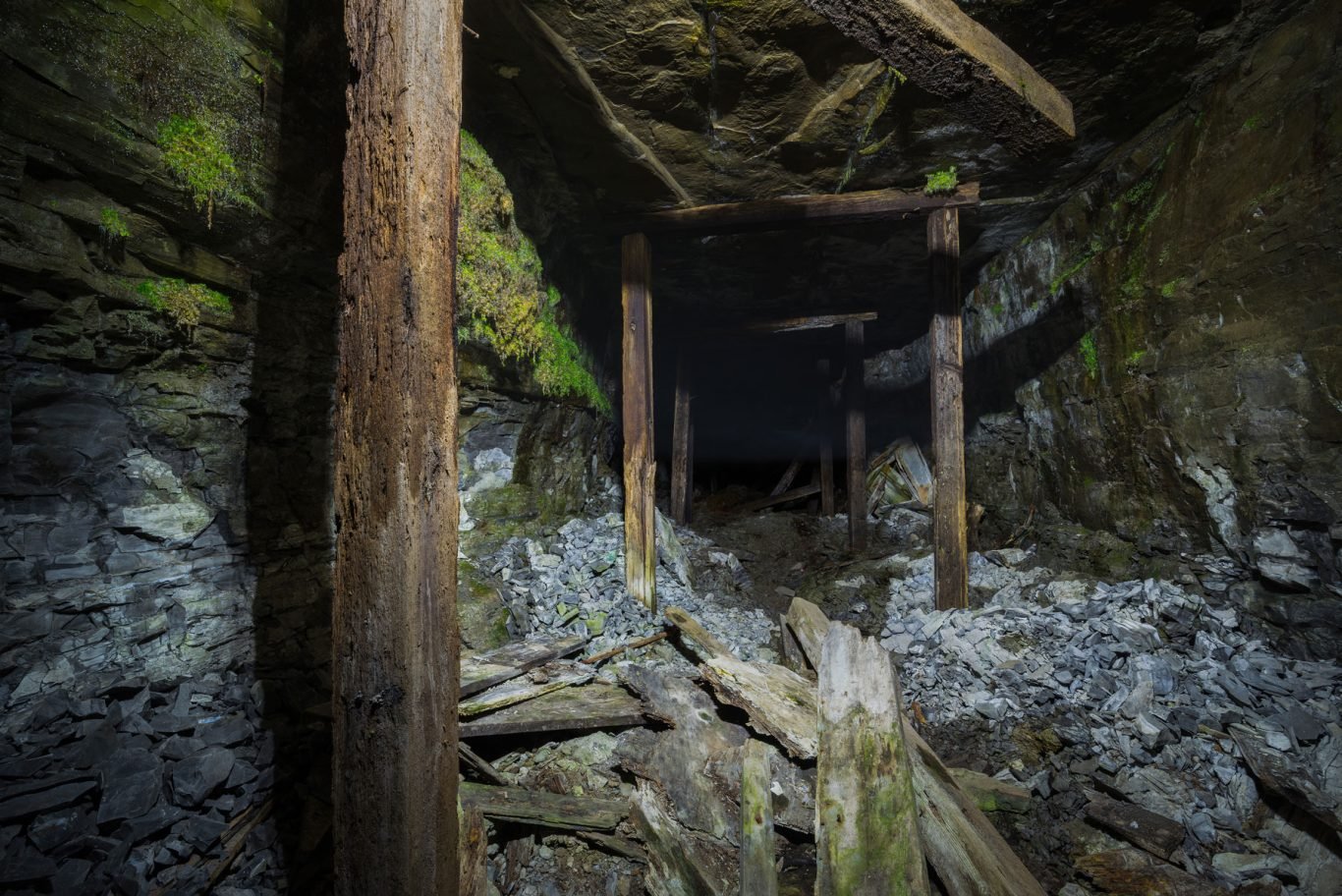
Today, visitors can glimpse this underground landscape through tunnels leading behind the cascade at Journey Behind the Falls, where observation portals cut through the rock reveal water plunging past only a short distance away.
The experience offers a striking reminder that Niagara’s landscape is still evolving.
The Floral Clock Keeps Perfect Time
A few kilometres downstream along the Niagara Parkway stands one of the region’s most unusual landmarks: the Niagara Floral Clock.
Constructed in 1950 and maintained by Niagara Parks horticultural teams, the clock features more than 16,000 seasonal plants arranged into intricate designs that change each year. Behind the colourful display lies a fully functioning clock mechanism that keeps accurate time year-round.
The Whirlpool Spins Because the River Turns
A few kilometres downstream from the Falls, the river suddenly bends nearly 90 degrees, creating one of Niagara’s most intriguing natural features: the Niagara Whirlpool.
As the powerful current rushes through this bend, it forms a massive rotating basin that continues to spin day and night. The unusual geological formation was carved thousands of years ago as the Falls gradually retreated upstream through the gorge.
Niagara Became the Honeymoon Capital of the World
By the early 1800s, Niagara Falls had become synonymous with romance. Newly married couples traveled from cities across North America and Europe to celebrate their honeymoon beside the roaring water.
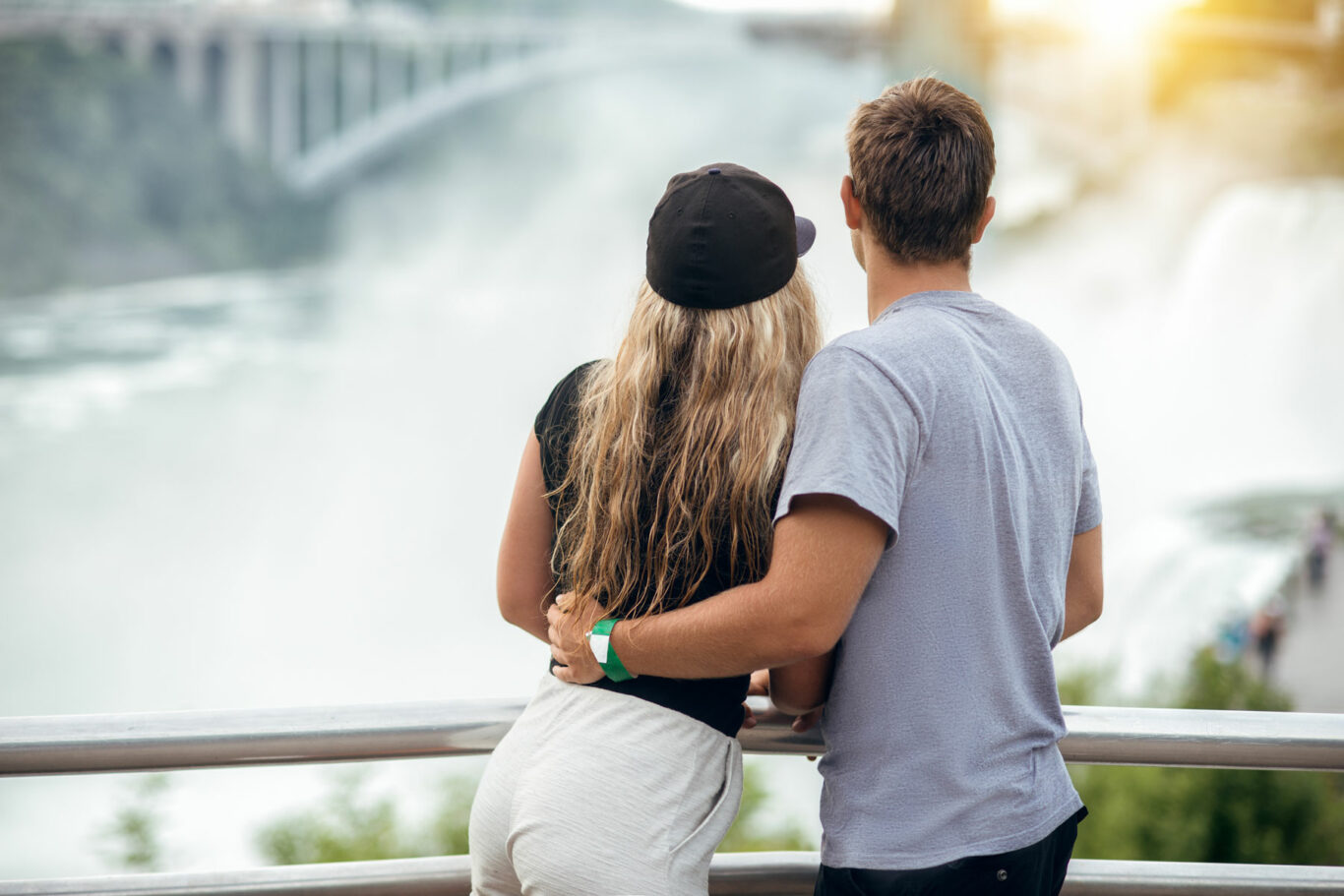
The tradition began after the brother of Napoleon Bonaparte, Jérôme Bonaparte, reportedly visited the Falls on his honeymoon in 1804. Word of the romantic landscape spread quickly, and by the Victorian era Niagara was widely known as the “Honeymoon Capital of the World.”
Even today, wedding photos and anniversary celebrations remain common along the viewing promenades.
Powering Millions of Homes
Beyond its beauty, Niagara Falls has long been a cornerstone of renewable energy. The enormous flow of water moving through the Niagara River provides a steady and reliable source of hydroelectric power.
Facilities such as the Sir Adam Beck Hydroelectric Generating Stations on the Canadian side and the Robert Moses Niagara Power Plant in the United States divert water through massive turbines to produce electricity.
Together, these installations supply power to millions of homes and businesses throughout the region.
A Geological Story Millions of Years in the Making
The dramatic cliffs surrounding Niagara Falls reveal a geological timeline stretching back hundreds of millions of years.
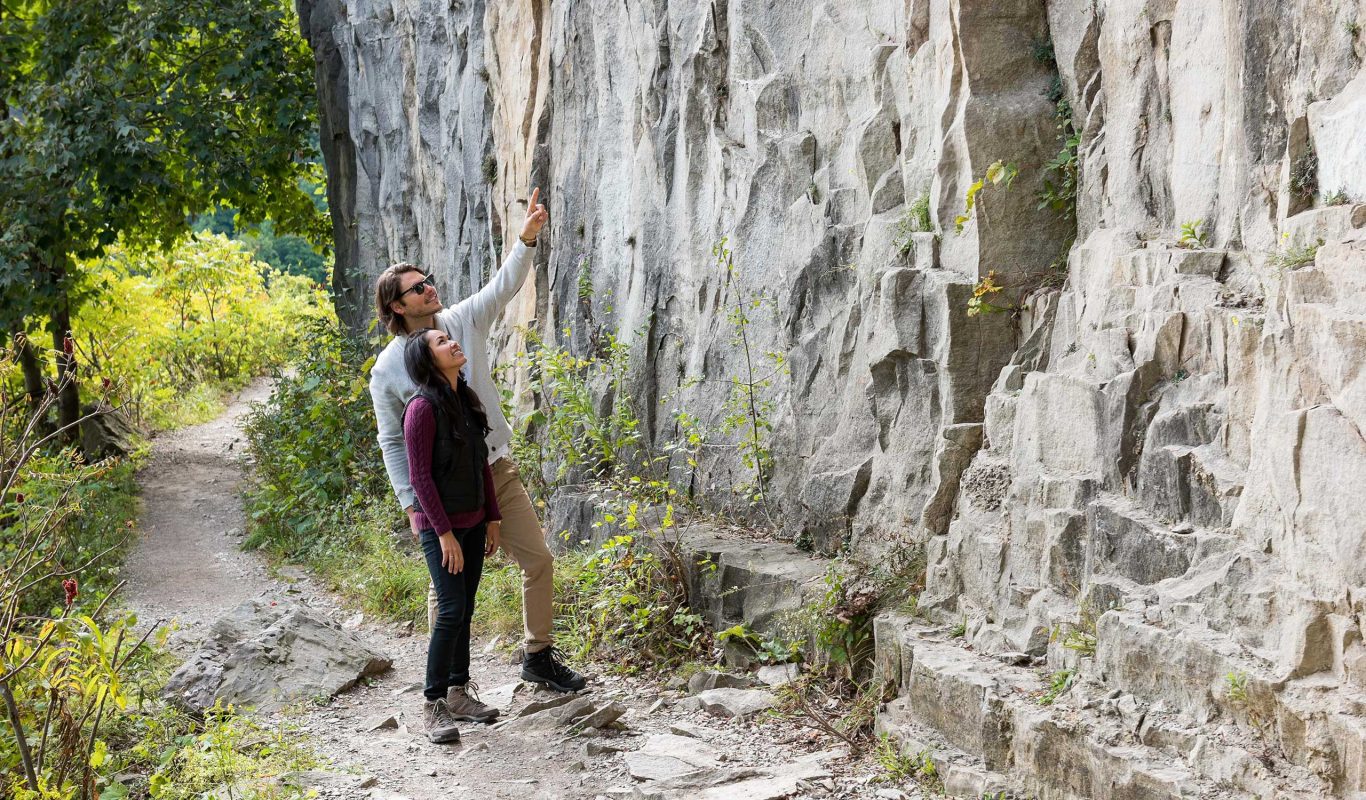
Layers of limestone, shale, and sandstone formed when much of the continent lay beneath ancient seas. Fossils embedded in the rock offer glimpses into prehistoric marine life.
The Falls themselves began forming roughly 12,000 years ago at the end of the last Ice Age, when retreating glaciers reshaped the Great Lakes and carved the Niagara River gorge.
Three Waterfalls, Not One
Despite the singular name, Niagara Falls actually consists of three separate waterfalls.
The largest is the sweeping Horseshoe Falls on the Canadian side. Across the river lies the broad American Falls, and beside it the smaller but elegant Bridal Veil Falls.
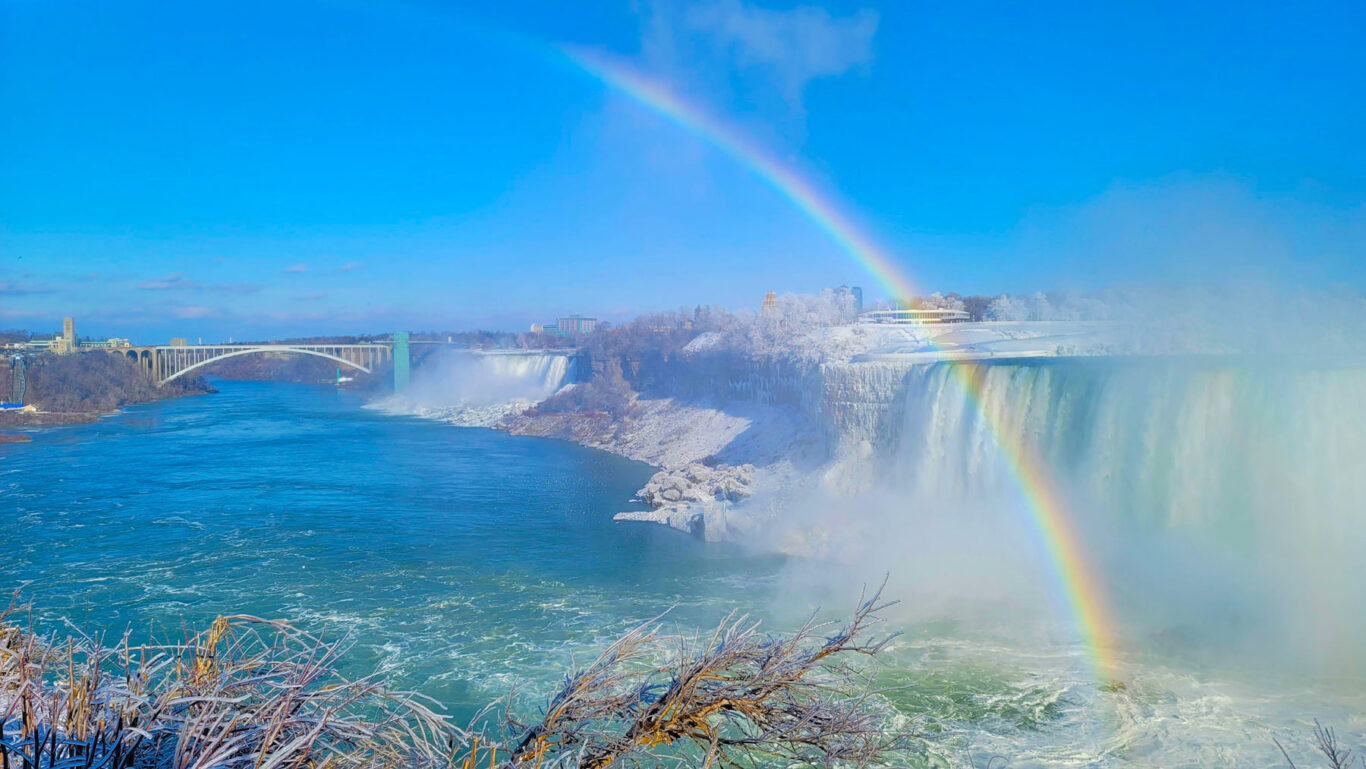
Together, these three cascades send more than 3,000 tons of water plunging over the cliffs every second, creating the mist clouds that have defined the landscape for centuries.
A Ghost Town Lies Beneath the River
Few visitors realize that a former village lies hidden beneath the waters of the Niagara River. During construction of the Robert Moses Niagara Power Plant, the small settlement of Elgin was relocated.
Some structures were removed, but parts of the original townsite remain submerged beneath the river’s surface—an unusual reminder of how major infrastructure projects reshaped the landscape.
The Mist Creates Its Own Weather
Standing near the brink of the Falls often means stepping into a constantly shifting cloud of mist. The tremendous force of the plunging water produces billions of airborne droplets that rise hundreds of feet into the air.
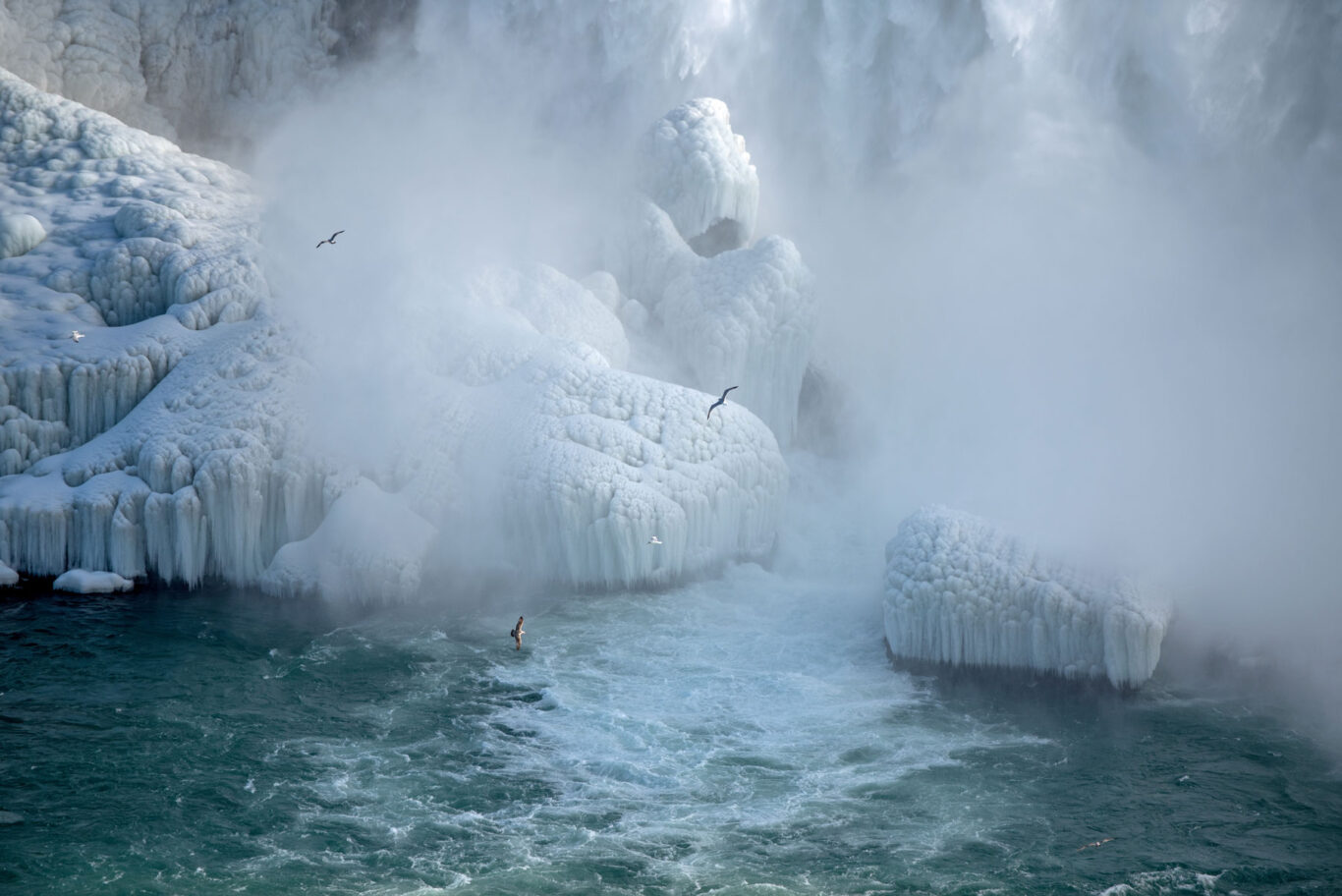
This localized moisture can create miniature rain showers, frequent rainbows, and icy formations in winter as the mist freezes onto nearby railings and trees.
A Century-Old Cable Car Still Crosses the Gorge
High above the swirling waters of the Niagara Whirlpool operates one of the region’s most unusual historic attractions: the Whirlpool Aero Car. The aerial cableway was designed by Spanish engineer Leonardo Torres Quevedo and officially opened on August 8, 1916. Suspended roughly 76 meters (250 feet) above the river, the antique cable car carries passengers across the Niagara Gorge for sweeping views of the rapids and whirlpool below.
The project began in 1913 when Spanish investors proposed a cableway spanning the dramatic whirlpool basin along the Niagara Parkway. Construction started in 1915, with the carriage manufactured overseas and shipped to Niagara before being mounted onto cables stretching more than 500 meters across the gorge.
Although the ride appears to travel between countries, the Aero Car actually begins and ends on the Canadian side of the river. Because the Niagara River twists through the gorge beneath it, the car briefly passes over the international border several times during its journey before returning to its original station. More than a century after opening, the historic cable car continues to glide above the rushing water, offering one of the most distinctive viewpoints in the Niagara region.
Niagara Is an Important Stop for Migrating Birds
The Niagara River corridor forms part of a major migration route used by birds traveling between the Great Lakes and the Atlantic Flyway.
During spring and autumn, species ranging from gulls and cormorants to hawks and songbirds gather along the riverbanks. The powerful currents prevent large sections of the river from freezing in winter, creating valuable habitat for overwintering birds.
One of the Best Views Comes from Above
While the waterfalls dominate the landscape at ground level, their full scale becomes even clearer from above. Rising above the entertainment district near Clifton Hill is the towering Niagara SkyWheel.
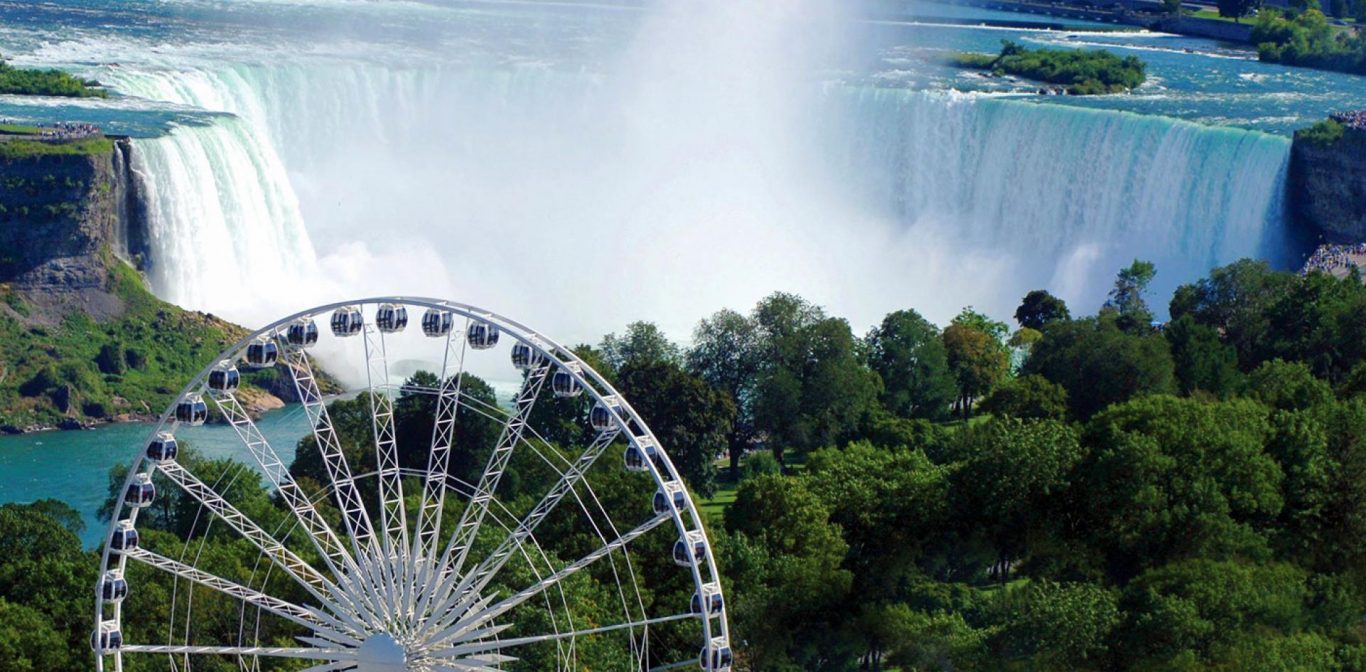
At 175 feet tall, the observation wheel provides sweeping views of the Niagara River, the city skyline, and the sweeping curve of Horseshoe Falls—revealing the broader geography that makes Niagara Falls one of the most distinctive natural landmarks in the world.