


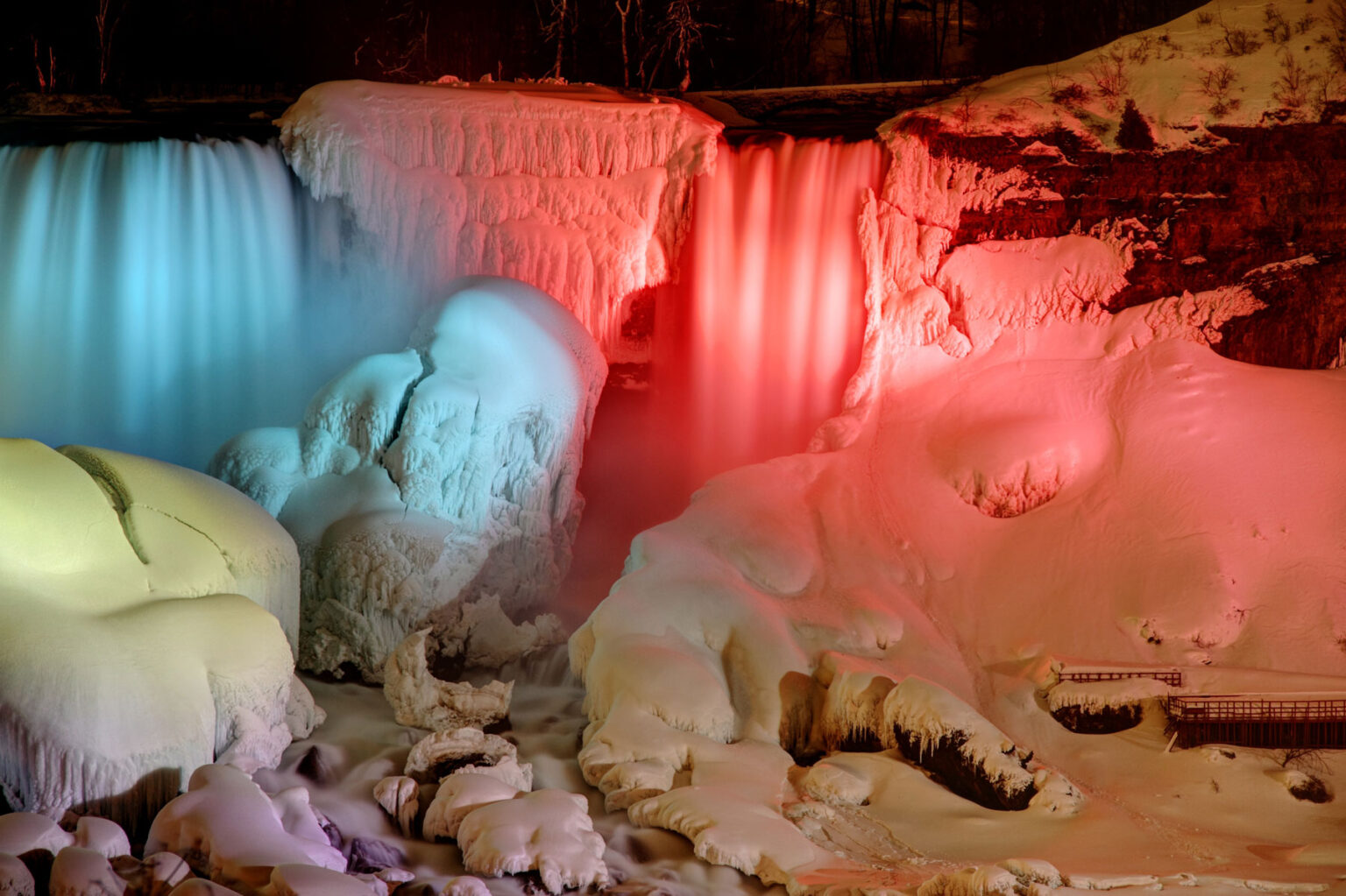

Niagara Falls in winter delivers one of North America’s most compelling seasonal transformations. The waterfalls continue their powerful flow year-round, yet colder temperatures reshape the surrounding environment in ways that feel both geological and theatrical. Ice, mist, light, and sound interact differently once winter arrives, creating a landscape that draws photographers, scientists, and seasoned travelers back year after year.
This seasonal shift is not a visual illusion. It is the result of measurable changes in air density, water volume, and atmospheric conditions along the Niagara River corridor.
The Falls never freeze, yet ice defines the view
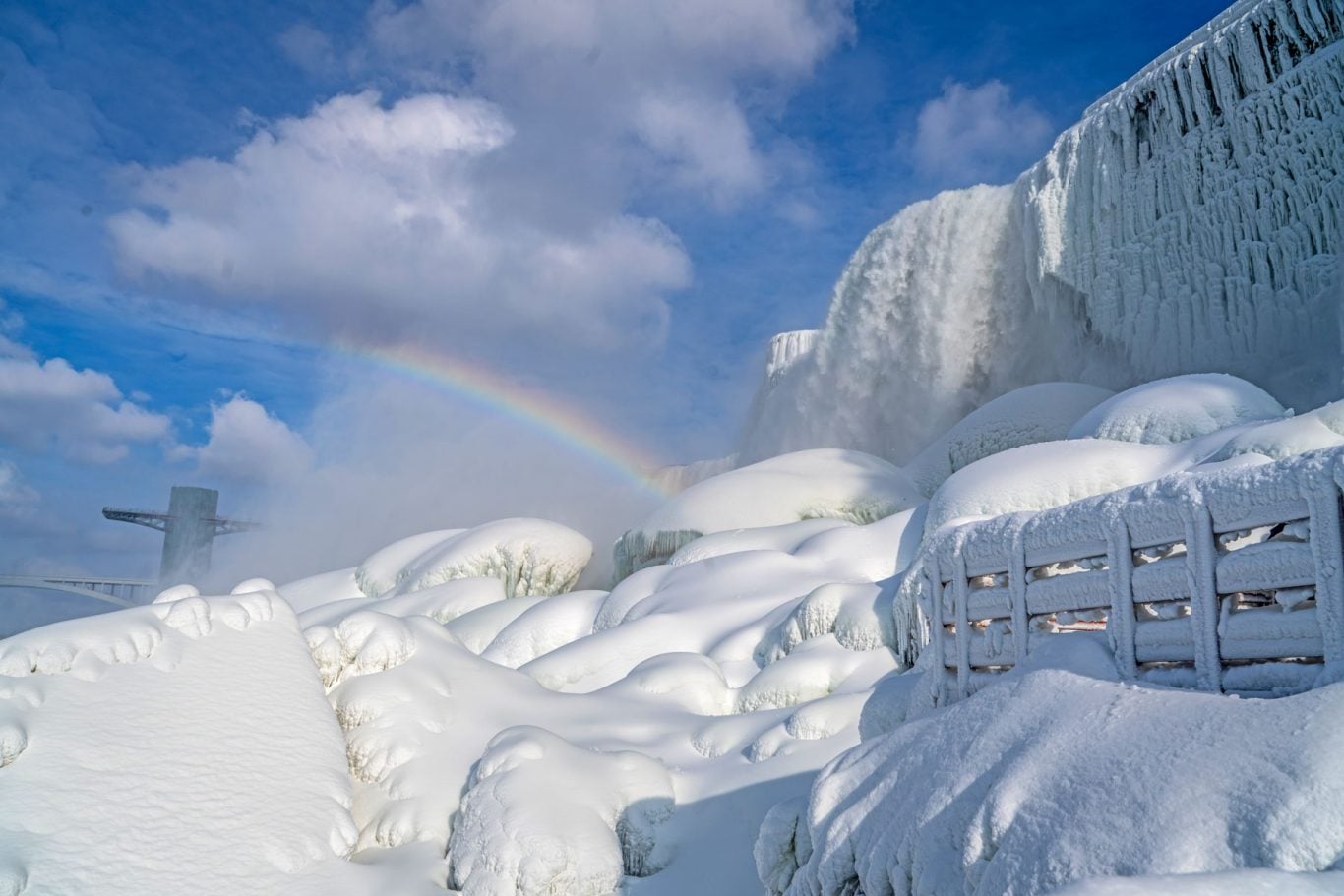
A common misconception suggests that Niagara Falls freezes solid in winter. In reality, the Niagara River moves at volumes and speeds that prevent complete freezing. What visitors see instead are vast ice formations created by airborne mist. As water plunges over the brink, it generates continuous spray that rises into cold air and settles onto nearby rock faces, trees, railings, and cliff walls.
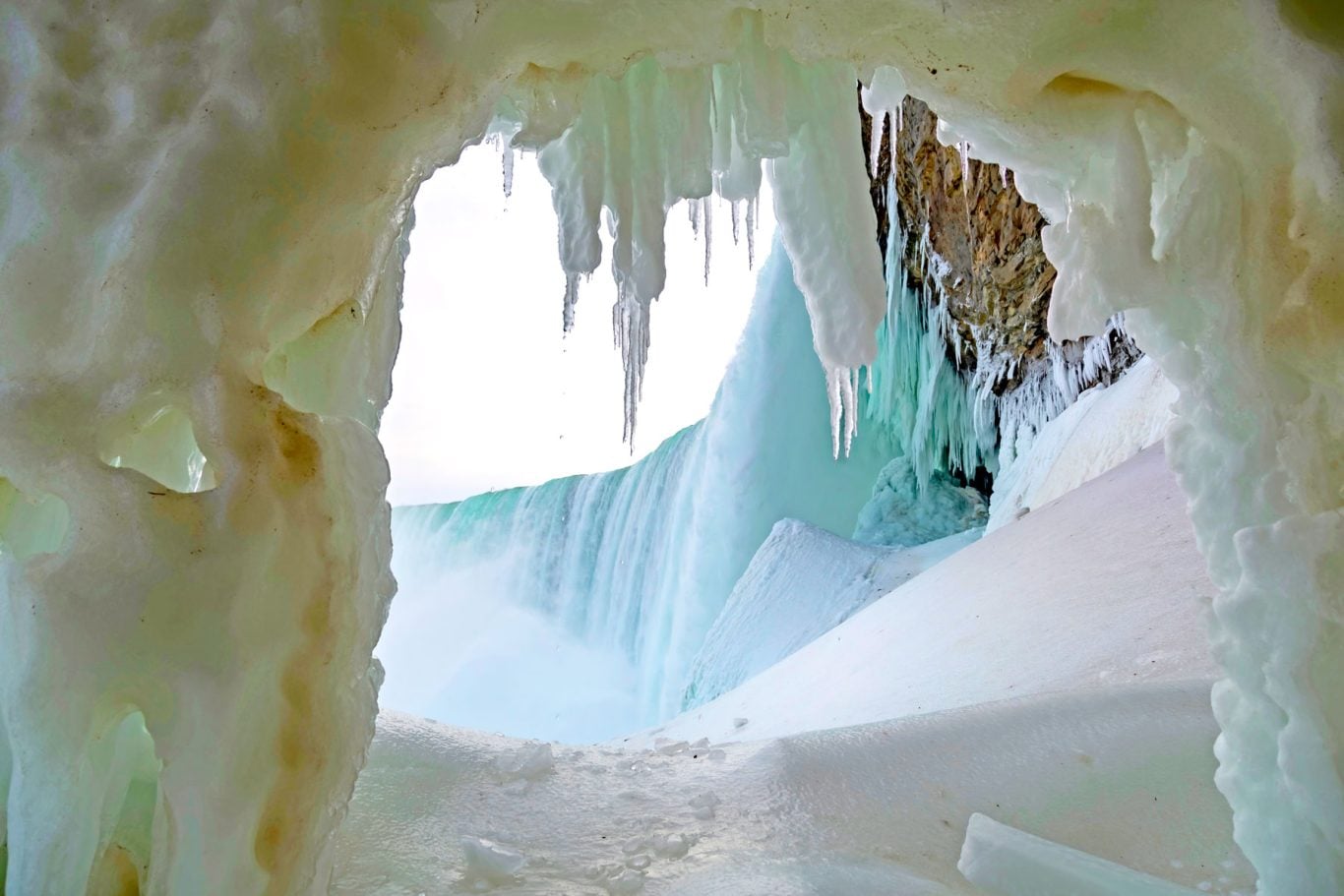
Over days and weeks, this mist freezes in layers, building massive ice accumulations that can reach several stories high. These formations frame the falls, alter sightlines, and give the gorge a sculpted, cathedral-like appearance.
Seasonal water flow reveals new details
Winter also changes how much water moves over the falls. Water levels are carefully managed throughout the year to balance natural flow with hydroelectric production. During colder months, the volume passing over the brink decreases slightly, revealing rock contours and segmented streams that are less visible during peak summer flow.
This creates a more textured look, where individual ribbons of water appear distinct rather than forming a continuous curtain. The effect highlights the geology of the escarpment and the physical forces shaping the falls over time.
Cold air reshapes the mist
Air temperature plays a critical role in how Niagara Falls looks and feels. Warm air allows mist to rise high into the sky, often obscuring views during summer. Cold winter air is denser and heavier, keeping mist lower and closer to the river. This results in clearer sightlines from observation decks and pathways along the brink.
The lower mist also contributes to the formation of ice shelves at the base of the falls and along the riverbanks, adding scale and depth to the winter landscape.
Ice shelves change sound and movement
Large ice formations collect in the plunge pool and along the Niagara River shoreline. These ice shelves absorb sound and alter how water moves after impact, giving the falls a more subdued acoustic presence. Visitors often describe the winter soundscape as deeper and more rhythmic, with the roar softened by surrounding ice.
This quieter atmosphere enhances the sense of space and makes winter visits feel immersive rather than overwhelming.
Winter light transforms the scene
Light behaves differently in winter, and Niagara Falls benefits from every shift in the sun’s angle. Snow and ice reflect daylight, brightening the gorge even under overcast skies. At night, the illumination of the falls becomes more vivid as colored lighting reflects off ice formations and frozen surfaces.
The result is a luminous scene that feels refined and cinematic, especially after fresh snowfall or during clear, cold evenings.
A landscape shaped by history and science
Historical accounts describe dramatic winter events, including the famous ice jam of 1848 that temporarily reduced the flow of the Niagara River. These moments reinforce how closely the falls are tied to climate, weather patterns, and seasonal cycles.
Today, the winter appearance of Niagara Falls continues to attract researchers studying ice formation, erosion, and microclimates, adding a layer of scientific significance to the visitor experience.
Why winter leaves a lasting impression
Niagara Falls looks completely different in cold weather because winter reveals its structure. Ice formed from mist reshapes the gorge, water flow patterns become more visible, mist settles lower, sound softens, and light reflects with greater clarity. Together, these elements transform one of the world’s most recognizable natural wonders into a living winter sculpture.
For travelers seeking a deeper understanding of Niagara Falls, winter offers insight into the forces that shape it every season of the year.