


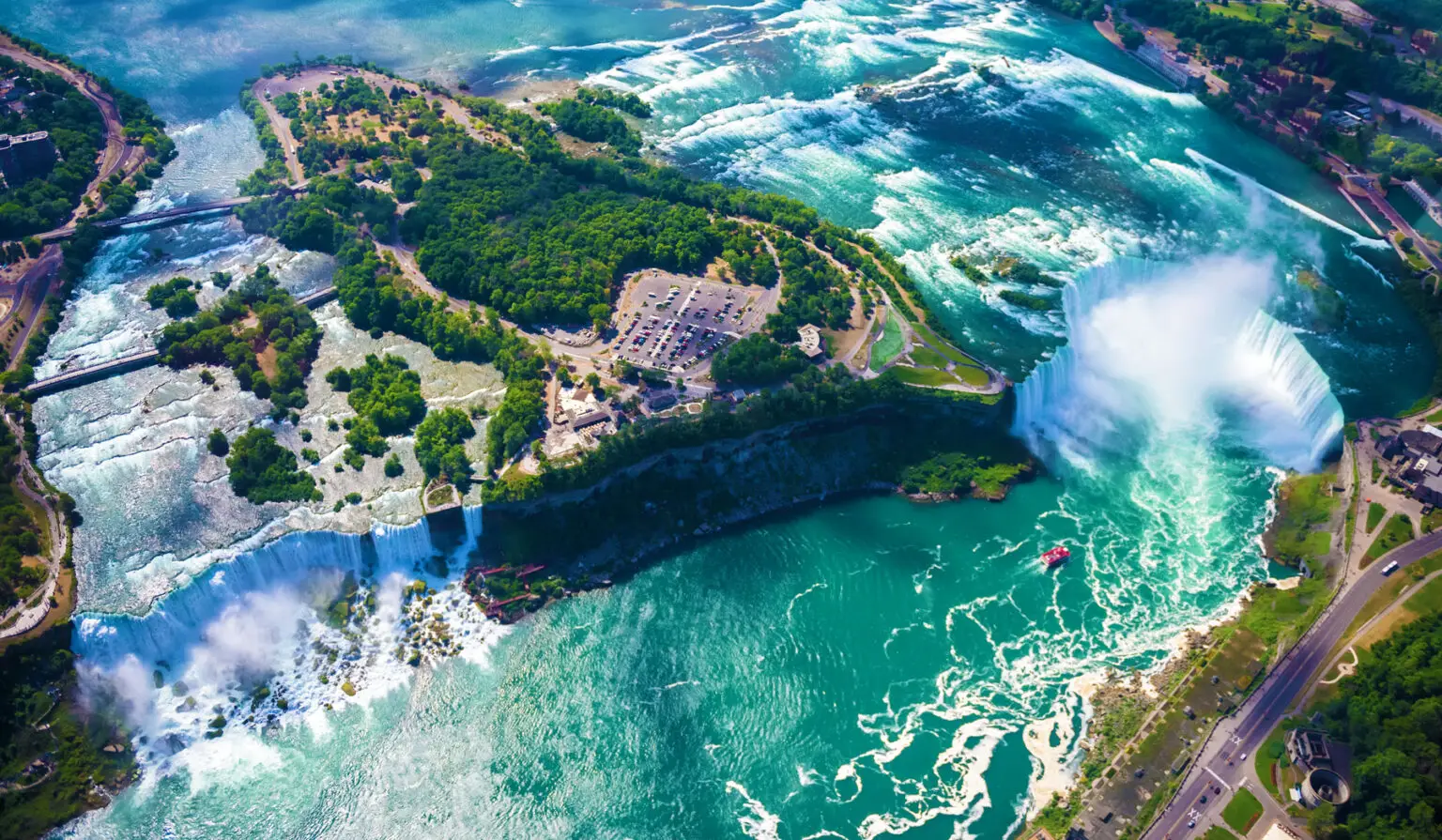

When most visitors arrive at Niagara Falls, their attention is immediately drawn to the thunderous curtain of water plunging over the brink. Cameras point toward Horseshoe Falls. Crowds gather along observation decks. The roar fills the air.
- The Island at the Center of Niagara Falls
- A Legacy of Conservation
- Five Experiences You Shouldn’t Miss
- Stand at the Edge at Terrapin Point
- Wander Across Three Sisters Islands
- Feel the Power at Cave of the Winds
- Discover the Tesla Monument
- Pause on Luna Island
- Wildlife Along the Niagara River
- Planning Your Visit
- The Quiet Heart of Niagara Falls
Yet hidden in plain sight between some of the world’s most famous waterfalls lies one of Niagara’s most remarkable experiences: Goat Island.
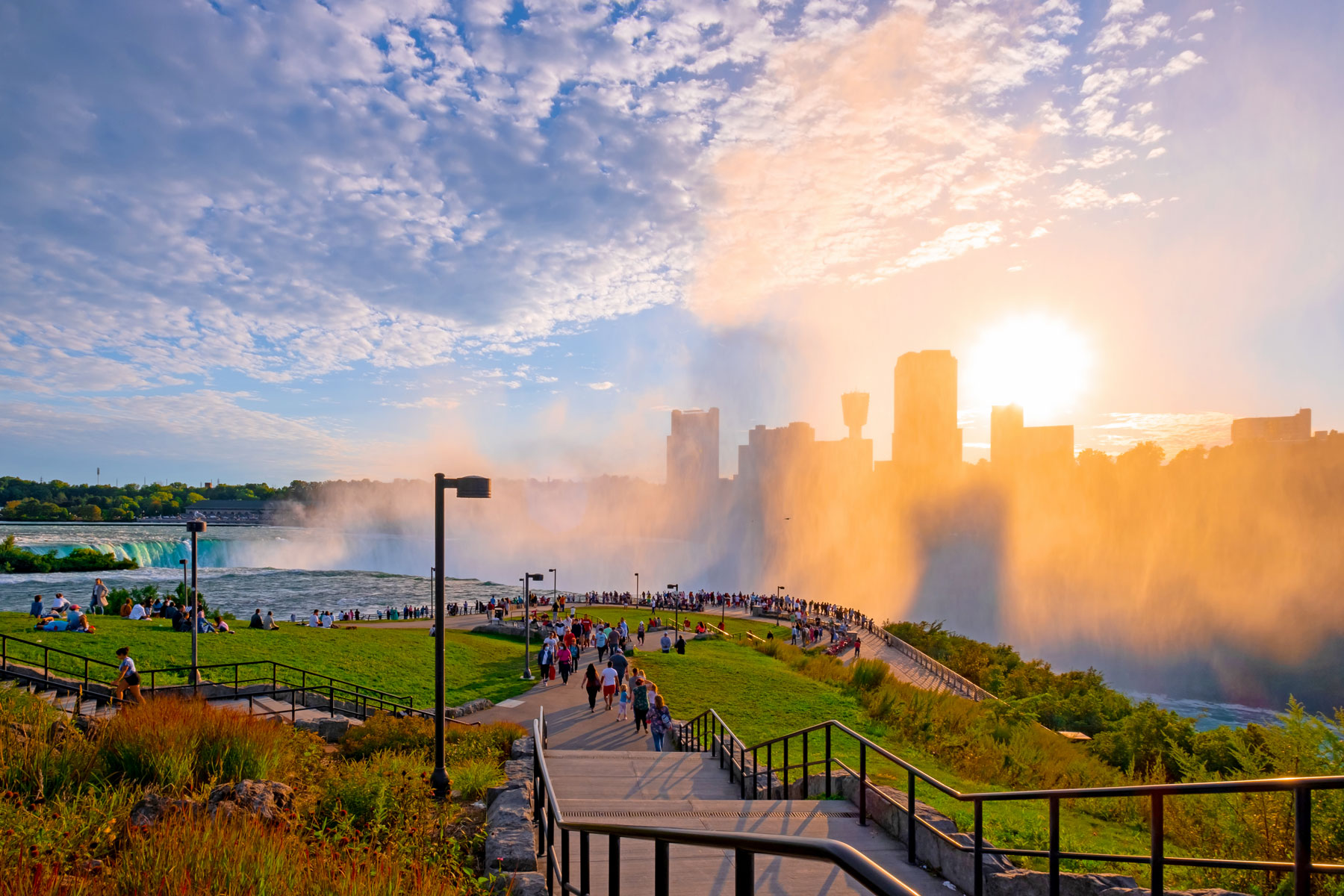
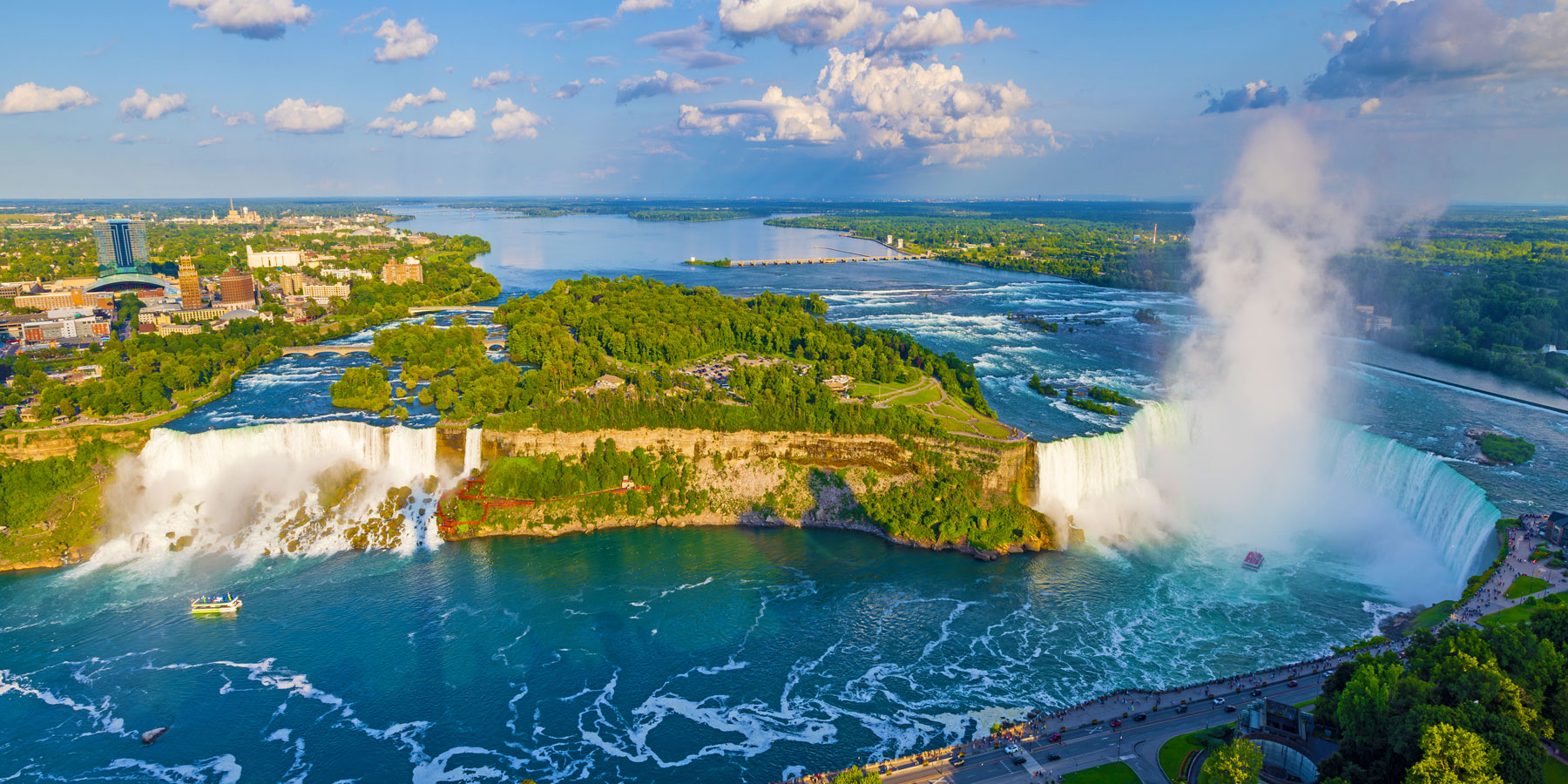
Spanning more than 70 acres in the heart of Niagara Falls State Park, Goat Island offers something increasingly rare at one of North America’s busiest attractions—space to slow down. Here, winding trails weave through mature forests, quiet overlooks reveal dramatic perspectives of the falls, and centuries of history unfold amid one of the continent’s most significant natural landscapes.
For travelers seeking a deeper connection to Niagara Falls beyond the iconic postcard views, Goat Island is where the destination truly comes alive.
The Island at the Center of Niagara Falls
Surrounded by the rushing waters of the Niagara River, Goat Island occupies a unique position between the American Falls and the Canadian Horseshoe Falls. It serves as both a front-row seat to the spectacle and a peaceful refuge from the crowds that gather nearby.
Long before Niagara Falls became a global tourism icon, Goat Island was a largely untouched wilderness. Originally known as Iris Island, it was later renamed by early settler John Stedman, who kept a herd of goats on the island during the late 18th century. Following a particularly severe winter, only one goat survived, and the island’s now-famous name endured.
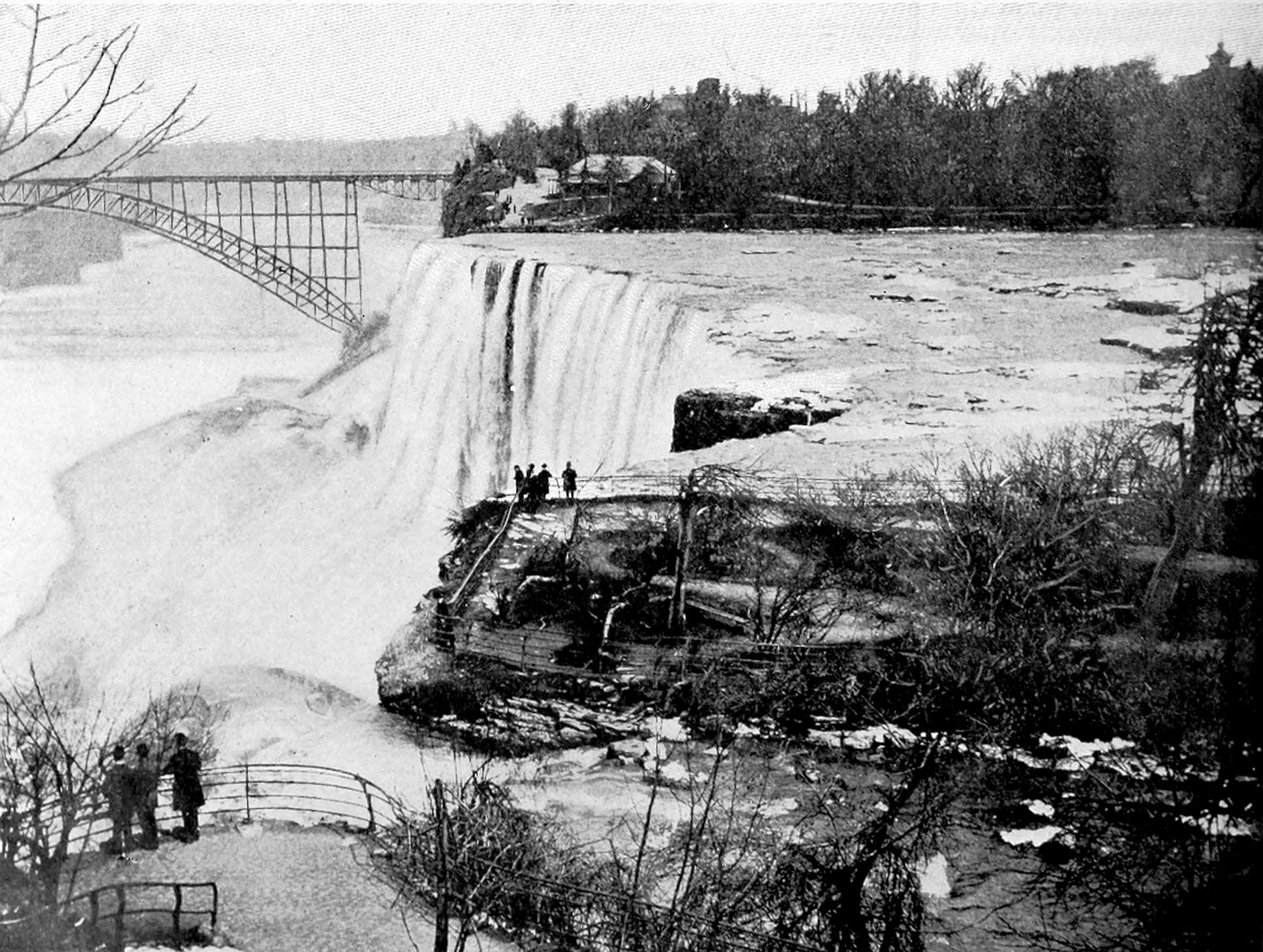
By the early 1800s, local entrepreneur Augustus Porter recognized the area’s tourism potential. Bridges and pathways were constructed, opening the island to visitors eager to experience the falls from a new perspective. As Niagara Falls grew into one of North America’s premier destinations, Goat Island became an essential part of the journey.
A Legacy of Conservation
Goat Island’s preservation is closely tied to one of America’s earliest conservation victories.
In 1885, the island became part of the newly established Niagara Reservation, recognized as the first state park in the United States. Visionary landscape architect Frederick Law Olmsted—best known for designing New York City’s Central Park—helped champion efforts to protect Niagara Falls from unchecked commercial development.
His philosophy was simple but revolutionary: natural wonders should be preserved for public enjoyment.
More than a century later, visitors still benefit from that vision. Unlike many heavily developed tourist destinations, Goat Island remains largely defined by its natural beauty. Towering trees provide shade along walking paths, native vegetation flourishes throughout the landscape, and many viewpoints feel remarkably untouched despite their proximity to millions of annual visitors.
Five Experiences You Shouldn’t Miss
Stand at the Edge at Terrapin Point
Few locations bring visitors closer to the power of Niagara Falls than Terrapin Point.
Located at the southwestern tip of Goat Island, this dramatic overlook sits just steps from the brink of Horseshoe Falls. Here, the Niagara River transforms from calm, flowing water into a roaring torrent plunging more than 180 feet below.
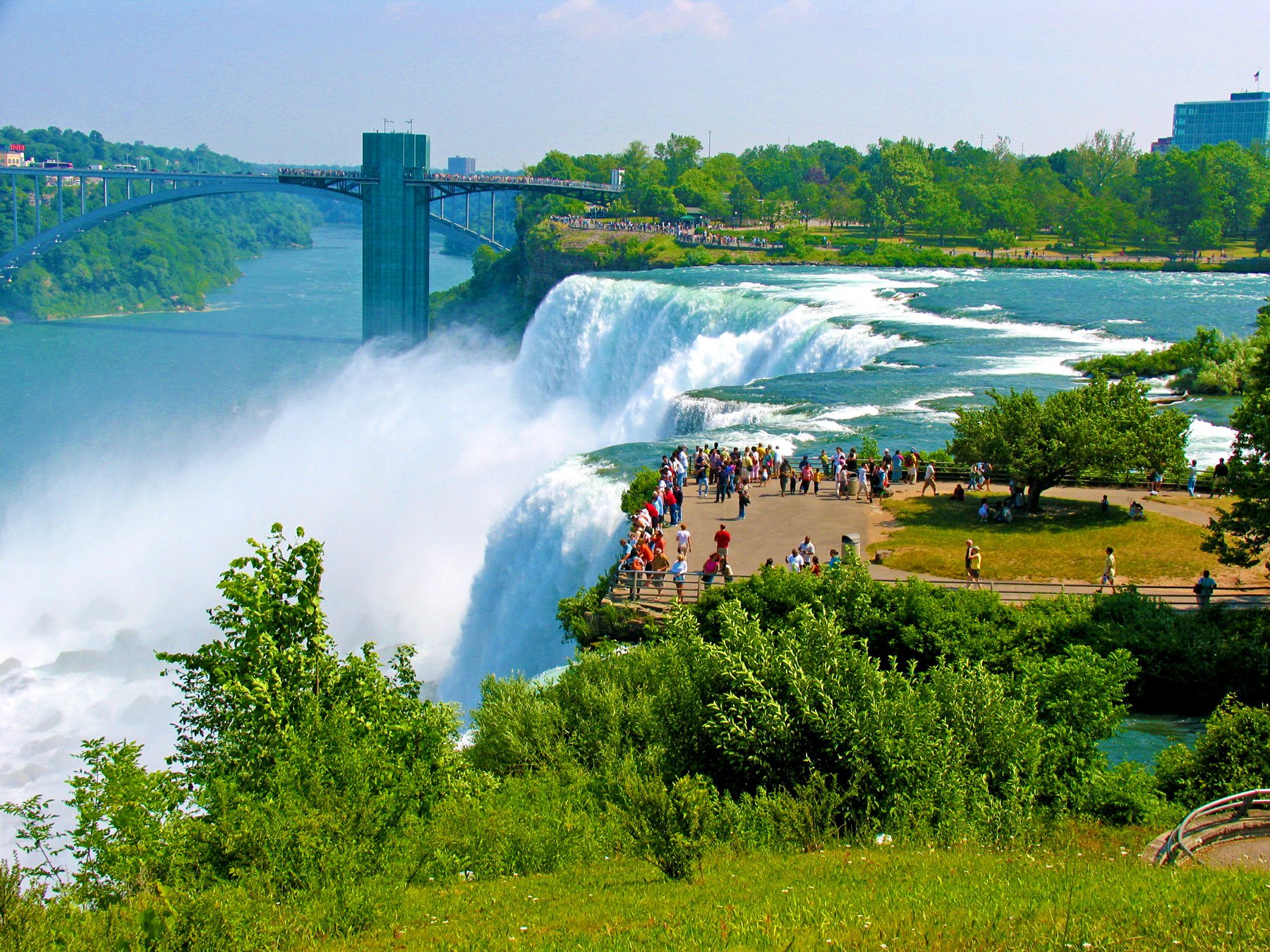
Early mornings often provide the most memorable experience, when mist rises into the sunlight and crowds are minimal.
Wander Across Three Sisters Islands
Connected to Goat Island by a series of pedestrian bridges, the Three Sisters Islands offer one of the most tranquil settings in Niagara Falls State Park.
Named after the daughters of General Parkhurst Whitney, a prominent Niagara Falls hotel owner, these small islands sit amid rushing rapids just upstream from the falls. The sound of moving water accompanies every step, while shaded pathways and scenic viewpoints create a welcome escape from the area’s busiest attractions.
Feel the Power at Cave of the Winds
For travelers who want more than a view, Cave of the Winds delivers one of Niagara Falls’ most exhilarating experiences.
An elevator descends 175 feet into the Niagara Gorge before visitors make their way along wooden walkways leading to the famous Hurricane Deck. Standing only feet from Bridal Veil Falls, you’ll experience the thunder, mist, and raw force of 700,000 gallons of water rushing past every second.
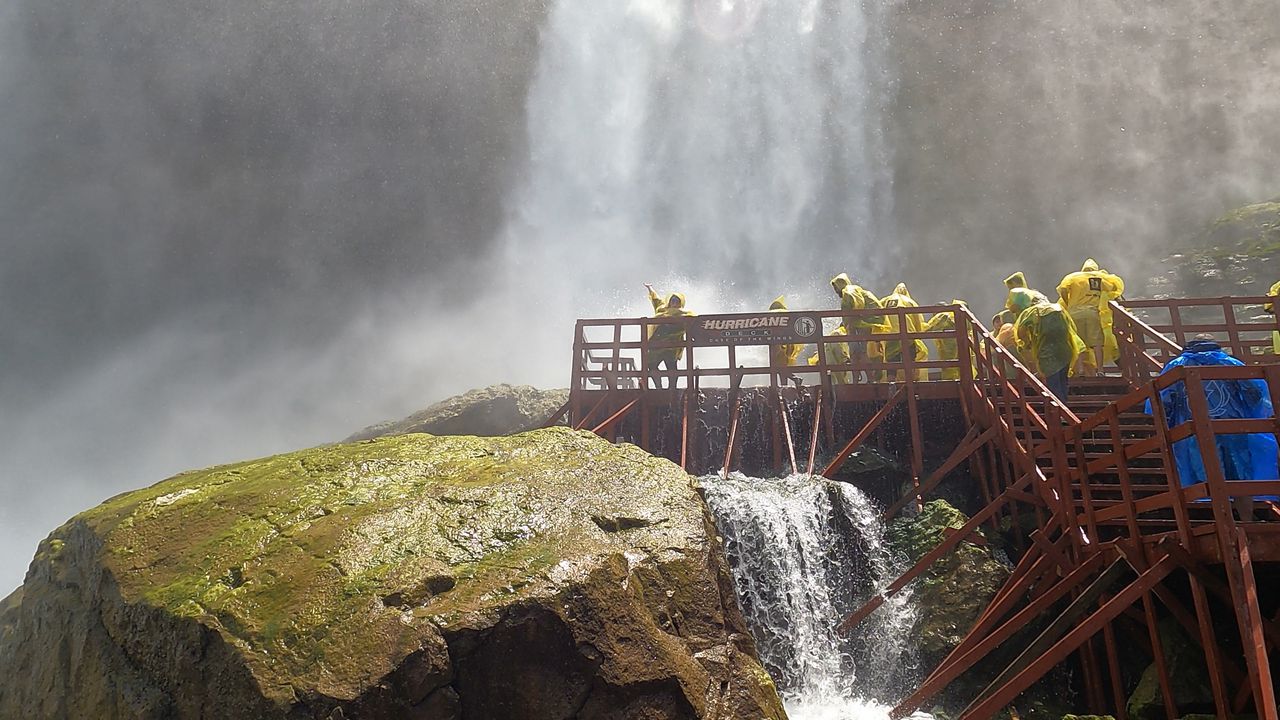
It’s one of the closest encounters with Niagara Falls available anywhere.
Discover the Tesla Monument
Near the entrance to Cave of the Winds stands a tribute to one of history’s greatest inventors.
The Nikola Tesla Monument honors the scientist whose pioneering work with alternating current helped transform Niagara Falls into the birthplace of modern hydroelectric power. The statue serves as a reminder that Niagara’s influence extends far beyond tourism, helping shape the future of electricity around the world.
Pause on Luna Island
Tucked between the American Falls and Bridal Veil Falls, Luna Island offers one of Niagara Falls’ most overlooked viewpoints.
Its compact size and unique location create spectacular photo opportunities while providing an unexpectedly peaceful atmosphere. From here, visitors can appreciate the distinct character of both waterfalls from a perspective unavailable anywhere else in the park.
Wildlife Along the Niagara River
Beyond its famous viewpoints, Goat Island serves as an important ecological habitat within Niagara Falls State Park.
Visitors regularly spot white-tailed deer, squirrels, and numerous bird species throughout the island’s wooded areas. Native trees and riverside vegetation support local biodiversity while helping preserve the natural character that conservationists fought to protect more than a century ago.
For nature lovers, the island provides an opportunity to experience Niagara Falls as more than a tourist attraction—it is also a thriving natural ecosystem.
Planning Your Visit
Goat Island is accessible year-round from Niagara Falls, New York, via bridges connecting it to the mainland. Walking paths, parking areas, and seasonal transportation services make exploring the island straightforward for visitors of all ages.
While many travelers stop briefly on their way to nearby attractions, Goat Island rewards those who linger. Allow several hours—or even a full day—to explore its trails, viewpoints, and attractions at a relaxed pace.
Comfortable walking shoes, a camera, and a willingness to wander are all that’s required.
The Quiet Heart of Niagara Falls
In a destination famous for spectacle, Goat Island offers something equally memorable: perspective.
Here, visitors can stand at the edge of one of the world’s most powerful waterfalls, walk through landscapes shaped by centuries of history, and discover moments of unexpected tranquility amid the roar of Niagara Falls.
For those willing to venture beyond the most crowded viewpoints, Goat Island reveals a side of Niagara that many visitors never experience—and one they rarely forge