


There are few landscapes in North America that so naturally invite spectacle as Niagara Falls. The scale alone—water collapsing into the gorge in relentless motion—creates a setting where reality already feels heightened. Before Clifton Hill became a corridor of neon lights, arcades, and immersive attractions, the Falls functioned as the original stage: unpredictable, theatrical, and impossible to ignore.
It is within this environment that the legend of Harry Houdini has long been anchored—part history, part mythology, and entirely consistent with the magician’s carefully constructed relationship with danger and belief. Today, that same fascination with illusion continues not on the river’s edge, but just steps away on Clifton Hill, where modern dark rides translate escapology into immersive, technology-driven entertainment.
The Myth That Refused to Sink
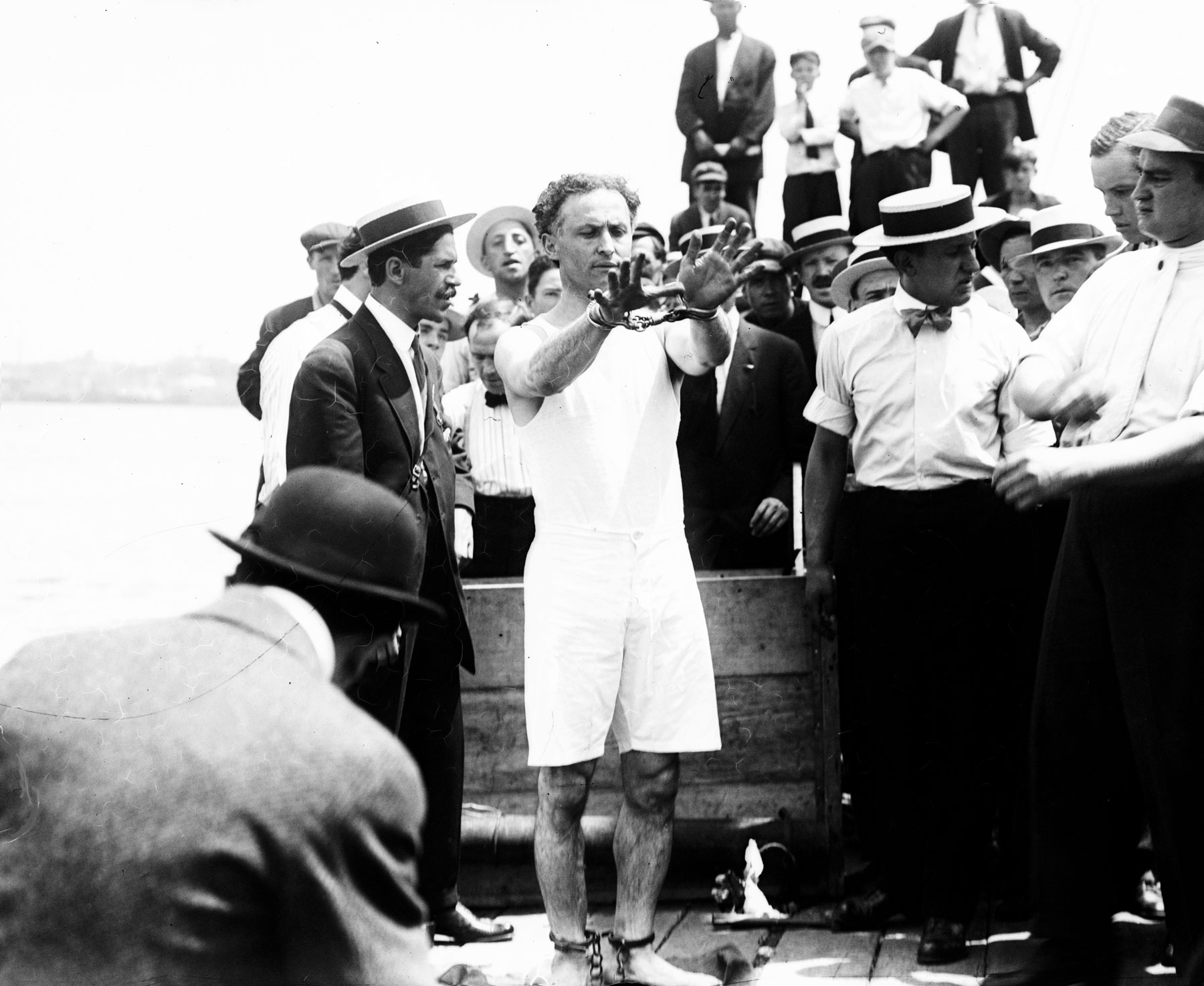
One of the most persistent stories tied to Houdini and Niagara Falls claims that in 1901, the young illusionist was sealed inside a crate and cast into the Niagara River, only to escape downstream unscathed.
Despite its endurance in popular storytelling, historians have found no reliable evidence that the stunt occurred. Houdini’s personal records—known for their precision—make no mention of it, and no verified documentation or consistent eyewitness accounts support the claim.
Yet the absence of proof has done little to diminish its cultural power. The story survives because it aligns so closely with Houdini’s crafted persona: a performer who made impossibility feel negotiable. Niagara Falls, with its overwhelming force and constant motion, serves as the ideal backdrop for that kind of mythmaking. Even if the crate never entered the river, the Falls undeniably became part of Houdini’s symbolic landscape.
When Niagara Became Cinematic
Houdini’s documented connection to Niagara is most clearly rooted in film rather than folklore. In the early 1920s, he returned to the region to film The Man From Beyond (1922), one of the period’s early feature films to use Niagara Falls as a dramatic setting.
Production scenes unfolded across the Niagara gorge, including the Whirlpool Rapids and surrounding parklands. The production relied heavily on physical performance rather than studio illusion. Houdini performed stunts himself—climbing steep rock faces, entering frigid water, and staging sequences that echoed his stagecraft philosophy: danger should feel immediate, even when controlled.
This period marked a shift in entertainment itself. Illusion was no longer confined to a theater or traveling show; it could now be captured, replayed, and distributed. Niagara Falls became not only a backdrop, but a narrative engine for cinematic suspense.
Clifton Hill and the Architecture of Modern Illusion
By the mid-20th century, Niagara Falls’ entertainment district began evolving into a dense cluster of attractions that embraced spectacle as a defining feature. On Clifton Hill, this transformation took a particularly immersive form.
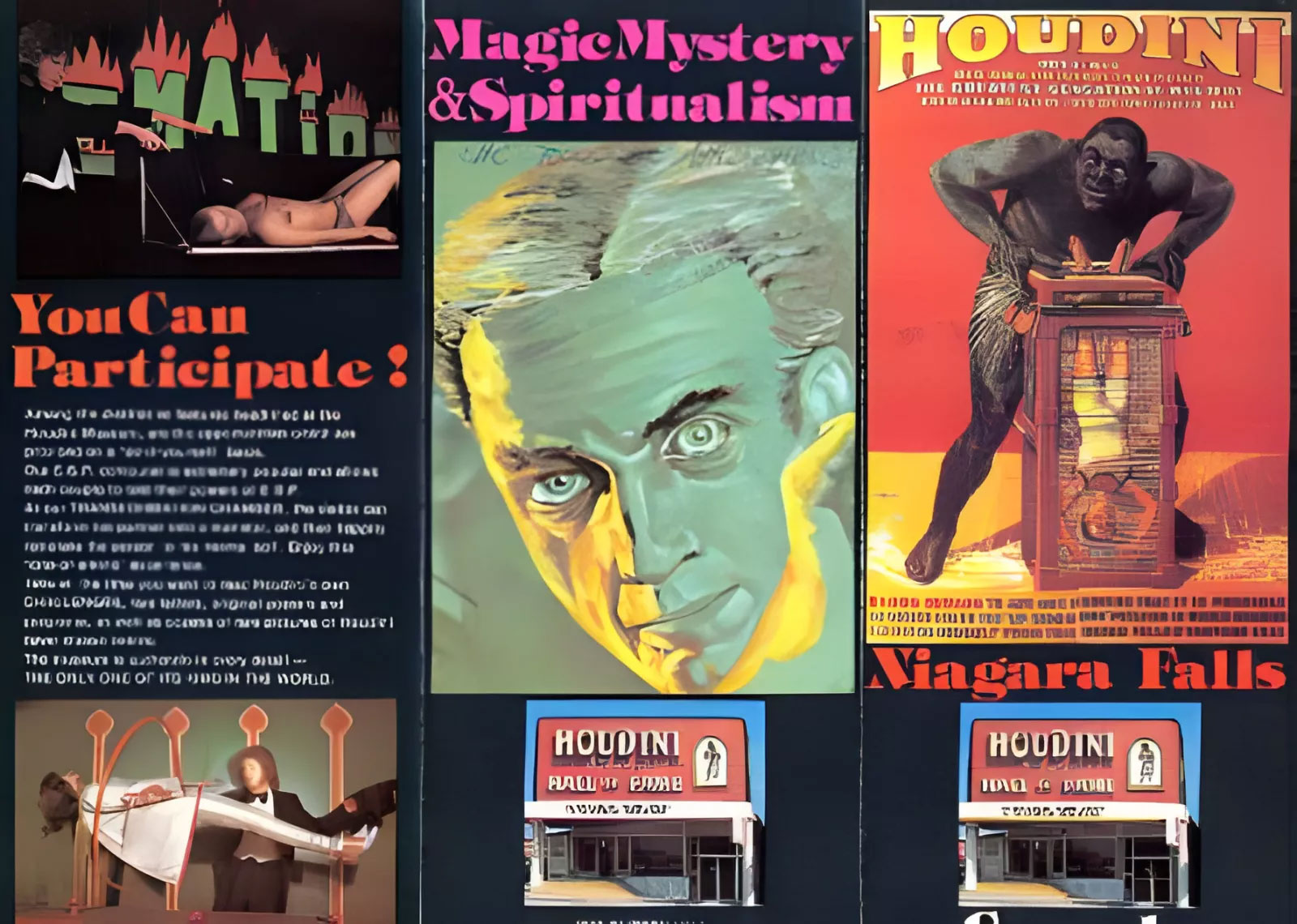
One of the most notable historical landmarks in this evolution was the Houdini Magical Hall of Fame, which opened in 1968. For decades, it preserved artifacts from the world of escapology, including Houdini’s famed Water Torture Cell. Located on Clifton Hill in a repurposed historic structure, it offered visitors a direct connection to the mythology surrounding one of the world’s most famous illusionists.
A fire in 1995 destroyed much of the collection, closing a defining chapter in Niagara’s entertainment history. Yet the underlying concept—participatory, story-driven illusion—did not disappear. Instead, it shifted form.
The Modern Illusion: Dark Rides Take the Stage
Today, Clifton Hill’s entertainment landscape is defined by immersive attractions that extend Houdini’s legacy into a digital era. Among them is Creepy Castle, a 6D interactive dark ride that transforms visitors from observers into participants.
Inside the attraction, motion seats, synchronized sound, environmental effects, and interactive scoring systems combine to create a layered sensory experience. Rather than watching danger unfold at a distance, guests are placed directly inside it—reacting, competing, and navigating a fully constructed narrative.
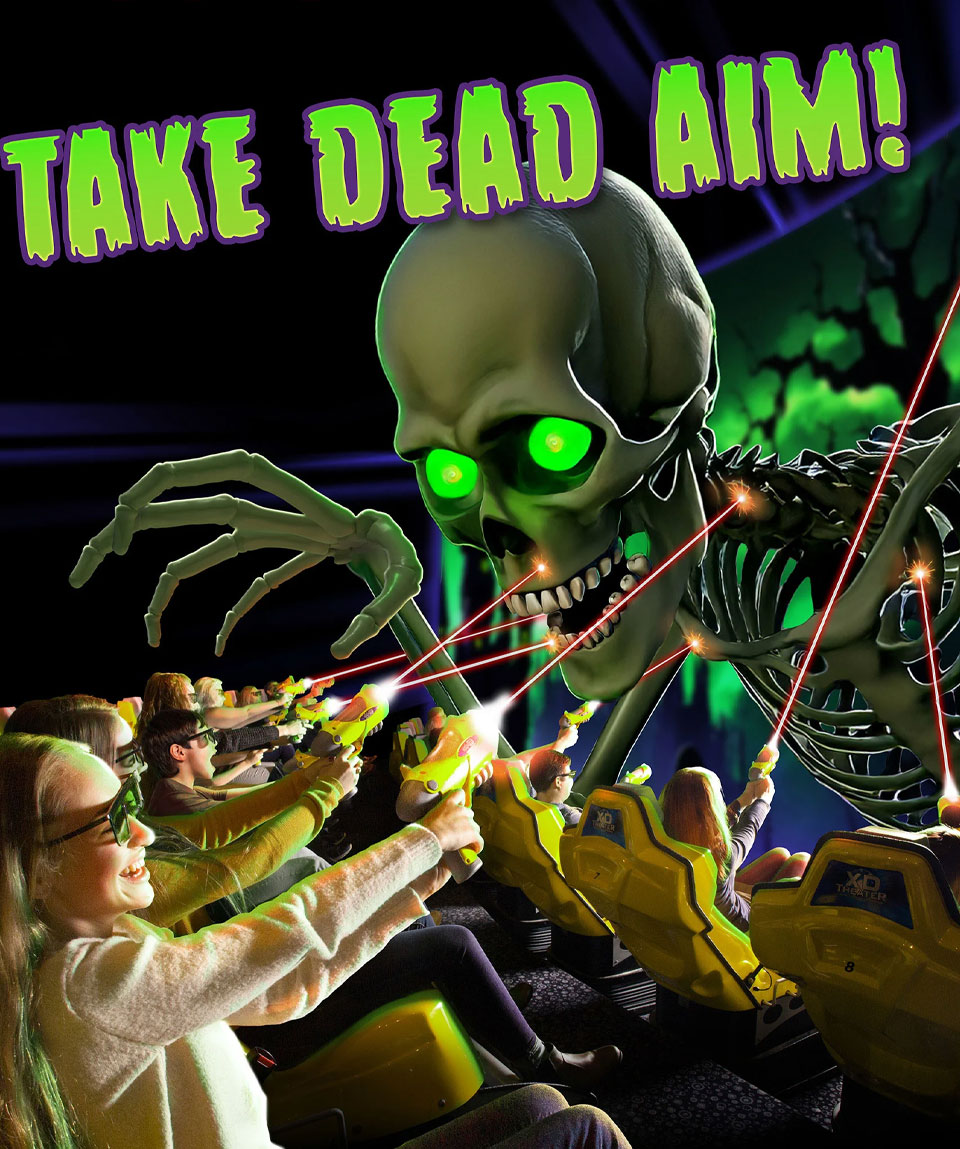
Where Houdini used restraint devices, misdirection, and physical risk to generate suspense, modern dark rides rely on simulation technology. The objective, however, remains unchanged: suspend disbelief long enough to make uncertainty feel real.
This continuity is what links historical escapology to present-day entertainment design. The tools have evolved, but the psychological architecture of illusion remains remarkably consistent.
The Illusion Lives On
Houdini’s direct presence in Niagara may be debated, but his influence is unmistakable. His legacy persists not as a single event, but as a framework for entertainment built on suspense, transformation, and participation.
On Clifton Hill, that framework has evolved into a full entertainment district where historical myth and modern technology intersect. From archival museums to interactive dark rides, the experience is unified by a shared principle: reality should never feel entirely fixed.
At Niagara Falls, illusion is not an accessory to the experience. It is embedded in it.
Practical Notes for Your Visit (FAQ)
The most comfortable visiting periods are weekday afternoons and early evenings, particularly outside of summer holidays. Evenings offer the most atmospheric experience due to the illuminated streetscape and proximity to Niagara Falls, while daytime visits typically provide shorter wait times for indoor attractions.
Crowds are heaviest during summer weekends, long weekends, school holidays, and evening hours. The district’s compact layout means foot traffic can feel concentrated at peak times. Earlier in the day generally allows for a more relaxed pace between attractions.
Yes. Clifton Hill is a fully walkable entertainment district. Most major attractions, dining options, and arcades are located within a short distance of one another, making it easy to move between experiences without transportation once on-site.
Most major indoor attractions operate year-round, including immersive rides, arcades, and themed experiences. Seasonal variations typically affect operating hours rather than availability, with longer hours during peak tourism months.
Clifton Hill remains highly accessible in poor weather conditions due to its concentration of indoor attractions. Rain, snow, or colder temperatures generally have minimal impact on available experiences, making it a reliable option year-round.
Yes. Multiple paid parking lots surround the district. Availability can vary significantly during peak periods, especially evenings and summer weekends. Many visitors staying nearby choose to walk, as the area is closely connected to central Niagara Falls accommodations.
A half-day visit typically allows for a few key attractions, while a full day provides time to explore multiple rides, arcades, and dining experiences at a comfortable pace. Many visitors extend their stay into the evening to experience the illuminated atmosphere after sunset.
Most attractions on Clifton Hill operate on continuous entry rather than fixed showtimes. Guests can typically enter rides and experiences throughout the day without needing to align with a specific performance schedule.
Yes. The district is designed as a four-season destination, with indoor attractions ensuring consistent availability regardless of weather. Seasonal changes primarily affect crowd levels and operating hours rather than access to core experiences.