





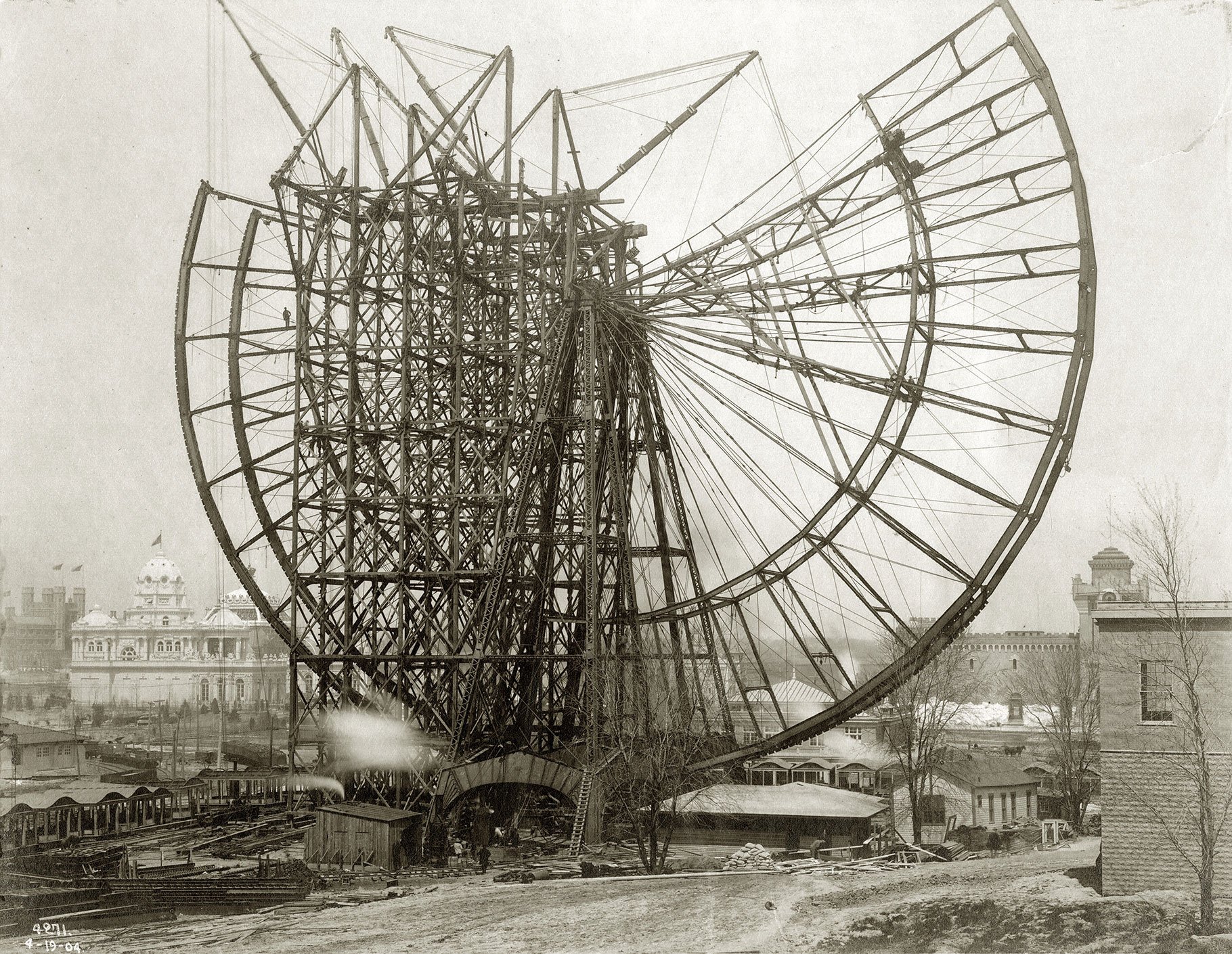


Giant Wheels have become some of the most recognizable landmarks in tourism destinations around the world. From historic world fairs to modern waterfront skylines, these towering attractions offer more than just a ride—they provide perspective, storytelling, and a shared sense of wonder.
- A Modern Example: The Niagara SkyWheel
- Early Origins of Wheel-Based Rides
- Antonio Maguino and the First American Wheels
- George Ferris and the Birth of the Ferris Wheel
- Portable Wheels and the Rise of Carnivals
- The World’s Tallest Observation Wheel
- Ferris Wheel vs. Observation Wheel: What’s the Difference?
- Why Giant Wheels Still Matter Today
Today, visitors riding the Niagara SkyWheel on Clifton Hill often find themselves asking an unexpected question: How did something like this ever begin? The answer spans centuries of innovation, engineering, and human curiosity.
This brief but authoritative history explores how Giant Wheels evolved from simple hand-powered rides into the climate-controlled observation wheels we know today.
A Modern Example: The Niagara SkyWheel
Standing 175 feet (53 metres) tall and featuring 42 fully enclosed, climate-controlled gondolas, the Niagara SkyWheel is one of North America’s most visited observation wheels. Located in the heart of Clifton Hill, it offers sweeping views of the Niagara Falls skyline, the American Falls, Horseshoe Falls, and the Niagara River corridor.


Unlike traditional amusement rides, modern observation wheels like the SkyWheel are designed for comfort, accessibility, and year-round operation—an evolution rooted in centuries of mechanical development.

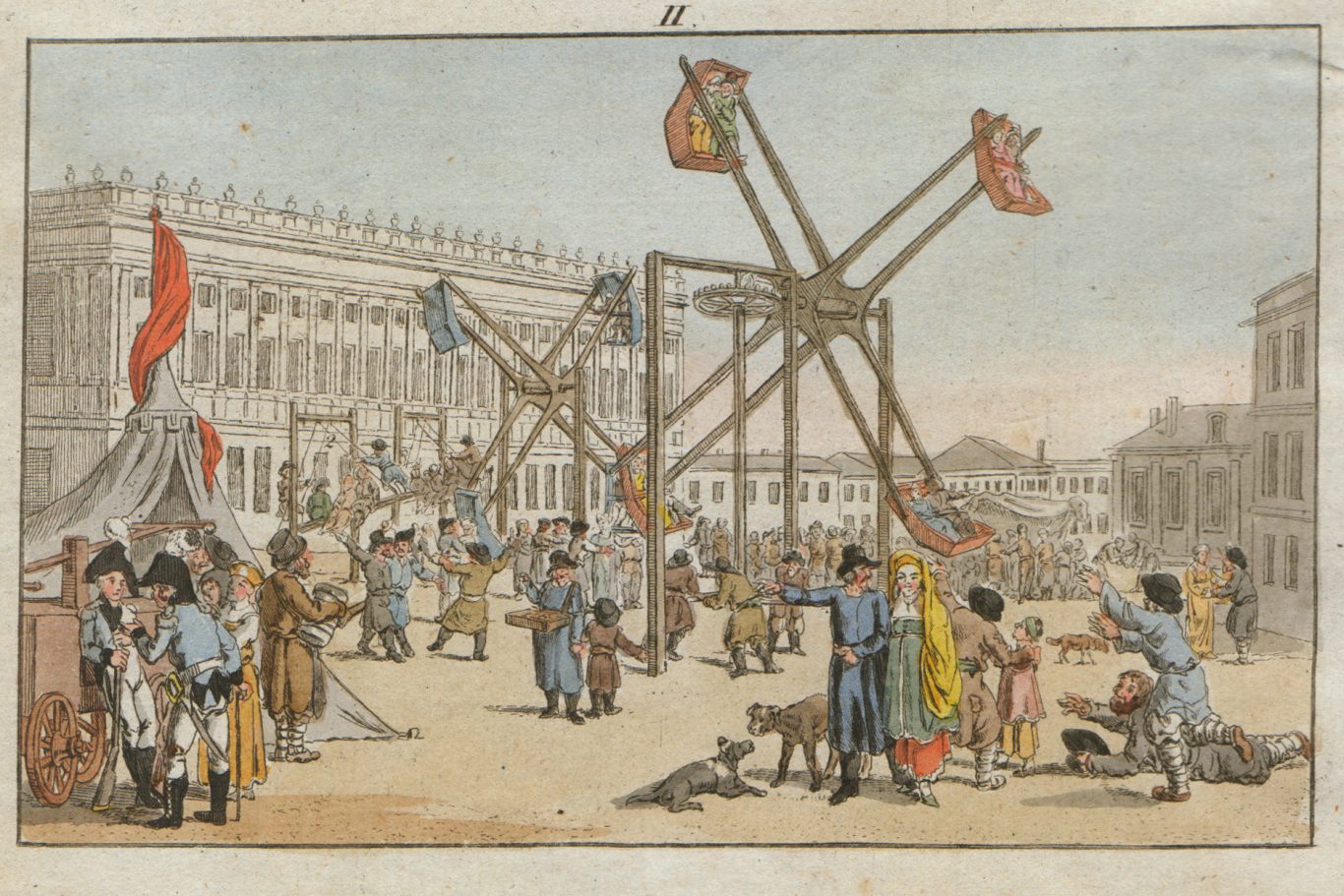
Early Origins of Wheel-Based Rides
The concept of a rotating wheel predates amusement parks by thousands of years.
- Circa 200 B.C.: Large wooden wheels were used in ancient civilizations to lift water for irrigation. These early engineering feats introduced the mechanical principles later adapted for entertainment.
- 17th-century Bulgaria: “Pleasure wheels” emerged, featuring chairs suspended from large wooden rings. These wheels were turned manually by strong men, offering riders a slow, circular lift.
- England, early 1700s: Small hand-turned amusement wheels known as “ups-and-downs” appeared at fairs as early as 1728.
These early rides laid the groundwork for the Giant Wheels that would soon captivate the public on a much larger scale.
Antonio Maguino and the First American Wheels
One of the earliest recorded amusement wheels in the United States was built in 1848 by Antonio Maguino in Walton Spring, Georgia. Constructed entirely of wood and powered by two men, the wheel was used to attract visitors to Maguino’s picnic grounds and rural park.
While modest in size, this early wheel demonstrated the ride’s potential as a crowd-drawing attraction—an idea that would soon be realized on a global stage.
George Ferris and the Birth of the Ferris Wheel
The modern Giant Wheel owes its name and fame to George Washington Gale Ferris Jr., a civil engineer from Illinois.
In 1893, Ferris designed and built the world’s first true Ferris Wheel for the Chicago World’s Columbian Exposition. The structure stood 264 feet (80.4 metres) tall and featured 36 enclosed gondolas, each capable of carrying 60 passengers.
- Construction cost: $300,000 (approximately $9.37 million today, adjusted for inflation)
- Ride duration: ~10 minutes
- Ticket price: 50 cents
The Ferris Wheel was both an engineering triumph and a cultural moment, proving that large-scale observation rides could be safe, profitable, and awe-inspiring.


Portable Wheels and the Rise of Carnivals
In 1900, inventor and bridge builder William E. Sullivan introduced a new idea: a portable Ferris Wheel that could be dismantled and transported between fairs.
Sullivan’s 45-foot wheel, featuring twelve three-passenger seats, revolutionized traveling carnivals. In 1906, he founded the Eli Bridge Company in Roodhouse, Illinois.
Today, the Eli Bridge Company remains one of the most influential manufacturers of Ferris Wheels in North America, with many classic carnival wheels still built using Sullivan’s original concepts.
The World’s Tallest Observation Wheel
The evolution of Giant Wheels continues to push engineering limits.

Ain Dubai, located on Bluewaters Island in the United Arab Emirates, is currently the world’s tallest and largest observation wheel:
- Height: Over 250 metres (820 feet)
- Announced: 2013
- Primary contractors: Hyundai Engineering & Construction and Starneth Engineering
Ain Dubai stands 82.4 metres (270 feet) taller than the former record-holder, the High Roller in Las Vegas, which opened in 2014.
Ferris Wheel vs. Observation Wheel: What’s the Difference?


While the terms are often used interchangeably, there are important distinctions:
Ferris Wheels
- Open or semi-open, free-swinging seats
- Typically supported by two side towers
- Partial views may be obstructed by the wheel’s structure
- Generally under 110 feet tall
Observation Wheels
- Fully enclosed, stabilized gondolas
- Supported by A-frame structures
- Designed for smooth rotation and comfort
- Offer 360-degree, unobstructed views
- Built for year-round operation
Modern attractions like the Niagara SkyWheel fall into the observation wheel category.
Why Giant Wheels Still Matter Today
From historic world fairs to modern tourist districts like Clifton Hill, Giant Wheels continue to serve as landmarks, gathering places, and symbols of innovation. Their enduring popularity speaks to a simple truth: people love seeing the world from a higher point of view.
Whether you’re riding a classic carnival wheel or stepping into a climate-controlled gondola overlooking Niagara Falls, you’re participating in a tradition that spans centuries—and continues to evolve.